
Myntra Fashion Photography: 25-Point Model Shoot Checklist, Poses, Angles & Image Requirements
A shoot-day operational blueprint from Satyam and the Uniqs Studio team for clothing brands, D2C labels and marketplace sellers.
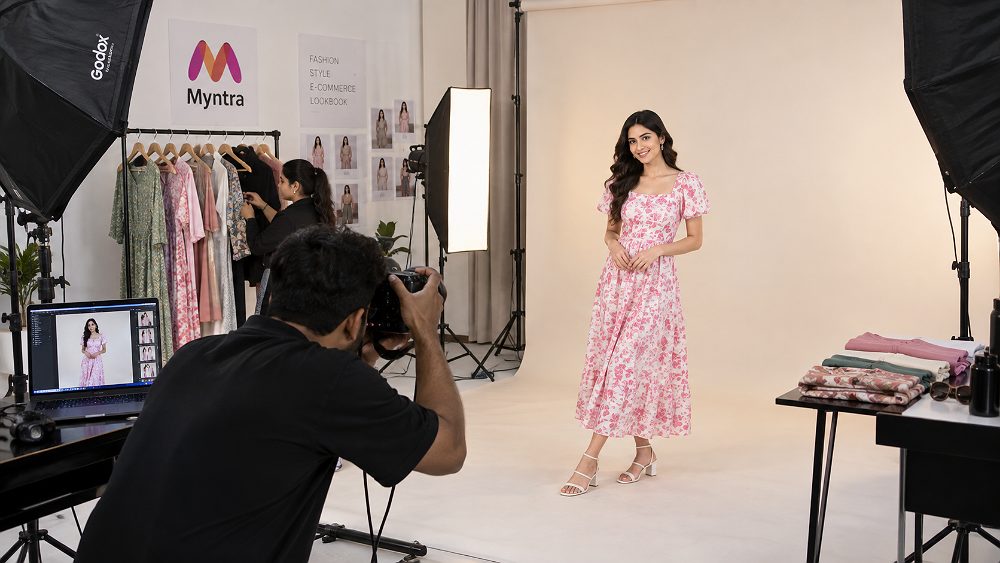
Myntra Fashion Photography succeeds long before the photographer presses the shutter. At Uniqs Studio, our nine-plus years of experience with fashion brands, D2C labels and marketplace sellers has taught us one thing clearly — the shoots that convert on Myntra are the shoots that were planned like a production, not a photo session. Garment readiness, model fitting, pose direction, camera angles, colour accuracy and on-set QC decide whether a catalogue looks professional or gets sent back for a reshoot.
This guide from Satyam gives you a practical, operational playbook: a 25-point Myntra model shoot checklist, category-specific poses, an essential camera-angle sequence, image requirement verification and a final upload QC. A quick note before we start — exact Myntra image dimensions, file sizes and category rules can change, so always confirm the current specification in your Myntra Partner Portal before a bulk apparel shoot.
Table of Contents
- Myntra Fashion Photography at a Glance
- Myntra Image Requirements Before Shooting
- 25-Point Myntra Model Shoot Checklist
- Best Model Poses for Myntra
- Essential Camera Angles & Shot Order
- Poses & Angles by Clothing Category
- Lighting, Background & Colour Accuracy
- Post-Production & Image QC
- Common Myntra Photography Mistakes
- How to Brief a Fashion Studio
- Final Photoshoot Checklist Before Upload
- Frequently Asked Questions
Key Takeaways
- A successful Myntra model shoot is 60% preparation — garments, fit and shot list — and 40% execution.
- Front, back, side/three-quarter and detail angles are the non-negotiable core of every apparel SKU photography set.
- Consistent fashion lighting, accurate colour and repeatable framing prevent avoidable reshoots.
- Retouching should preserve the product — never change garment shape, print or colour.
- Always verify current Myntra category specifications in the Partner Portal before a bulk fashion catalogue shoot.
Myntra Fashion Photography at a Glance: What Sellers Need to Prepare
Myntra Fashion Photography is category-specific ecommerce apparel photography that presents garments through professional model images, consistent studio lighting, accurate colour and multiple angles suitable for Myntra catalogue listings. Sellers need prepared garments, a properly fitted fashion model, a defined shot list and disciplined on-set QC.
Before you book a photographer, prepare seven things: your SKU list, garment steaming and fit checks, the right catalogue model, a locked pose and angle sequence, consistent fashion lighting on a neutral background, an accurate colour reference and a final image quality control pass. Skip any of these and you risk missing angles or getting flagged on marketplace listings across Myntra, Ajio, Amazon or Flipkart.
Our team at Uniqs Studio Fashion Photography services treats every Myntra apparel shoot as a small production line — SKUs move through steaming, fitting, shooting and QC in a repeatable order. That is what keeps a 300-garment catalogue looking like a single connected fashion catalogue instead of 300 random photos. For a deeper primer on ecommerce apparel workflows, our fashion catalogue photography complete guide walks through the full production flow.
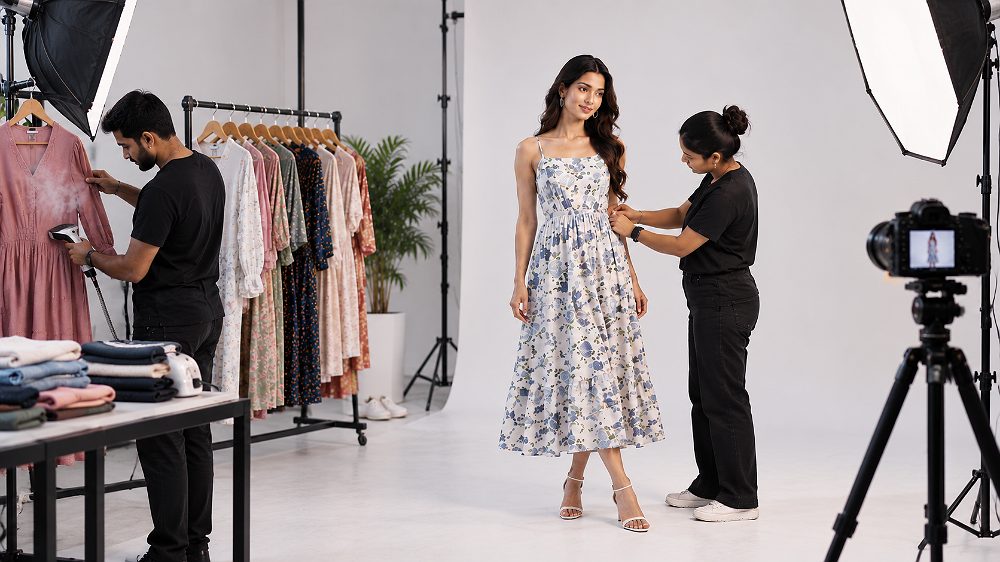
Myntra Image Requirements to Check Before the Model Shoot
Treat Myntra image requirements as a pre-production verification checklist, not permanent specifications. Marketplaces update their category sheets regularly, and requirements for a saree listing may differ from those for a men’s shirt or a lingerie set. What stays constant is the discipline of checking the current spec before you commit lights, model time and studio hours.
Whether you sell on Myntra, Ajio, Amazon India or Nykaa Fashion, always confirm the live specification in the Myntra Partner Portal or your category sheet before you brief a photographer. This one habit prevents entire reshoots. Our writeup on fashion photography for ecommerce and the wider fashion photography for Myntra guide covers the specification-verification workflow in more detail.
| Requirement | What to Check | Why It Matters | Verify Before Shoot |
|---|---|---|---|
| Aspect Ratio | Portrait 3:4 or 4:5 | Full-length model image fits fashion catalogue grid | Yes — Partner Portal |
| Image Dimensions | Shoot larger than final delivery size | Room to crop without softening detail | Yes — category sheet |
| File Format | JPEG for web export | Marketplace listing compatibility | Yes |
| File Size | Within marketplace maximum | Upload success, page speed | Yes |
| Background | Clean neutral or white background photography | Product presentation consistency across SKUs | Category-dependent |
| Colour Profile | sRGB | Colour accuracy on web | Yes |
| Framing | Full-length with head-to-toe visible | Silhouette and garment drape shown clearly | Yes |
| Minimum Image Count | Depends on garment category | Coverage of all fit and detail angles | Yes — check per category |
| Image Sequence | Front → Back → Side → Detail | Consistent seller catalogue experience | Yes |
| Text / Watermarks | Generally not allowed | Rejection risk | Yes |
| Category Rules | Model vs flat-lay vs ghost mannequin | Category-specific compliance | Yes |
Aspect Ratio, Resolution and Image Orientation for Myntra Fashion Photography
Plan a portrait-first shoot. Fashion model images look natural in 3:4 or 4:5 and give room for a clean full-length model image with a small border above the head and below the feet. Shoot at higher resolution than the final delivery so you can crop for platform variants without losing sharpness on fabric detail. Never design a shoot only around square marketplace crops — you will lose garment drape at the edges.
Background, File Format and Colour Profile
Keep a clean marketplace-style neutral background across every SKU. Consistency is more important than which exact shade of grey or white you pick. Work in an sRGB workflow with a calibrated monitor for colour accuracy and correct skin tone rendition. Avoid creative colour grading that alters garment appearance — buyers on Myntra, Ajio and Nykaa Fashion return products that don’t match the image, and returns hurt more than clicks.
How Many Images and Angles Should You Plan?
Plan enough images to show the front, back, side or three-quarter angle, key fabric close-up shots and any category-specific features such as embroidery, prints, closures or included pieces in a co-ord set. Do not commit to a universal minimum count without checking the live Myntra category sheet — image count varies by garment type across apparel photography categories.
25-Point Myntra Model Shoot Checklist for Clothing Brands
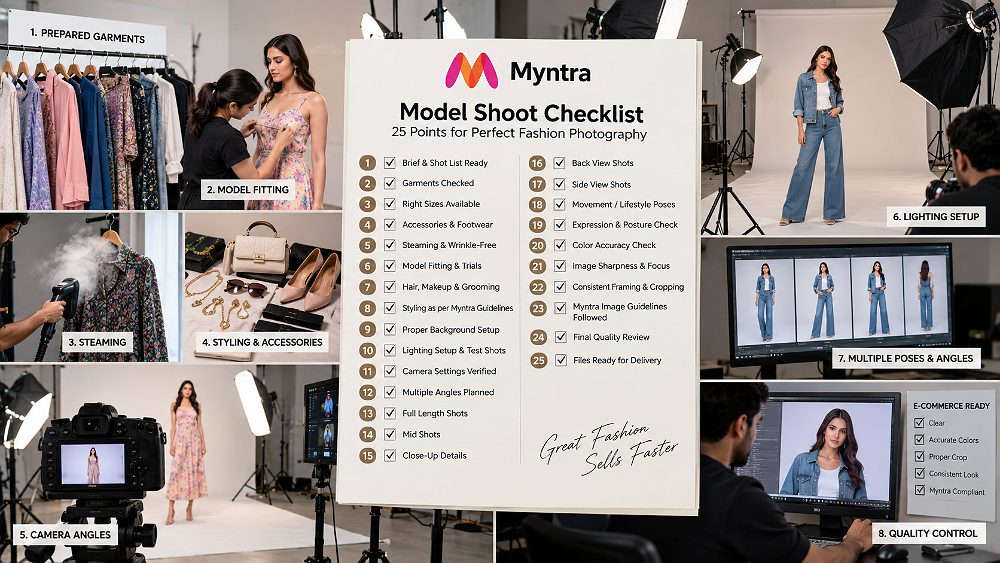
This is the shoot-day blueprint we use at Uniqs Studio for every clothing model photography project. Print it, share it with your photographer, tick it as you go. The order matters — pre-shoot preparation feeds fitting, fitting feeds the camera, the camera feeds QC.
Before the Shoot: Garment and SKU Preparation
- Finalize SKU shot list — every garment mapped to a shot count and angle plan.
- Check product colour, size labels and SKU codes against your master sheet.
- Remove packaging folds and creases the day before the shoot.
- Steam every garment — garment steaming is the single biggest reason images look premium or amateur.
- Check every SKU for stains, loose threads and defects; replace or repair before packing for the studio.
- Prepare matching garment sets — co-ord tops with bottoms, ethnic sets with dupattas, lehenga with blouse and choli.
- Organize products by SKU in shooting order to avoid on-set confusion.
- Prepare accessories only when appropriate — never let props overshadow the garment.
Model Selection and Fitting Checklist
- Select a suitable fashion model for the garment category — the right catalogue model for lingerie is not the right model for menswear.
- Match garment sample size to model measurements before booking.
- Conduct a fitting before shooting starts — never fit on camera.
- Check shoulder, waist, sleeve and hem placement during model fitting.
- Avoid excessive pinning or unnatural shaping — buyers should see how the garment actually fits.
- Keep styling consistent within a single SKU — same hair, same jewellery, same shoes across front, back and side.
Shoot-Day Camera and Styling Checklist
- Lock lighting consistency across every SKU — meter once, then don’t change settings mid-shoot.
- Set accurate white balance to a colour reference card.
- Confirm framing on a test shot before bulk shooting a SKU.
- Capture a clean front full-length model image with garment unobstructed.
- Capture a back view showing closure, print and construction.
- Capture a side or three-quarter angle for silhouette and garment drape.
- Capture important fabric close-up shots for texture, print or embroidery.
- Check the garment between poses — reset creases, sleeves and hem.
- Review focus at 100% zoom on the tethered monitor.
- Compare on-screen colour with the physical garment sample.
- Confirm the complete shot list before releasing the SKU and switching over.
Pro Insight from Satyam — What We Check Before a Clothing SKU Leaves the Set
After nine-plus years of running fashion catalogue shoots, my rule at Uniqs Studio is simple — a five-minute on-set review is always cheaper than a reshoot. Before we release any apparel SKU, we walk through fit, wrinkles, missing angles, colour consistency, focus, product visibility and file completeness on the tethered monitor. A reshoot costs the studio day, the fashion model booking, the stylist and your launch date. Reviewing while the model, the garment and the fashion lighting are still in place is the cheapest insurance you can buy.
Best Model Poses for Myntra Fashion Photography
Model poses for Myntra Fashion Photography should serve the garment — not the fashion model’s portfolio. A great catalogue pose keeps the product unobstructed, shows fit honestly and reads clearly at thumbnail size. Editorial and movement poses have their place, but only after the essential catalogue frames are locked. Similar principles apply across Ajio, Nykaa Fashion and Meesho apparel listings — catalogue clarity first, mood second.
Straight Front Pose: The Essential Product View
The straight front pose is the anchor of every apparel SKU photography set. Feet shoulder-width apart, balanced stance, arms positioned slightly away from the body so the garment silhouette remains clear. The fashion model should stand tall with relaxed shoulders and a soft, neutral expression. Watch for hands blocking pockets, neckline or print detail — if a hand hides an important design element, you’ll need a re-shot or a duplicate frame with hands moved.
Three-Quarter Pose for Fit and Garment Shape
Rotate the fashion model 30 to 45 degrees to reveal depth, silhouette and how the garment sits at the waist and hip. This is the most versatile catalogue pose because it works for dresses, kurtas, shirts and jackets alike. Keep important design elements visible — a three-quarter that hides the front zipper or the print detail defeats the purpose. Avoid overly editorial posing that reads well on a magazine cover but not on a marketplace listing.
Side and Back Poses
Side profile and back view are where apparel photography earns buyer trust. A side pose shows sleeve construction, garment length and how the fabric drapes at the waist and hip. A back view reveals back neckline, zippers, yokes, vents, print placement and overall garment length. For dresses, sarees, kurtas and lehengas, the back is often where the design story lives, so give it a dedicated frame rather than treating it as an afterthought.
Natural Movement Poses for Dresses, Kurtas and Flowing Garments
Once the catalogue essentials are captured, add controlled walking, fabric movement or slight turns to bring dresses, kurtas and sarees to life. These frames are excellent for social product presentation, secondary catalogue slots and lifestyle context. Never lead with a movement pose — buyers judge fit from static frames first. Our breakdown of editorial vs commercial vs catalogue shoots explains where each style fits inside a full campaign.
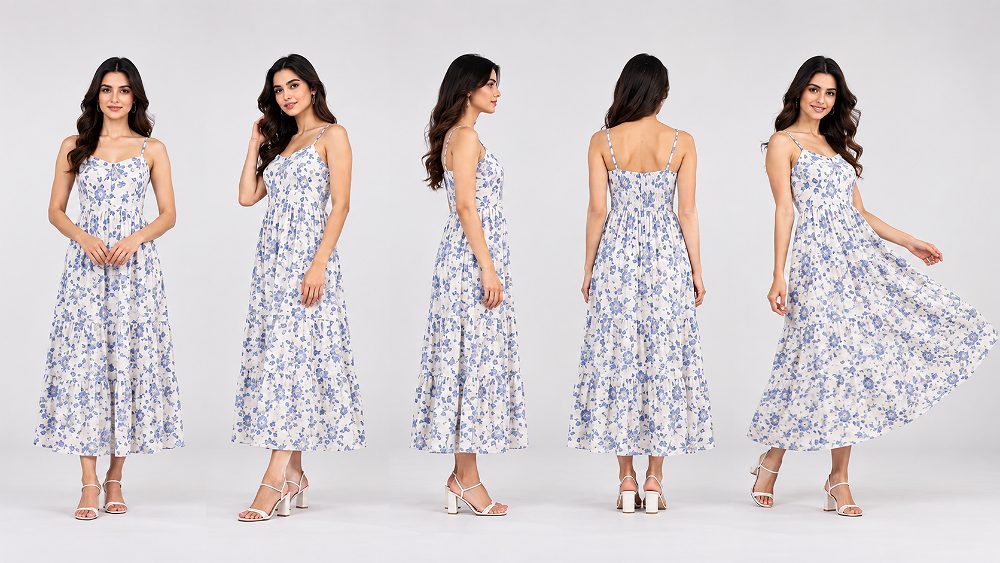
Essential Camera Angles for Myntra Model Photography
Camera angles carry the technical weight of Myntra Fashion Photography. Buyers scroll through a fixed image sequence — inconsistent angles across SKUs make an entire fashion catalogue feel unprofessional. Shoot the same sequence in the same order for every garment.
Front Full-Length Angle
Camera at chest height, full body in frame with a small headroom margin. This is the buyer’s first impression on Myntra and Ajio thumbnails, so present the overall garment shape, length, neckline and front detailing clearly. Keep the lens between 50mm and 85mm equivalent to avoid distortion on the fashion model’s proportions.
Back Full-Length Angle
Match camera height and framing exactly to the front frame. This is where you show back construction, closure detail, back print or design, garment length and how the fabric falls. Consistency between front and back frames is what makes a marketplace listing look like it came from a professional studio photography workflow.
Side or Three-Quarter Angle
The side or three-quarter angle is the depth frame — it shows garment volume, silhouette and drape that a flat front view can never capture. For structured menswear this angle proves shoulder and chest fit. For flowing dresses and lehengas, it shows fabric weight and movement. Keep camera height the same as your other frames for a coherent seller catalogue.
Fabric and Detail Close-Up
Every serious apparel SKU deserves at least one detail shot — fabric texture, print, embroidery, buttons, zippers, stitching, neckline, sleeve detail or branding labels where relevant. Detail images build buyer confidence and drive better conversion on Myntra, Amazon Fashion and Nykaa Fashion. For garments with intricate work, our guide on apparel product photography shot lists per SKU is a useful reference.
| Shot | Model Position | Camera Angle | Product Detail Shown | Priority |
|---|---|---|---|---|
| Front Full Length | Straight, balanced | Chest height | Silhouette, front construction | Must have |
| Back Full Length | Straight, back to camera | Chest height | Back print, closure, length | Must have |
| Three-Quarter | 30–45° rotation | Chest height | Depth, fit, silhouette | Must have |
| Side Profile | 90° rotation | Chest height | Drape, sleeve, waist | Recommended |
| Fabric Detail | Static | Close macro | Texture, weave, print | Recommended |
| Neckline Detail | Head tilt down | Chest-up close | Neckline design, embroidery | Category-based |
| Sleeve Detail | Arm forward | Close | Cuff, sleeve construction | Category-based |
| Movement Shot | Walking / turning | Chest height | Fabric flow, drape | Optional |
Myntra Model Poses and Angles by Clothing Category
Different apparel categories carry different visual stories. A T-shirt is about fit and print; a lehenga is about drape and embroidery; jeans are about waistband, silhouette and hem. Match your model poses and camera angles to the clothing category you’re shooting — this is what separates a strong Myntra fashion photography workflow from a generic apparel shoot.
| Garment | Front | Back | Side / 3/4 | Detail | Movement / Styled |
|---|---|---|---|---|---|
| T-Shirt | Essential | Essential | Recommended | Print / fabric | Optional |
| Shirt | Essential | Essential | Essential | Collar, cuff | Optional |
| Dress | Essential | Essential | Essential | Neckline, fabric | Recommended |
| Kurta | Essential | Essential | Essential | Embroidery, print | Recommended |
| Co-ord Set | Essential | Essential | Recommended | Fabric, pieces | Optional |
| Jeans | Essential | Essential | Essential | Waistband, hem | Optional |
| Trousers | Essential | Essential | Essential | Waistband, pockets | Optional |
| Ethnic Set | Essential | Essential | Essential | Embroidery, drape | Recommended |
| Saree | Essential | Essential | Essential | Pallu, border | Essential |
| Lehenga | Essential | Essential | Essential | Embroidery, dupatta | Recommended |
T-Shirts, Shirts and Tops
Prioritize front, back and a clean three-quarter angle. For shirts, add neckline, collar and cuff detail — these frames sell menswear on Myntra and Amazon Fashion. Fabric close-ups matter more for premium tops where texture is the story. Keep the fashion model’s arms clear of the front print or design panel.
Dresses, Kurtas and Ethnic Sets
Give full garment length priority — head-to-hem must be in frame. Follow up with a side profile for drape, a back frame for print, embroidery or design and detail shots for the neckline, sleeve or dupatta. For ethnic sets, always show every included piece — buyers on Myntra Fashion and Ajio return co-ord sets when they expect three pieces and receive two.
Jeans and Trousers
Front fit, back fit and a strong side silhouette are the foundation. Add close-ups for waistband, pockets, closures and hem. Denim washes photograph very differently from studio light to daylight — nail white balance for accurate colour on the wash. For clothing brand teams building a full bottom-wear catalogue, our complete guide to garment photography for ecommerce covers the SKU workflow end-to-end.
Lighting, Background, Framing and Colour Accuracy for Myntra Fashion Photography
Lighting is where amateur and professional apparel photography split. A consistent lighting setup that reads the same across 100 SKUs is more valuable than a beautiful one-off frame. Colour accuracy protects your reviews, your ratings and your return rate on Myntra, Amazon and Ajio.
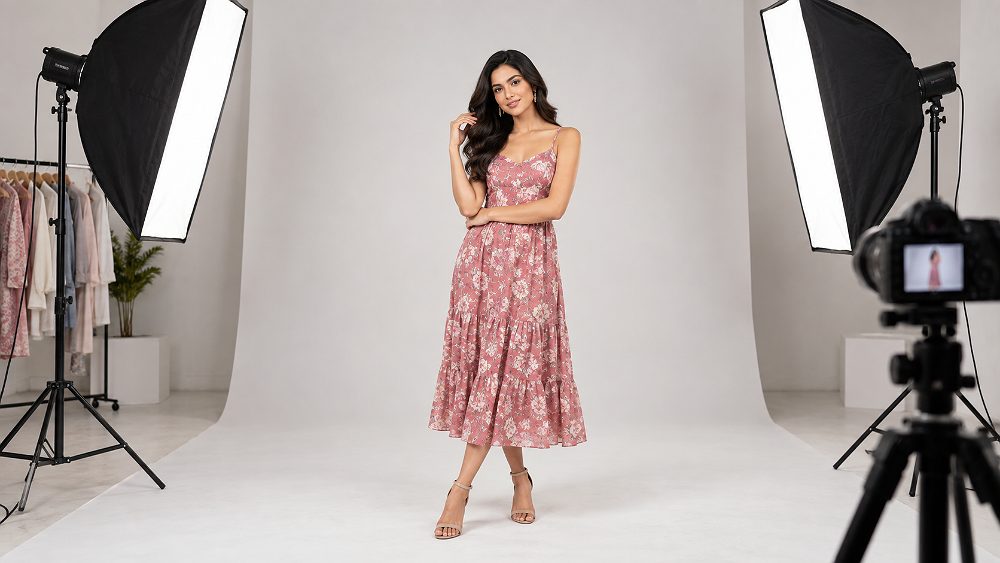
Use Soft, Consistent Fashion Lighting Across Every SKU
At Uniqs Studio we run Godox and Elinchrom monolights through large softboxes and a beauty dish for fashion model shoots. The goal is soft, even fashion lighting with controlled shadow — enough to reveal fabric texture without carving harsh shadows on the fashion model’s face. Meter every setup, then don’t touch the lights until you change the setup for a new category.
Keep Garment Colours Accurate
Set white balance to a colour checker on the first frame of every session. Compare on-screen colour with the physical garment sample using a reference monitor. Avoid heavy presets that shift skin tone or garment colour. When a Myntra buyer receives a maroon kurta that photographed as burgundy, the return isn’t a photography problem — it’s a colour accuracy failure.
Maintain Consistent Camera Height and Framing
Lock camera height, distance and lens choice for a full SKU. Consistency across front, side and back frames makes catalogue pages look professional and reduces avoidable recropping in post. For the studio vs outdoor decision, our comparison on fashion photography studio vs outdoor shoot covers the tradeoffs.
Post-Production Checklist for Myntra Fashion Photography
Post-production is where trust is either preserved or destroyed. Every edit should serve product presentation, never distort it. If a customer receives a garment that looks different from the image, that’s a review problem across Myntra, Ajio and Amazon Fashion — and reviews stay live for years.
Retouching That Preserves the Product
Acceptable retouching includes dust removal, cleanup of temporary creases the steamer missed, background cleanup, gentle skin tone cleanup and exposure correction. What we never do at Uniqs Studio: changing print, changing garment colour, changing garment shape, removing real design details or artificially altering how the product fits. Honest retouching protects the brand and reduces returns.
Crop and Export Consistently
Matching crop across front, back and side frames keeps the fashion model at the same scale in every image. Correct orientation, sRGB colour space and category-specific export settings finish the job. Batch-process by SKU to keep image quality control tight across the marketplace listing set.
100% Zoom Quality Control
Every final image gets a 100% zoom check for focus, fabric detail, colour, retouching artefacts, background edges, clothing defects and missing angles. This is where a good editor catches what the shoot missed. Our post-production workflow guide walks through the full sequence.
Common Myntra Fashion Photography Mistakes That Lead to Reshoots
Most Myntra reshoots come from a small set of avoidable mistakes. Recognising them is the first step to preventing them.
- Shooting wrinkled garments — no lens, no editor and no lighting fixes bad garment steaming.
- Incorrect sample size on the fashion model, ruining fit visibility.
- Poor model fitting — over-pinning or clamping that hides real garment fit.
- Hiding important garment details with hands, hair or accessories.
- Missing back or side images — buyers can’t picture the garment in full.
- Overly creative editorial poses replacing straight catalogue frames.
- Changing lighting between SKUs — the fashion catalogue looks stitched together.
- Incorrect colour and white balance drifting through the session.
- Tight cropping that clips the hem, neckline or head.
- Soft focus that becomes obvious at zoom.
- Excessive retouching that changes the product.
- Forgetting fabric close-up or garment detail shots for premium SKUs.
- Ending the shoot without reviewing files — the biggest single risk.
- Using outdated platform specifications for cropping and export.
- Shooting Myntra, Ajio, Amazon Fashion and Nykaa with the same crop strategy when category rules differ.
Why a Five-Minute On-Set QC Can Prevent a Full Reshoot
Before a fashion model changes into the next SKU, run a five-minute checklist on the tethered monitor — SKU tag verified, front captured, back captured, side captured, detail captured, colour matches sample, focus is sharp at 100%. A reshoot involves the fashion model, the stylist, the studio, the editor and your launch date. Five minutes of on-set image quality control is the cheapest insurance in ecommerce photography.
How to Brief a Studio for a Myntra Model Shoot
A well-briefed studio delivers a clean, marketplace-ready fashion catalogue in a single production window. A poorly briefed studio delivers frames you’ll have to reshoot. Prepare a clear, written brief before the shoot day and send it to your photographer at least 48 hours in advance.
Include SKU count and clothing category, required angles per garment, model profile with reference images, sample sizes, styling requirements, required fabric and detail images, target marketplace listing (Myntra, Ajio, Amazon Fashion, Nykaa Fashion), launch deadline, file naming and delivery requirements, and the current Myntra category specification sheet. Brands running multi-SKU catalogues can use professional Fashion Photography services to keep fashion lighting, model styling, garment presentation and shot consistency standardized across the entire seller catalogue. For pricing planning, our transparent breakdown of fashion photography cost in Delhi helps sellers plan a realistic budget.
What to Send the Photography Studio Before Shoot Day
Send a shot list with SKU codes, product reference images, category, model requirements, sample measurements, an approved shot list, current marketplace guidelines, the delivery deadline and final file requirements. Confirm the shoot brief in writing and share a WhatsApp checklist on shoot morning so nothing gets missed between the styling area and the camera. If you’re planning a full multi-SKU shoot for a clothing label, our writeup on fashion photography for clothing brands in Delhi walks through the studio-hiring workflow.
When Professional Clothing Model Photography Makes More Sense
Choose a professional studio when you have large SKU volumes, strict consistency requirements, complex garments, tight launch schedules, multiple angles per SKU or frequent catalogue production cycles. Sellers running catalogues across Myntra, Ajio, Amazon Fashion and Nykaa benefit from repeatable studio photography workflows that DIY setups can’t match. To match photography with video assets, our ecommerce video production team can shoot fashion reels alongside stills in the same booking.
Planning Your Next Myntra Fashion Catalogue?
Book your slot with Satyam and the Uniqs Studio team. Share your SKU count, clothing category and required delivery date and we’ll plan a full Myntra Fashion Photography production for you at our Delhi NCR fashion studio.
Final Myntra Fashion Photography Checklist Before Upload
Before you upload a single product listing image to your Myntra seller catalogue, run this bookmarkable list one last time. It’s the same final QC we run at Uniqs Studio.
- Correct SKU photographed and tagged
- Garment steamed and defect-free
- Product fit checked on the fashion model
- Front image captured and framed correctly
- Back image captured
- Side or three-quarter angle captured
- Detail shots captured — fabric, print, embroidery, closures
- Garment unobstructed in every catalogue frame
- Colour visually accurate against the physical sample
- Focus checked at 100% zoom
- Background consistent across every frame
- Model scale and framing consistent within a SKU
- Retouching preserves product accuracy
- Crop and export settings match category requirements
- Current Myntra category rules verified in the Partner Portal
- Final file set reviewed before upload
For sellers building assets for reels alongside stills, our operational guide on product reels video maker workflows shows how to capture photos and video in a single studio session.
Verify Current Myntra Category Specifications
Because marketplace image rules change without much notice, always verify current requirements from official sources before a bulk shoot. Two references we recommend to every seller — the official Myntra Partner Portal for live seller-facing category rules, and the Amazon India seller image documentation from Amazon Seller Central India for cross-marketplace image standards. Cross-reference these with your shoot brief before finalising a production window.
Frequently Asked Questions About Myntra Fashion Photography
Sellers ask us these questions every week. Short, honest answers below — call Satyam at +91-8076745824 if you’d like the long version tailored to your catalogue.
What is Myntra Fashion Photography?
Myntra Fashion Photography is ecommerce-focused apparel photography created to present garments clearly through professional fashion model images, consistent studio photography lighting, accurate colours and multiple product angles suitable for Myntra catalogue listings.
What poses are best for a Myntra model shoot?
Start with clean front, back, side and three-quarter poses that keep the garment visible. Natural movement poses for dresses, kurtas and sarees can be added after the essential catalogue views are complete.
What camera angles should be included in Myntra model photography?
A strong fashion catalogue shot list normally includes front full-length, back full-length, side or three-quarter, and close-up detail images, with additional angles based on the clothing category being photographed.
How should clothes be prepared for a Myntra model shoot?
Steam every garment, remove loose threads and packaging folds, verify SKU and colour, confirm the sample fits the selected fashion model and organize products in shooting order before photography starts.
How can brands avoid Myntra photography reshoots?
Use a fixed SKU shot list, review fit and garment styling before each image, check focus and colour during the shoot, capture every required angle and verify current category specifications before final export.
Conclusion & Next Steps
Great Myntra Fashion Photography is not luck or gear — it’s the operational discipline of preparing garments, fitting the fashion model, locking a shot list, running a consistent studio setup and executing on-set QC before the next SKU. Follow the 25-point checklist, respect category-specific angles, keep colour accurate and always verify current Myntra category rules before you commit to a production window.
If you’re planning a Myntra apparel catalogue and want a partner who runs this workflow end-to-end, reach out to Satyam. Uniqs Studio has spent nine-plus years building repeatable fashion catalogue shoots for D2C clothing brands, marketplace sellers and designers across Delhi NCR. Email [email protected] with your SKU count, category and target launch date, and we’ll come back with a shoot plan.