
Every fashion brand, model, and designer eventually asks the same question — which shoot style will actually move the needle? Editorial, commercial, or catalogue? This is the definitive breakdown from Uniqs Studio, decoded through 9+ years of shooting for magazines, D2C labels, and India’s biggest marketplaces.
What Is Fashion Model Photography?
Fashion Model Photography is a specialised genre where a trained fashion model photographer captures apparel, accessories, jewellery, and beauty products worn or held by professional models — with the intent of building brand identity, driving product sales, or telling a visual story. At Uniqs Studio, the practice sits at the intersection of art direction, wardrobe styling, cinematic lighting, and post-production craft, and it powers everything from Vogue India covers to marketplace listings on ecommerce fashion platforms like Myntra and Ajio.
India’s fashion ecommerce market is projected to cross USD 50 billion by 2027, and modelling photography now shapes almost every consumer touchpoint — from Instagram Reels to Amazon India hero banners. Whether you run a fashion label in Delhi, model with an agency in Mumbai, or manage a marketplace catalogue for a D2C brand, understanding this genre helps you brief the right team and avoid the wrong shoot style entirely. As Satyam often reminds new clients, a single shoot type rarely serves every business goal — the smartest brands mix and match.
- Fashion model photography splits into three primary styles: editorial, commercial, and catalogue.
- Each style differs in purpose, lighting, styling, poses, and retouching depth.
- Choosing the right style directly impacts brand perception, conversions, and shoot budget.
- Uniqs Studio in Delhi NCR delivers all three under one roof with dedicated art direction.
- Real professional photography always outperforms AI-generated imagery for trust and returns.
Editorial vs Commercial vs Catalogue: The Quick Snapshot
Before diving deep, here’s the fastest way to place each style. Editorial model photography tells a mood-driven story — think Elle India spreads and avant-garde concept shoots. Commercial model photography sells a brand feeling — aspirational, polished, and campaign-ready. Catalogue model photography sells the product itself — clean, consistent, and conversion-focused for platforms like catalogue-driven marketplaces. The three overlap in craft but diverge sharply in purpose, and knowing that difference is the single biggest budget-saver for fashion brands.
Story-Driven
Magazine spreads, concept films, and designer showcases. Art direction leads; product follows.
Brand-Driven
Campaign hero banners, brand films, and Instagram grids. Aspirational, polished, and on-brand.
Product-Driven
Clean marketplace listings for Myntra, Ajio, and Nykaa Fashion. Consistent, scalable, conversion-first.
What Is Editorial Model Photography?
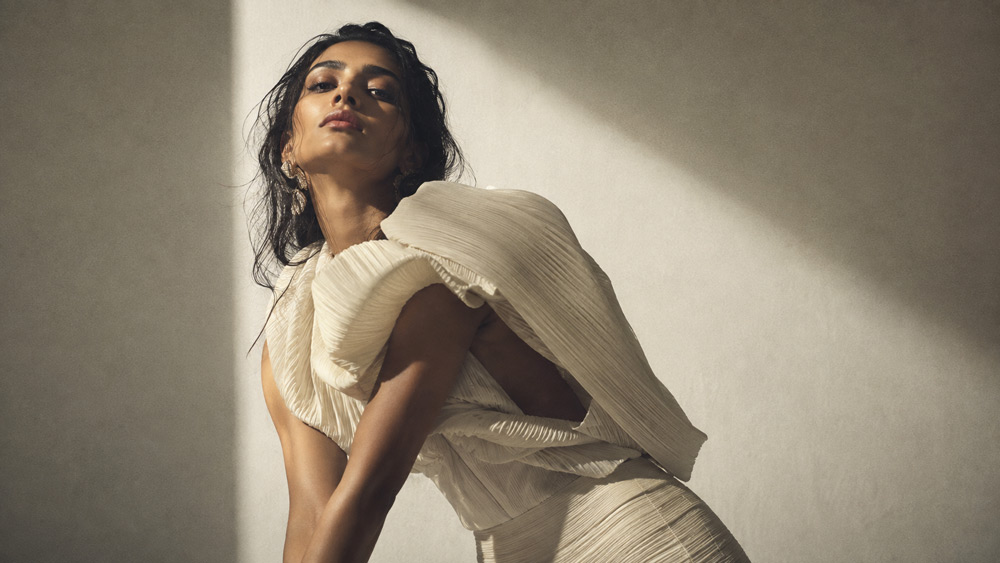
Editorial model photography is the storytelling wing of the fashion industry. It sits closer to fine art than advertising — every frame carries a mood, a concept, or a cultural point of view. When a designer wants to launch a couture line with a bold visual identity, or when a magazine needs a 12-page fashion spread, this is the format they commission. At Uniqs Studio, editorial shoots begin with a moodboard, an art director, and a location or set that supports the narrative — not the other way around. The latest editorial trends in India lean heavily into cinematic grain, sculptural silhouettes, and cross-cultural styling.
Purpose & Usage of Editorial Fashion Photography
Editorial fashion editorials are commissioned for print and digital magazine spreads, luxury designer campaigns, art coffee-table books, and portfolio-building work. They live on the covers of Vogue India, Elle India, Harper’s Bazaar, and Grazia, and increasingly on brand-owned Instagram grids where creative differentiation matters more than direct sales. The images are rarely used to sell a specific product — instead, they position the brand as culturally relevant, which is precisely why fashion houses invest in them season after season. A single strong editorial can shift how the market perceives a label for years.
Styling, Lighting & Poses in Editorial Shoots
Editorial styling is the boldest of the three — think oversized silhouettes, unexpected colour pairings, hair sculpted into architectural forms, and makeup that reads as art. Fashion styling for editorials often involves borrowed couture, statement jewellery, and props that reinforce the mood. On the lighting side, editorial embraces drama — hard side light, Rembrandt shadows, coloured gels, mixed continuous-and-strobe setups, and even natural light on location. The studio-vs-outdoor decision matters more here than in any other genre, because location itself becomes part of the story.
Poses in editorial modelling photography lean towards the stylised and gestural — extended limbs, sculptural body lines, unusual angles, and expressions that hint at narrative rather than smile at the camera. Movement is welcomed. A model may lean into wind, twist against a wall, or hold a still moment mid-motion. Satyam’s team at Uniqs Studio uses continuous direction and long shooting cycles for editorials — often 4 to 8 frames per look — because the perfect editorial shot rarely appears in the first three clicks.
Retouching Style for Editorial Fashion Photography
Editorial retouching is the most craft-intensive of the three styles. It combines high-end skin work with mood-driven colour grading — muted teals, warm bronze, deep magenta, or filmic desaturation depending on the concept. Fabric detail is preserved even in shadow, and skin retains texture rather than being airbrushed flat. Post-production time per image often runs 45–90 minutes at Uniqs Studio, and a single frame may pass through skin, dodge-and-burn, colour, and final grade before export. Editorial fashion photography demands this depth — a rushed edit destroys the entire concept.
What Is Commercial Model Photography?
Commercial model photography is the workhorse of every fashion brand’s marketing engine. It’s built to sell — not through product zoom, but through aspiration. A commercial shoot puts a model in a lifestyle context that invites the viewer to imagine themselves wearing the brand. Digital ad spend on fashion in India has crossed ₹15,000 Cr annually, and the vast majority of those visuals sit in the commercial category. At Uniqs Studio, commercial fashion work drives most brand campaigns for D2C labels, and it’s where strong imagery directly increases sales the fastest.
Purpose & Usage of Commercial Fashion Photography
Commercial fashion photography powers brand campaigns, seasonal lookbooks, homepage hero banners, out-of-home billboards, YouTube pre-rolls, and Meta ad creative. It sells a brand campaign feeling — polished, aspirational, and unmistakably on-brand. Myntra, Nykaa Fashion, FabIndia, and countless D2C labels build entire quarterly launches around commercial shoots. The images are recognisable at a glance, work at any scale, and carry consistent visual identity across every touchpoint — which is exactly why the format has become the backbone of Indian fashion advertising.
Styling, Lighting & Poses in Commercial Shoots
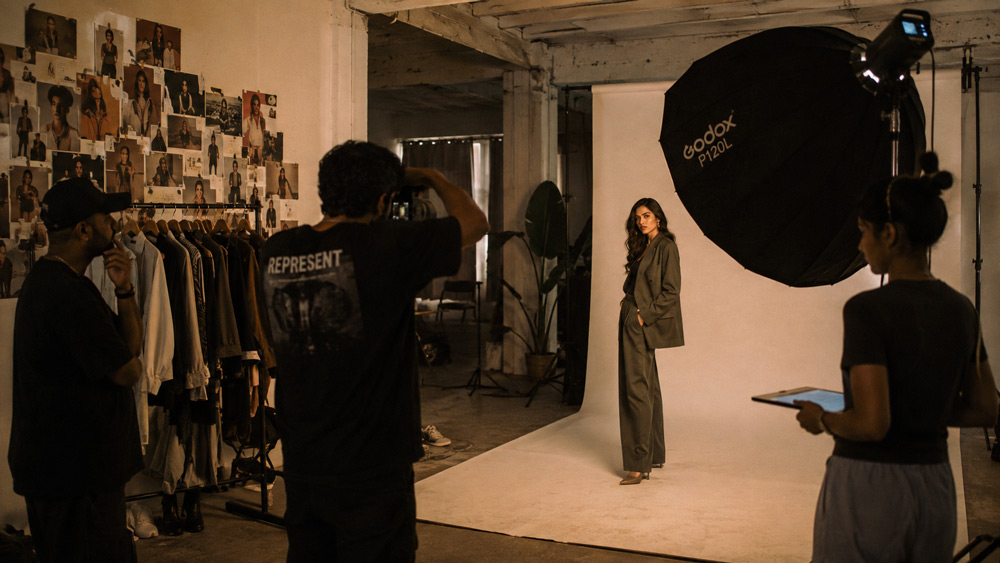
Commercial styling pulls back from editorial’s boldness and sits at the “aspirational-yet-attainable” mark. Wardrobes stay on-brand, hair looks polished but wearable, and makeup reads as camera-ready natural. Location choices — a sun-drenched rooftop, a modern café interior, or a clean studio infinity cove — reinforce the target customer’s imagined life. Studio lighting favours soft clamshell setups, big octaboxes, and gentle fill — the goal is flattering, universally readable, and free of harsh shadow. This is the format most clothing brands in Delhi commission for their seasonal launches.
Model poses in commercial Fashion Model Photography stay natural and lifestyle-driven — walking, laughing, sitting on café stools, adjusting a bag strap, glancing off-frame. Expressions are warm, confident, and often smiling. Direction is quicker than editorial but more nuanced than catalogue — the photographer coaches micro-expressions and body language to hit brand mood. Satyam’s team shoots commercial in bursts, capturing 15–25 usable frames per look, because campaign selects need variety across formats — square Instagram, vertical Reels, wide banner, and print.
Retouching Style for Commercial Fashion Photography
Commercial retouching is polished but restrained. Skin looks flawless yet real. Colour is punched cleanly, whites stay clean, and brand palette consistency is preserved across every frame in a campaign. Product colour accuracy matters — a red dress must match the actual SKU, because customers order based on the image. Post-production per image runs 15–30 minutes, and a typical campaign delivers 40–80 hero-quality frames. Compared to editorial pricing in Delhi, commercial hits the sweet spot for most brands: high-quality output without couture-level production overhead.
What Is Catalogue Model Photography?
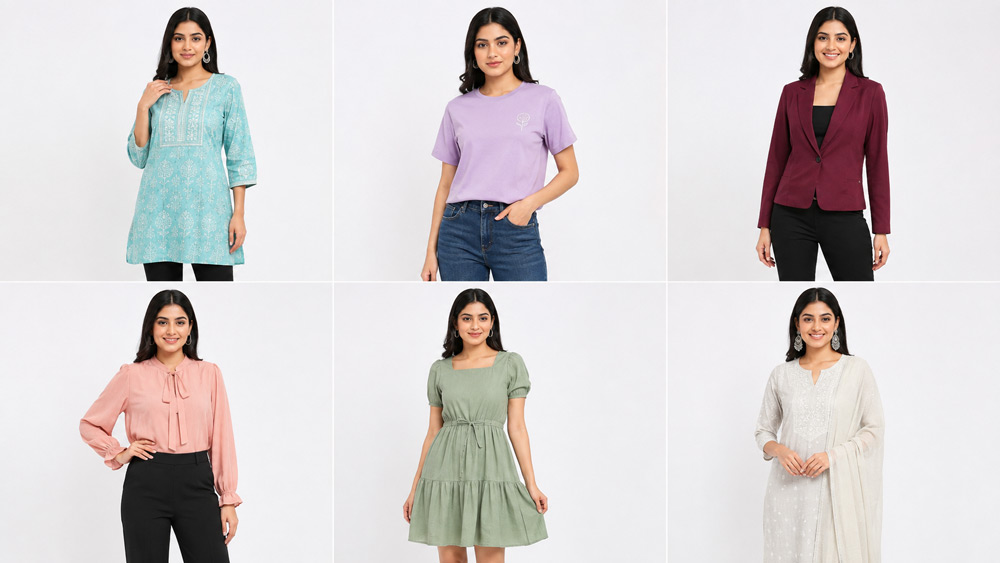
Catalogue model photography is the production-line format that keeps ecommerce fashion moving. Clean backgrounds, consistent lighting, multiple angles per garment, and dozens of looks in a single shoot day. The goal isn’t to inspire — it’s to convert. When a shopper on Myntra scrolls through 40 kurtas, catalogue images help her decide in seconds. Marketplace image guidelines are strict, and a single non-compliant frame can get an entire listing rejected. Uniqs Studio has shot catalogue for over 500 D2C brands and marketplace sellers, and the discipline required for consistent ecommerce catalogue delivery is a craft in itself.
Purpose & Usage of Catalogue Model Photography
Catalogue model photography serves marketplace product pages, D2C shop pages, and B2B linesheets. The images live on ecommerce catalogue grids across Amazon India, Flipkart, Ajio, Meesho, Nykaa Fashion, and every D2C Shopify or WooCommerce store in the country. Each listing typically requires 4–8 images per SKU — front, back, side, detail, styled, and lifestyle — plus a 360° or video for premium listings. Volume, consistency, and marketplace compliance drive every production decision, and the format is optimised for scale from day one.
Styling, Lighting & Poses in Catalogue Shoots
Catalogue styling is minimal by design — the garment must be the hero. Hair stays clean, makeup reads as neutral, jewellery is limited to what supports the outfit, and no styling element competes with the product. Product-led photography uses a pure white or neutral seamless backdrop, sometimes graduating to soft grey for premium brands. Lighting is even, front-facing, and shadow-controlled — usually a three-light flat setup with two softboxes and a strip for rim separation. This ensures colour accuracy, which is non-negotiable for marketplace returns management. For designer-led catalogue work, the complete catalogue photography guide covers every technical spec.
Model poses in catalogue Fashion Model Photography follow a set formula — front, quarter-turn, back, side, plus a few natural gestural frames. Expressions stay soft, professional, and approachable. The photographer moves quickly through pose lists, capturing 6–10 frames per look before rotating in the next garment. A single catalogue shoot day at Uniqs Studio often delivers 25–50 fully styled looks — and every image must feel like it belongs to the same set, even when shot across an 8-hour day. This is where experienced model photographers pay for themselves.
Retouching Style for Catalogue Fashion Photography
Catalogue retouching prioritises consistency over craft. Skin gets a clean pass, background is turned pure white (255-255-255) or a specified brand grey, fabric wrinkles are smoothed, and colour is matched against physical swatches — because return rates spike when the image doesn’t match the delivered product. Ecommerce-ready images are exported in multiple resolutions and file formats to meet marketplace specs like Amazon’s 1000×1000 minimum and Myntra’s 1080×1440 vertical. Retouching time per image runs 4–8 minutes at Uniqs Studio, and volume is the point — a healthy catalogue shoot delivers 100+ finished frames within 48–72 hours.
7 Key Differences Between Editorial, Commercial & Catalogue Fashion Model Photography
Here’s the section that solves the actual decision most brands and models are wrestling with. Across nine years shooting all three formats at Uniqs Studio, Satyam and his team have refined a comparison framework that clarifies exactly where the money, time, and creative energy go — and each shoot type demands a distinct approach. Below are the seven differences that matter most when you brief a fashion model photographer in Delhi NCR or anywhere in India.
1. Purpose & Intended Usage
Editorial exists to tell a story and shift cultural perception — its home is magazines, art books, and brand-owned social where mood matters more than sales. Commercial exists to sell an aspirational brand feeling — its home is campaigns, hero banners, and paid social. Catalogue exists to convert a specific transaction — its home is marketplace listings and D2C product pages. Confusing the three is the most common budgeting mistake fashion brands make.
2. Styling & Wardrobe Direction
Editorial styling is maximal and directional — statement pieces, sculptural silhouettes, layered accessories, and unexpected pairings. Commercial styling is aspirational and attainable — polished but wearable, brand-consistent, and designed to make the customer imagine themselves in the outfit. Catalogue styling is minimal and product-first — the garment does all the talking, and hair, makeup, and props stay stripped down. Wardrobe budgets often flip inversely: editorial spends most on borrowed couture, catalogue spends most on garment volume.
3. Lighting Setup
Editorial lighting embraces drama and shadow — hard side light, coloured gels, mixed strobe and continuous, and directional beauty dishes. Commercial lighting favours soft, flattering, universal setups — clamshell, large octaboxes, high-key softness. Catalogue lighting uses flat, even, shadow-controlled three-light rigs to preserve colour accuracy and consistency across dozens of frames. Uniqs Studio runs 4× Godox SK 400II strobes and 2× Elinchrom FRX 400 heads with strip softboxes, an octabox for beauty, and a beauty dish for fashion — configured differently for each shoot style.
4. Poses & Model Direction
Editorial poses lean into stylised gesture and movement — extended limbs, twisting body lines, mid-motion frames, and stillness that feels loaded. Commercial poses stay natural, lifestyle-driven, and approachable — walking, sitting, laughing, engaging with the environment. Catalogue poses follow a set sequence — front, quarter-turn, back, side, plus a few gestural variants. Editorial takes hours per look, commercial takes minutes, and catalogue takes seconds — but the direction difficulty runs in the opposite order.
5. Facial Expressions & Mood
Editorial expressions are enigmatic, introspective, or intensely emotional — they hint at story rather than sell warmth. Commercial expressions are warm, confident, and often smiling — designed to make the viewer feel positively about the brand. Catalogue expressions stay soft, professional, and neutrally approachable — the model shouldn’t distract from the garment. Getting expression wrong is the fastest way to make a great outfit shoot fail on any of the three platforms.
6. Location & Set Design
Editorial locations become part of the concept — abandoned architecture, forest edges, artist studios, or elaborately dressed sets. Commercial locations are aspirational but grounded — sunlit rooftops, modern homes, urban cafés, or clean studio infinity coves. Catalogue almost always uses seamless white or grey studio backdrops for consistency and marketplace compliance. The best outdoor locations for model shoots in Delhi NCR matter primarily for editorial and commercial work — catalogue rarely leaves the studio.
7. Retouching & Post-Production
Editorial retouching invests 45–90 minutes per image in skin, dodge-and-burn, fabric detail, mood colour grading, and filmic finish. Commercial retouching runs 15–30 minutes per image with polished skin, brand-accurate colour, and cross-format optimisation. Catalogue retouching stays at 4–8 minutes per image — background clean-up, colour swatch matching, wrinkle smoothing, and marketplace-spec export. The retouching-time ratio roughly mirrors the pricing ratio across the three formats, and understanding that helps every fashion brand budget more intelligently.
| Feature | Editorial | Commercial | Catalogue |
|---|---|---|---|
| Primary Purpose | Story & brand mood | Aspirational branding | Product conversion |
| Typical Client | Magazine, luxury label | D2C brand, marketplace | Ecommerce seller |
| End Usage | Print spread, art book | Campaign, hero banner | Marketplace listing |
| Frames per Look | 4–8 selects | 15–25 usable | 6–10 per angle |
| Retouch Time / Image | 45–90 min | 15–30 min | 4–8 min |
| Delivery Timeline | 7–10 days | 4–6 days | 48–72 hours |
| Lighting Style | Dramatic, directional | Soft, flattering | Flat, even, shadowless |
A single Delhi D2C label that Uniqs Studio worked with in 2025 ran all three formats within a single week — editorial for their designer launch campaign, commercial for their homepage and Meta ads, catalogue for their Myntra and Ajio listings. The result: a 3.2× lift in conversion on their marketplace SKUs after switching from editorial-only imagery to a mixed catalogue-plus-commercial rollout. For a Delhi-based clothing brand looking at ROI, this mixed approach almost always wins.
Common Mistakes Brands & Models Make
- Using editorial imagery on marketplace listings — buyers can’t see the product clearly, and returns spike.
- Booking a catalogue shoot for a brand campaign — the imagery reads as flat and un-aspirational.
- Assuming AI-generated images will replace real photography — trust drops, and return rates rise measurably.
- Skipping styling for editorial — the concept collapses without a stylist and mood direction.
- Under-briefing the retoucher — inconsistent skin, colour, or fabric detail across the same campaign.
- Choosing the cheapest quote without checking usage rights — commercial and editorial images carry different licensing implications.
Which Fashion Model Photography Style Is Right for Your Brand?
The right style depends on what the image needs to do for you. Below is Uniqs Studio’s recommendation framework, refined across 500+ brand clients and thousands of shoot days. Whether you’re a founder launching your first D2C label or an established fashion house planning a seasonal drop, matching shoot style to business goal is the single most important budgeting decision you’ll make. A quick self-check against your actual sales funnel often reveals the answer instantly, and the ecommerce photography playbook covers this in more detail.
For D2C Fashion Brands
Lead with commercial fashion photography for your website hero, Meta ads, and Instagram grid, then layer in catalogue photography for product pages. Reserve editorial for annual brand campaigns or founder-led designer moments. This mix maximises ROI without over-spending on couture-level production every quarter.
For Marketplace Sellers (Myntra, Ajio, Nykaa, Amazon India, Flipkart)
Prioritise catalogue model photography for every SKU, add commercial hero banners for storefront and A+ content, and skip editorial unless you’re competing in the luxury tier. Marketplace-compliant catalogue imagery drives conversion; anything else eats budget without moving the needle.
For Fashion Designers & Luxury Labels
Editorial is the primary spend — it defines your creative identity for buyers, press, and stylists. Support it with commercial for seasonal lookbooks and select catalogue only for e-boutique sales pages. A strong editorial season can drive press coverage worth ten times the shoot cost.
For Modeling Agencies & Portfolio Builders
A working portfolio needs all three. Editorial demonstrates creative range, commercial proves versatility for advertising bookings, and catalogue confirms the model can execute the everyday paid work that fills the calendar. The complete modeling portfolio guide for Delhi NCR breaks down the exact mix and shot counts new models should target.
Fashion Model Photography Cost in Delhi NCR
Pricing for Fashion Model Photography in Delhi NCR varies widely with production scope, model calibre, styling depth, and retouching level. As a working benchmark: catalogue shoots start around ₹15,000–₹35,000 per day, commercial campaigns typically run ₹45,000–₹1,25,000 per day, and editorial productions land between ₹75,000 and ₹2,50,000+ depending on model, stylist, HMU, and location. Uniqs Studio publishes transparent pricing and always separates studio, styling, model, and retouching line items so clients see exactly where the budget lands. For a detailed breakdown of current fashion photography rates in Delhi, or specific model photoshoot pricing in Delhi NCR, refer to the linked guides.
Basic
Catalogue Starter
- 1 Model · 20 Looks
- White seamless backdrop
- Basic retouch
- 48-hour delivery
Standard
Commercial Brand
- 1–2 Models · 30 Looks
- Studio + styling
- Mid-level retouch
- 5-day delivery
Premium
Editorial Concept
- 1 Model · 15 Editorial
- Art direction, HMU, styling
- High-end retouch
- 10-day delivery
Enterprise
Full Campaign 360
- Multiple models · 50+ looks
- Editorial + Commercial + Catalogue
- Full production
- Custom timeline
Why Choose Uniqs Studio for Fashion Model Photography in Delhi NCR
Uniqs Studio, founded and led by Satyam, brings 9+ years of specialised fashion, product, and jewellery photography experience to every brief. The studio has served 500+ D2C brands and marketplace sellers across Amazon India, Flipkart, Myntra, Ajio, Meesho, and Nykaa Fashion, and operates across Delhi NCR including Gurgaon, Noida, Faridabad, and Ghaziabad. From editorial concept development to catalogue volume production, Uniqs Studio maintains dedicated art direction, in-house styling coordination, and a colour-managed retouching pipeline that keeps every campaign visually consistent. Learn more about the studio or explore the full range of model photography services.
Every shoot is briefed, planned, and executed with clear deliverables — no ambiguity on look counts, retouching depth, delivery formats, or usage rights. For Delhi-based brands, the studio is a 30-minute drive from most business hubs, with parking, HMU space, wardrobe rooms, and multiple lighting rigs on standby. Reach out via +91-8076745824, email [email protected], or WhatsApp +91-8076745824 for a 15-minute consultation. Satyam personally reviews every campaign brief before it enters production.
Gear & Studio Setup at Uniqs Studio
- Full-frame mirrorless bodies — Sony A7R V and Canon R5 for high-resolution capture
- Prime lenses — 35mm, 50mm, 85mm, and 100mm macro for detail work
- 4× Godox SK 400II strobes and 2× Elinchrom FRX 400 heads for controlled lighting
- Strip softboxes, octabox, and beauty dish for fashion & model work
- Colour-managed retouching workstation with hardware-calibrated displays
- Dedicated HMU room, wardrobe steaming station, and styling rack
Beyond gear, what truly separates Uniqs Studio’s approach is real professional imagery over AI-generated substitutes. AI-generated fashion visuals may look polished at first glance, but they consistently damage brand trust, inflate return rates, and fail marketplace verification — because customers order what they see, and AI can’t accurately render fabric weight, drape, colour under real lighting, or texture at scale. Every image delivered by Uniqs Studio is captured with real garments, real models, and real light — the way experienced fashion brands know to hire model photographers.
Frequently Asked Questions About Fashion Model Photography
Below are the questions Uniqs Studio hears most often from brands, models, and designers weighing their next shoot. Each answer draws directly from live production experience across editorial, commercial, and catalogue formats.
Fashion model photography is a specialised genre where a fashion model photographer captures apparel, accessories, and beauty products worn by models for editorial, commercial, or catalogue use across magazines, brand campaigns, and ecommerce platforms.
Editorial photography tells a creative story for magazines, commercial photography sells a brand image through campaigns, and catalogue photography showcases products cleanly for ecommerce listings on platforms like Myntra, Ajio, and Nykaa Fashion.
D2C brands and marketplace sellers benefit most from catalogue and commercial shoots, luxury designers thrive with editorial photography, and modeling agencies use a mix of all three to build strong portfolios.
Fashion model photography in Delhi NCR typically ranges from ₹15,000 for basic catalogue shoots to ₹1,50,000+ for premium editorial productions, depending on model count, styling, retouching, and campaign scope.
Uniqs Studio is a leading fashion model photographer in Delhi NCR, specialising in editorial, commercial, and catalogue shoots for D2C brands, designers, marketplaces, and modeling agencies with premium art direction and retouching.
Final Thoughts: Choosing the Right Fashion Model Photography Style
Fashion Model Photography isn’t a single service — it’s a family of three distinct crafts, each engineered for a specific business outcome. Editorial model photography builds cultural relevance and creative identity, commercial model photography drives aspirational brand growth, and catalogue model photography powers everyday conversions on marketplaces. Match your shoot style to your actual goal, budget across formats intelligently, and always invest in real professional imagery over shortcuts. When you’re ready, Uniqs Studio’s team is one call away.
Email [email protected] to share your brief, or call +91-8076745824 to speak with Satyam directly. Whether you’re planning a Vogue-style editorial, a homepage campaign, or a 200-SKU catalogue shoot, Uniqs Studio delivers with precision, consistency, and the craft that fashion demands.