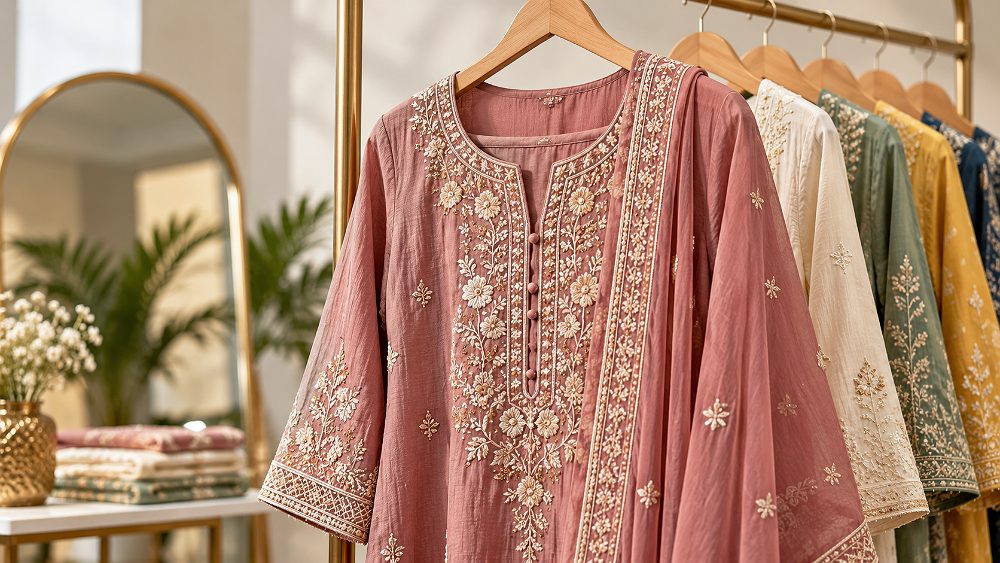
Myntra Seller Checklist 2026-2027: 50 Things to Check Before You Start Selling
A practical pre-launch audit for Indian D2C fashion brands, apparel manufacturers, designers, boutique owners and marketplace teams preparing documents, catalogue, photography, pricing, inventory and operations before selling on Myntra.
By Satyam · Uniqs StudioPublished 15 Sep 202622–26 min read
Pre-launch readiness works best when business data, catalogue assets and physical products are organised before onboarding begins.
Myntra Seller Checklist is most useful before a brand opens the launch calendar, not after listings are already delayed. Seller readiness is broader than registration: the business needs consistent documents, clear brand rights, accurate product data, marketplace-ready images, sizing, sustainable pricing, sellable inventory and a fulfilment process that can survive the first real order.
For detailed seller onboarding, account and marketplace context, use the Myntra seller guide. This article deliberately serves a different search intent: it is the pre-onboarding readiness audit. Sellers that still need account-creation steps can use the Myntra seller account registration guide after the readiness gaps are clear.
Direct answer
Before selling on Myntra, verify business documentation, brand rights, product compliance, catalogue information, photography, sizing, pricing and margins, stock, packaging, fulfilment, returns, seller-account access and final listing QA. Complete the checks in this Myntra seller requirements checklist before launch so operational gaps are found before they become live customer problems.
Myntra’s official seller page currently publishes onboarding-document and cataloguing prerequisites, while Seller Support publishes operational notices. Since marketplace policies can change, every dynamic rule in this Myntra onboarding checklist should be verified against current official sources. Myntra Partner Portal should be treated as the primary external reference for current seller onboarding information.
This Myntra seller readiness checklist groups 50 launch checks into ten areas. Work through them in sequence, but do not treat the numbering as an official Myntra approval score. It is an editorial readiness framework from Uniqs Studio designed to make a large seller setup easier to scan. A fashion brand may be strong in catalogue photography but weak in stock control; another may have documents ready but no contribution-margin model. The purpose is to make those gaps visible before launch.
Before a brand begins seller onboarding, the commercial plan should be clear enough to answer three questions: what will be sold, who will own marketplace operations, and what a successful first 30 days should look like. This part of the Myntra seller readiness checklist prevents teams from treating account creation as the launch itself. The account is only one layer; assortment, ownership, goals and catalogue capacity have to be ready behind it. Brands that also sell through Amazon or Flipkart should keep channel-specific requirements separate instead of assuming one listing template fits every marketplace.
01
Checklist 01 — Confirm Your Product Category Fits Your Myntra Strategy
Start by checking whether the planned product category, price band and assortment make sense for the customers the brand wants to reach on the Myntra marketplace. A Myntra product readiness checklist should begin with category-market fit, not document upload. Fashion, footwear, accessories, beauty and lifestyle teams should define which categories are launch priorities and which products can wait until the first catalogue has stable operations.
02
Checklist 02 — Define the Customer You Want to Reach on Myntra
Write a practical target-customer definition covering age band, use case, style preference, price sensitivity and key product problems. This improves product positioning, titles, imagery and assortment choices. If a brand also operates on Ajio or Meesho, the customer promise may still differ by channel. Keep Myntra positioning specific so the fashion brand does not copy a generic marketplace strategy into every catalogue.
03
Checklist 03 — Confirm You Have Enough Launch-Ready Products
A launch should have enough complete styles and variants to look intentional rather than unfinished. Audit every SKU for images, attributes, size data, price and sellable stock. The Myntra seller launch checklist should distinguish “designed” products from “launch-ready” products. A style is only ready when the team can list, fulfil, support and replenish it without improvising missing information after orders begin.
04
Checklist 04 — Set Clear Launch, Revenue and Catalogue Goals
Define a first-phase catalogue target, expected order volume range, revenue objective and operational service goals. Avoid treating the first month as an open-ended experiment. A practical Myntra seller setup checklist can include catalogue completion rate, live SKU count, stock availability, return reasons and listing-quality issues. For multi-channel brands using Shopify alongside marketplaces, keep one source-of-truth dashboard but review Myntra-specific KPIs separately.
05
Checklist 05 — Assign Ownership of Your Myntra Operations
Decide who owns the seller account, catalogue updates, inventory, pricing, customer-impacting exceptions, returns and finance reconciliation. Shared responsibility without named owners creates delays. The Myntra seller account checklist should record primary and backup team access, escalation contacts and approval authority. For smaller D2C brands, one marketplace manager can own several functions, but each daily task still needs an explicit owner and backup.
Readiness area 2 of 10
2. Myntra Seller Documents Checklist
Documentation should be organized before the onboarding form is started. Myntra’s current Partner Portal FAQ lists PAN Card, GSTN Certificate, Cancelled Cheque, Authorised Signatory Signature Copy, and an Original Trademark Certificate or Authorisation Letter/NOC on the brand owner’s letterhead among the documents required to start selling. Because requirements can change by entity, category or programme, treat this Myntra seller documents checklist as a readiness file and verify the latest portal instructions before submission.
Document consistency check: Compare legal business name, GST details, PAN details, bank information and registered/contact address from one approved master sheet before any upload. GST Portal taxpayer search can help verify taxpayer information where appropriate.
06
Checklist 06 — Keep Your GST Information Ready and Verified
Keep the GSTIN, registration certificate and legal business details ready in a shared onboarding folder. Cross-check the legal name and status through the official GST portal where appropriate. A Myntra seller documents required checklist should not rely on screenshots copied from old applications. Use current records and make sure the tax identity matches the entity that will invoice, receive settlements and operate the seller account.
07
Checklist 07 — Verify PAN and Business Identity Details
Check that PAN information, legal entity name and business constitution are consistent with the records used for GST and banking. Small spelling differences can create avoidable verification questions. The Myntra seller requirements checklist should include one internal “identity master” sheet containing the approved legal spelling of company name, trade name, registered address and authorised signatory so every onboarding field is copied from the same source.
08
Checklist 08 — Prepare Business Registration and Address Details
Collect the applicable business registration records and confirm the registered/contact address that the team intends to use. Warehouse or pickup details may be handled separately during operational setup, so do not mix those records casually. A clean Myntra onboarding checklist should tell the team which address belongs to legal identity, tax records, correspondence and fulfilment. This reduces confusion when marketplace, logistics and finance teams review the account.
09
Checklist 09 — Prepare Bank and Payment Details
Keep the seller bank account information and cancelled cheque ready, and make sure the beneficiary details align with the business identity used during onboarding. The Myntra seller account checklist should also name the finance contact responsible for settlement review and reconciliation after launch. Do not wait for the first payout cycle to decide who will investigate deductions, mismatches or payment questions.
10
Checklist 10 — Check That Details Match Across Your Documents
Run a document consistency check before uploading anything. Compare the business name, legal entity name, GST details, PAN details, bank information and registered/contact address line by line. Seller onboarding becomes harder when one file uses an old address or legacy trade name. This simple audit is one of the highest-value checks in the Myntra seller documents checklist because it catches errors before they enter a marketplace workflow.
Readiness area 3 of 10
3. Brand Approval, Ownership and Compliance Readiness
Myntra is a brand-led marketplace, so a seller should be prepared to show the right to sell the products being listed. The Myntra brand approval checklist needs to cover brand ownership, authorisation, trademark evidence and category-specific product compliance without presenting editorial advice as official approval criteria. Verify current instructions on the Partner Portal and use IP India resources when checking trademark records or filing status.
Verify brand evidence: Myntra’s official seller page currently lists trademark certificate or brand-owner authorisation/NOC among seller documents. For trademark search and filing information, use IP India’s official trademark resources.
11
Checklist 11 — Confirm Brand Ownership or Selling Authorization
Confirm whether the seller owns the brand or is authorised to sell it. If the business is a distributor, licensee or marketplace operator for another brand, prepare the relevant authorisation evidence. The Myntra brand approval checklist should identify the brand owner, the selling entity and the relationship between them. Unclear brand rights can become a serious onboarding or compliance issue later, so resolve them before catalogue production begins.
12
Checklist 12 — Prepare Trademark or Relevant Brand Evidence
Keep trademark certificates, application records or other relevant brand evidence organised and current. The official Myntra Partner Portal specifically references an Original Trademark Certificate or Authorisation Letter/NOC among onboarding documents. Separately, IP India provides official trademark search and e-filing resources. This does not mean every brand situation is identical; the seller should verify what evidence applies to its ownership structure and current onboarding route.
Create a category compliance folder for any statutory or marketplace requirements that apply to the products being sold. Beauty, personal care, footwear, jewellery and apparel may carry different labelling or regulatory considerations. The Myntra seller guidelines checklist should include a “source and last-checked date” beside each requirement, because category rules and marketplace processes are not permanent. Avoid copying an old seller checklist without verifying the current position.
14
Checklist 14 — Verify Product Labels and Mandatory Product Information
Audit physical labels, MRP, country-of-origin information and other mandatory product information applicable to the SKU before the catalogue is photographed or packed. Product compliance is easier when labels are final before the shoot. If labels change later, the images, product data or packaging workflow may need to be updated too. This check protects catalogue accuracy as well as marketplace compliance.
15
Checklist 15 — Audit Your Products for Authenticity and IP Risks
Review logos, artwork, licensed characters, prints, patterns, packaging and product names for potential intellectual-property risks. Marketplace compliance is not limited to the seller account; each SKU should be authentic and legitimately sourced. If the team cannot explain the ownership or authorisation behind a branded element, pause that listing and resolve the evidence first. This is especially important for multi-brand sellers and distributors.
Readiness area 4 of 10
4. Myntra Catalogue Checklist Before Product Upload
A strong product catalogue is a structured dataset, not just a folder of photos. The Myntra catalogue checklist should connect SKU logic, style codes, titles, attributes, descriptions, care information, tax fields and image assets so the listing team can work from one reliable source. Brands that also publish to Nykaa, Paytm or their Shopify store should maintain channel-specific export sheets while keeping the core product master consistent.
Catalogue QA field
What to verify
SKU / style code
Unique, stable and mapped to the physical variant
Product name
Correct category and distinguishing product facts
Colour / material / pattern / fit
Matches label, sample and photography
Care / origin / MRP
Current and consistent with product records
HSN / GST data
Use applicable tax data maintained by the business
16
Checklist 16 — Create a Clean SKU and Style-Code System
Give every sellable variant a stable SKU and every design or parent style a consistent style code. Avoid codes that change when a product is moved between spreadsheets or photographers. A good Myntra product catalogue checklist links SKU, style code, size, colour and barcode/identifier information in one row structure. This also helps inventory management, returns investigation and image matching after the catalogue grows.
17
Checklist 17 — Prepare Accurate Product Titles
Build titles from verified product facts rather than keyword stuffing. The title should reflect the actual category, gender/use, product type and distinguishing attribute where relevant. Keep a controlled naming format so similar products do not get inconsistent title structures. Product catalogue accuracy matters more than creative copy here; the listing team should be able to trace every title back to the SKU master and physical product.
18
Checklist 18 — Complete Every Important Product Attribute
Fill material, colour, pattern, fit, occasion, sleeve, neckline and other relevant product attributes from real product specifications. Do not infer missing attributes from the photograph. Good catalogue data improves filtering and reduces internal corrections. If the same product is published on several marketplaces, maintain a master attribute dictionary and map it to each platform’s allowed values instead of rewriting facts independently.
19
Checklist 19 — Write Accurate Product Descriptions and Care Information
Descriptions should explain the product clearly without inventing benefits that the product does not support. Include verified material details, construction notes and care instructions where applicable. A Myntra catalogue checklist should flag any description that conflicts with the label, size chart or photography. Consistency across copy and visuals is especially important for clothing because shoppers use both together to estimate fabric, fit and use case.
20
Checklist 20 — Perform a Catalogue Data Quality Audit
Before upload, review a sample and then the full catalogue for missing fields, duplicate SKUs, inconsistent colour names, wrong size mapping, old MRP values and image-file mismatches. Treat catalogue quality as a launch gate. A product should not move to “ready” because most fields are complete; critical data must be complete for every active variant that the team expects to sell.
Readiness area 5 of 10
5. Myntra Product Photography and Image Readiness
Photography is where product reality becomes marketplace evidence. Myntra’s Partner Portal says sellers need brand tag details, accurate product sizing details and article images for cataloguing that meet Myntra specifications and guidelines. Because image requirements can vary by category and can change, this Myntra catalogue photography checklist focuses on production readiness and quality control rather than publishing fixed dimensions that may later become outdated.
Plan texture, colour and construction detail before the batch shoot so every image has a catalogue purpose.
Uniqs Studio photography check
Before marketplace-ready exports leave the studio
From a catalogue-production perspective, Uniqs Studio checks colour representation, consistent lighting, garment shape and fit, clean backgrounds, texture visibility, styling, framing and retouching restraint. Large batches are easier to manage when the garment photography workflow is planned around SKU order and when model-led products have a repeatable model photography setup. For marketplace images, the product must still look like the product the customer will receive.
21
Checklist 21 — Confirm Current Image Requirements for Your Category
Before the shoot, verify the current Myntra product photography requirements for the specific category and product type. Do not rely on an old PDF or another seller’s export preset. Record the date the team checked the requirement and the source used. This is essential for a Myntra product listing readiness checklist because cropping, background treatment, view requirements or file specifications can change and may differ by category.
22
Checklist 22 — Plan the Correct Photography Style for Each Product
Decide whether each SKU needs model photography, clean product-only imagery, flat lay, mannequin, detail frames or a combination. The photography style should help the shopper understand shape, fit, material and use. For apparel, the team can review Uniqs Studio’s fashion photography for Myntra guide before finalising the shot plan, while keeping the current category specification as the final marketplace reference.
23
Checklist 23 — Capture Essential Product Views and Details
Build a shot list that covers the complete product, key construction details, texture, closures, back view and any feature that affects buying confidence. Product images should correspond to the exact SKU and variant being listed. For clothing, model poses and angles can be planned in advance so production remains consistent across a large catalogue.
24
Checklist 24 — Keep Lighting, Colour and Styling Consistent
Use repeatable lighting, white balance, camera position, styling and framing across the catalogue. Colour accuracy is particularly important when multiple shades belong to one style. Uniqs Studio treats colour matching and garment shape as quality-control tasks, not just editing choices. Brands preparing a larger clothing catalogue can also use the fashion catalogue photography guide to plan production batches efficiently.
25
Checklist 25 — Complete Image Quality Control Before Upload
Inspect final exports for focus, colour, background cleanliness, edge quality, garment shape, visible defects, inconsistent crops and over-retouching. Retouching should improve presentation without changing the actual product. Before upload, match the filename or asset ID back to the SKU master. Uniqs Studio recommends a final image QA pass separate from the retoucher’s own check so catalogue mistakes are caught before marketplace submission.
Readiness area 6 of 10
6. Size Chart and Product Information Readiness
Sizing problems quickly become customer-expectation problems. A Myntra size chart checklist for clothing brands should be built from actual measurements, consistent size naming and verified variant mapping. Visuals, fit descriptions and size data should support one another. If the model image suggests an oversized silhouette while the product data says slim fit, the listing creates ambiguity even when every field is technically filled.
26
Checklist 26 — Build Accurate Product Size Charts
Create size charts from the measurements that actually apply to the product range. Distinguish body measurements from garment measurements where relevant and use a consistent measurement method. A Myntra size chart checklist should identify who measured the sample, which size was checked and when the chart was last updated. Avoid copying a generic chart across styles that use different blocks, fits or construction.
27
Checklist 27 — Standardize Size Naming Across Your Catalogue
Choose a controlled size naming system and use it consistently in the product master, inventory, labels and listings. Mixing “M” with “Medium” or numeric systems without mapping creates avoidable variant errors. Standardisation is especially important when catalogues are exported to Amazon or Flipkart as well, because each marketplace may use different accepted values even though the underlying product size remains the same.
28
Checklist 28 — Verify Measurements Against Actual Products
Measure physical samples and compare them with the chart before launch. Use a defined tolerance policy internally rather than assuming production is always exact. Product measurements should be checked again after a major vendor, pattern or construction change. This step is a practical part of how to prepare products for Myntra because incorrect sizing data can create avoidable customer dissatisfaction and returns.
29
Checklist 29 — Check Colour and Variant Mapping
Confirm that every colour and size variant points to the correct SKU, inventory record and image set. Variant mapping errors are easy to miss in spreadsheets and expensive to correct after launch. A simple catalogue accuracy check is to select random live-ready rows and physically trace the SKU to the product, colour name, size label, photos and stock quantity before approval.
30
Checklist 30 — Audit Material, Fit and Product Specifications
Review material composition, fit language and product specifications against the label and the actual sample. Do not use “cotton,” “stretch,” “oversized” or similar descriptors unless they are accurate. The Myntra product readiness checklist should treat these fields as purchase-decision data, not filler. The goal is a listing where product copy, size guidance and images describe the same item without contradiction.
Readiness area 7 of 10
7. Myntra Seller Pricing and Profit Checklist
A product can sell well and still lose money if the contribution margin was never modelled. The Myntra seller pricing checklist should therefore be completed at SKU level before launch. Use current commercial terms, seller-dashboard information and actual operating costs rather than a universal commission assumption. The same discipline is useful on Amazon, Flipkart and Ajio, but the charge structure and commercial agreement should be treated separately for each platform.
Profitability checkNet Realisation − Product Cost − Packaging Cost − Current Marketplace/Applicable Charges − Fulfilment/Operating Cost − Expected Return Cost Allocation − Promotional Cost = Contribution MarginUse the seller’s current commercial agreement and live dashboard for exact charges rather than universal assumptions.
31
Checklist 31 — Set the Correct MRP for Every SKU
Verify the MRP in the product master against labels, tax records and the intended listing. Do not let old seasonal sheets overwrite a revised value. The Myntra seller pricing checklist should record MRP by SKU and effective date so the catalogue and finance teams work from the same number. A mismatch between label, listing and internal sheet can create operational and compliance complications.
32
Checklist 32 — Define Your Minimum Sustainable Selling Price
Calculate the minimum selling price the business can accept without breaking its contribution-margin target. Include product cost and the operating costs that remain even during discount periods. This floor helps the team evaluate promotions instead of approving them emotionally. It should be documented per SKU or margin group and reviewed whenever sourcing, packaging, fulfilment or marketplace commercial terms change.
33
Checklist 33 — Account for Marketplace and Operating Costs
Model current marketplace/applicable charges, fulfilment costs, packaging, payment-related adjustments, operational labour and expected marketing spend. For detailed planning, use the Myntra seller fees and profit guide, but verify exact charges against the current agreement and seller dashboard. Teams that also sell on Amazon should keep a separate model rather than copying one platform’s fee assumptions into another.
34
Checklist 34 — Build Discounts and Returns Into Your Margin Model
Stress-test profitability at realistic discount levels and include an expected cost allocation for returns. A Myntra seller profit checklist should show how contribution margin changes during promotions, not just at full selling price. If returns are material, model reverse-logistics and reprocessing effects too. This makes pricing decisions more resilient and helps the business understand how much promotional flexibility each product actually has.
35
Checklist 35 — Calculate Contribution Margin and Break-Even
Use a consistent SKU-level formula: net realisation minus product cost, packaging cost, current marketplace/applicable charges, fulfilment and operating cost, expected return-cost allocation and promotional cost equals contribution margin. Then estimate how many units are needed to recover launch or catalogue production costs. The objective is not a universal profit benchmark; it is a transparent decision model using the seller’s own current terms.
Readiness area 8 of 10
8. Myntra Inventory Checklist Before Launch
Inventory readiness is not simply “stock available.” A Myntra inventory checklist should know what is sellable by SKU, size and colour, how quickly stock can be replenished, and how mismatches will be prevented. Fashion catalogues are especially sensitive to broken size curves: a style may appear well stocked in total units while the most demanded sizes are already unavailable.
36
Checklist 36 — Confirm Sellable Stock by SKU, Size and Colour
Count sellable units at variant level rather than style total. Separate damaged, sample, QC-hold and unavailable stock from inventory that can actually fulfil orders. A Myntra inventory readiness checklist should connect each live SKU to a quantity the operations team trusts. For apparel, review the size curve so launch stock is not concentrated only in slow-moving variants.
37
Checklist 37 — Create Minimum Stock and Safety-Stock Levels
Set a minimum stock level and practical safety stock for products that can replenish quickly. The right threshold depends on demand, lead time and production reliability, so avoid a single number for every SKU. The purpose is to give the team an action point before a product reaches zero. Document who receives the alert and who can approve replenishment.
38
Checklist 38 — Know Your Replenishment Lead Time
Record how long each supplier or internal production team needs to replenish a style, including fabric or component constraints where relevant. Inventory replenishment planning should use realistic lead time, not the best-case promise. This is particularly important for campaign periods because a fast-selling product can lose momentum if the catalogue remains live but key sizes disappear for weeks.
39
Checklist 39 — Plan How You Will Handle Slow and Fast Movers
Define actions for fast-moving products, slow-moving inventory and styles that perform differently by size or colour. Fast movers may need earlier reorder triggers, while slow movers may need merchandising, pricing or assortment decisions. A 30-day launch review should distinguish demand problems from availability problems. That prevents the team from discounting a product that was simply out of stock in the right variants.
40
Checklist 40 — Prevent Overselling and Inventory Mismatches
Document how stock will sync between Myntra and other sales channels. If the same physical inventory is also sold on Shopify, Amazon or an offline counter, a delayed update can create overselling. The Myntra inventory checklist should include the source of truth, sync frequency, manual fallback and reconciliation owner. Inventory accuracy is an operations control, not just a software setting.
Readiness area 9 of 10
9. Myntra Packaging, Fulfilment and Returns Checklist
Packing and returns should be designed before the first order arrives. Myntra Seller Support can publish operational updates that affect packaging and claims. As checked in September 2026, its support homepage carried a notice asking sellers to transition to 100% recyclable, serialized poly bags before 15 August 2026 and also highlighted current SPF claim process requirements. Because these instructions evolve, verify the latest support notice and Partner Portal workflow before procuring packaging or finalising SOPs.
Verify current Myntra requirements: Operational rules can change. Check Myntra Seller Support and the Partner Portal before final packaging procurement, SPF preparation or fulfilment changes.
41
Checklist 41 — Prepare Suitable Product Packaging
Select packaging that protects the product, supports current marketplace requirements and can be executed consistently at order volume. The Myntra packaging checklist should document approved packaging materials, size options and procurement lead time. Reconfirm the latest official packaging instruction before ordering in bulk. What was acceptable in an old seller manual may not reflect a current operational notice.
42
Checklist 42 — Set Up Packing, Label and Invoice QA
Create a simple packing-station check that verifies product, size, colour, quantity, shipping label and invoice/required documentation before closure. Fulfilment quality control is strongest when the packer follows a visible sequence rather than memory. Use barcode or SKU scanning where practical, but keep a manual exception procedure for damaged labels, duplicate codes or system downtime.
43
Checklist 43 — Create a Pick-Pack-Dispatch SOP
Write the order fulfilment workflow from order receipt to pick, QC, pack, handover and dispatch confirmation. Include cut-off times, exception handling and escalation ownership. This is especially important when one warehouse processes orders for several marketplaces. The team should know which steps are universal and which are Myntra-specific, rather than mixing Amazon, Myntra and Flipkart procedures into one unclear SOP.
44
Checklist 44 — Build a Pre-Dispatch Product Quality Check
Inspect the actual product before dispatch for stains, damage, wrong size, missing accessories, packaging issues and other category-relevant defects. The pre-dispatch inspection should be fast enough to scale but specific enough to prevent avoidable returns. Record recurring failure reasons; if the same defect appears repeatedly, correct the upstream receiving, storage or picking process instead of treating every case as isolated.
45
Checklist 45 — Prepare a Returns and Reverse-Logistics Process
Define who receives returned products, how condition is documented, when stock can be resold, and how exceptions or seller-protection processes are handled. For current operational context, review the Myntra SPF claim and returns guide alongside official Seller Support. A Myntra seller return checklist should also track return reasons so catalogue, sizing and QC problems can be fixed at source.
Readiness area 10 of 10
10. Myntra Seller Launch Checklist: Final Five Checks
The final stage is not another planning exercise; it is a go-live control. The Myntra seller launch checklist should confirm that account access, listings, prices, inventory and monitoring routines are working together. A brand that has completed 45 earlier checks can still create customer-facing errors if the live SKU has the wrong price, old image set or zero stock in the intended launch variant.
Final launch QA should connect the live listing to the actual sellable stock and approved image set.
46
Checklist 46 — Audit Seller Account and Team Access
Confirm the seller account is accessible to the correct people, backup access exists, and unnecessary credentials are removed. Record who can change pricing, inventory, catalogue data and operational settings. The Myntra seller account checklist should also define the escalation contact if the primary marketplace manager is unavailable during launch. Access control becomes more important as agencies, interns or external operators join the workflow.
47
Checklist 47 — Preview Listings Before They Go Live
Preview every listing as a customer would see it. Check product title, images, colour, size, MRP/selling price, key attributes and description. The Myntra product readiness checklist should include a sample-based second reviewer for larger catalogues. If the launch team needs a current image-specific audit, the Myntra product photography and image guidelines guide can support the visual QA process.
48
Checklist 48 — Verify Live Prices and Inventory
Compare the intended selling price and stock quantity with what is actually visible in the seller system for a sample of SKUs and then expand the review. Pay special attention to recently changed prices and replenished variants. A launch readiness check should catch data-sync lag before marketing starts, because advertising a product that is unavailable or incorrectly priced wastes both budget and customer attention.
49
Checklist 49 — Create Your First 30-Day Launch Monitoring Plan
List the KPIs the team will review daily and weekly: live catalogue count, stock availability, order volume, cancellations, return reasons, price errors and listing issues. After the first data appears, use a structured growth review rather than reacting to one-day fluctuations. The Myntra seller growth guide can support the next phase once basic operational stability is achieved.
50
Checklist 50 — Run a Final Go/No-Go Readiness Audit
Complete the Myntra Seller Checklist one last time and mark any unresolved critical item. Do not launch because a campaign date is close if documents, catalogue accuracy, pricing, inventory or fulfilment controls are still uncertain. A final go/no-go meeting should assign an owner and deadline to every open issue. Launch only when the team understands the remaining risk and has consciously accepted or resolved it.
Editorial readiness framework
Myntra Seller Readiness Score: Are You Ready to Launch?
Use this score only as an internal planning framework. It is not an official Myntra approval score and does not predict marketplace acceptance. The value is operational: a team can quickly see whether the remaining gaps are minor launch QA issues or foundational gaps in documents, catalogue, pricing and fulfilment.
45–50Launch-ready: perform final account and catalogue QA.
38–44Nearly ready: resolve remaining operational or catalogue gaps first.
30–37More preparation required: prioritise critical documentation, catalogue, pricing and operations.
Below 30Complete foundational readiness work before planning launch activity.
A low score is not a judgement on the brand; it is a signal that launch risk is concentrated in unfinished work. For teams preparing to sell across multiple channels, the ecommerce platforms hub can help separate Myntra-specific readiness from broader marketplace planning.
Quick Myntra Seller Pre-Launch Checklist Table
Use this summary during an internal launch meeting. “Evidence to verify” means the proof or operational artefact the team should be able to show, not a document that Myntra necessarily asks to upload.
Area
Checks
Ready?
Priority
Evidence to verify
Business Readiness
01–05
□
High
Strategy + ownership
Documents
06–10
□
Critical
Verified business records
Brand & Compliance
11–15
□
Critical
Ownership / authorisation
Catalogue
16–20
□
Critical
Product data sheet
Photography
21–25
□
High
Final image assets
Size & Product Data
26–30
□
High
Verified measurements
Pricing & Profit
31–35
□
Critical
Margin calculation
Inventory
36–40
□
High
SKU-level stock
Fulfilment & Returns
41–45
□
Critical
Operations SOP
Launch QA
46–50
□
Critical
Final launch audit
Critical before launch
Common Myntra Seller Mistakes to Fix Before Launch
Most Myntra seller mistakes are not dramatic; they are small gaps that compound when a catalogue goes live. Starting onboarding before documents are organised can create verification friction. Inconsistent business details force teams to reconcile which version is correct. Weak SKU structures and incomplete attributes make the catalogue harder to maintain as variants grow.
On the product side, inaccurate size charts, poor colour representation and inconsistent catalogue photography create expectation gaps. Pricing without contribution-margin calculations hides how discounts and returns affect profitability. Launching with shallow variant-level stock makes popular sizes disappear quickly, while weak return and fulfilment SOPs leave the operations team improvising under pressure.
One mistake deserves special attention: treating marketplace requirements as permanently fixed. Myntra’s own support area publishes operational notices, which means packaging, claims or workflow instructions can change. Keep a “last verified” date on critical marketplace rules, and assign someone to recheck them before major launches or packaging purchases.
Documents organised before account submission
One approved legal/business identity master
Stable SKU and style-code logic
Complete product attributes and accurate size charts
Consistent, colour-accurate product photography
Contribution-margin model before discounts
Variant-level launch inventory
Written fulfilment, return and final listing QA
Why Catalogue Readiness Matters Before Selling on Myntra
A clean launch catalogue starts with repeatable product preparation and a controlled data-to-image workflow.
Catalogue readiness matters because product data and images are two views of the same SKU. If the colour name says navy but the image looks black, or the size chart describes one fit while the model image communicates another, the shopper receives conflicting information. Large catalogues magnify those inconsistencies quickly.
From a catalogue-production perspective, Uniqs Studio recommends finalising product preparation, size references, shot lists and file-naming logic before a large batch shoot. Brands comparing studio and location production can use the studio vs outdoor fashion photography guide, while teams building clothing listings can use the fashion photography for clothing brands guide to plan a consistent catalogue system.
For video-led fashion launches, the same source-of-truth principle applies. A garment video, reel and still-image set should represent the same colour, fit and product details. Teams can review the Myntra garment video guide or compare AI garment video vs real fashion shoots when deciding how motion assets will fit the launch workflow.
Catalogue production support
Preparing a fashion catalogue before marketplace onboarding?
Uniqs Studio works with ecommerce and fashion brands that need professional product photography, model catalogue shoots and marketplace-ready fashion imagery. Call Satyam on +91-8076745824, WhatsApp +91-8076745824 or email [email protected].
Final 24-hour check
Final 24-Hour Myntra Seller Launch Check
Within the last 24 hours before activation or a planned campaign push, stop changing the catalogue unless a change is necessary. Run a compact final check and document who signed off. This final Myntra seller launch readiness checklist is deliberately shorter than the full 50 points because it is meant to catch last-minute execution errors, not reopen strategic decisions.
Documents verified
Brand information verified
Catalogue data verified
Product images checked
Size information checked
Prices checked
Inventory checked
Packaging workflow checked
Return workflow checked
Seller account and listing access checked
If any critical item fails, assign an owner immediately and decide whether launch should pause. A rushed go-live can create more work than a short delay. Once the fundamentals are stable, move from readiness into growth planning rather than continuing to change the base catalogue.
Frequently Asked Questions About the Myntra Seller Checklist
These answers cover the most common questions sellers ask before selling on Myntra. They are planning guidance, not a substitute for current marketplace instructions.
Before launching, check business documents, brand authorisation, product compliance, catalogue data, product photography, size information, pricing, margins, inventory, packaging, fulfilment, returns and final listing quality. This Myntra Seller Checklist is designed to reveal gaps before go-live. For the full onboarding path, use the Myntra seller guide as the pillar resource.
The current official Myntra Partner Portal lists PAN Card, GSTN Certificate, Cancelled Cheque, Authorised Signatory Signature Copy, and an Original Trademark Certificate or Authorisation Letter/NOC among seller documents. Exact requirements can depend on the entity, brand and current onboarding route, so confirm the latest portal instructions before submission.
A seller should be able to demonstrate the right to sell the products being listed. Depending on whether the business owns the brand or sells for another owner, trademark, ownership or authorisation evidence may apply. Myntra’s current seller FAQ explicitly references a trademark certificate or brand-owner authorisation/NOC among the onboarding documents.
Prepare clear, consistent and colour-accurate product images for each SKU and important detail, then verify the latest category-specific Myntra product photography requirements before production and export. A seller can also review Uniqs Studio’s Myntra product photography image guide while using current official marketplace specifications as the final reference.
Calculate expected net realisation for each SKU and subtract product cost, packaging, current marketplace/applicable charges, fulfilment and operating cost, expected promotional cost and a reasonable return-cost allocation. The result is the contribution margin. Use current seller commercial terms instead of generic fee percentages, and stress-test the result at the discounts the brand may actually run.
Final Myntra Seller Checklist: Ready to Start?
Marketplace readiness is more than opening a seller account. A dependable launch connects five core pillars: verified documents, a clean catalogue, sustainable pricing, accurate inventory and repeatable operations. Product photography and sizing sit across those pillars because they turn the physical product into information that customers use to make a decision.
Use the 50-point Myntra seller readiness checklist to resolve critical gaps before launch, then move to the complete Myntra seller pillar guide for broader seller information. Brands planning professional catalogue production can speak with Satyam at Uniqs Studio on +91-8076745824 or email [email protected].
Next step
Prepare the catalogue before the deadline becomes urgent
Discuss ecommerce product photography, model catalogue shoots and marketplace-ready fashion images with Uniqs Studio. WhatsApp +91-8076745824 or call +91-8076745824.