
Meesho vs Flipkart for Sellers 2026-2027: 9 Honest Differences in Fees, Returns & Catalogue Rules
A practical, side-by-side look at what new clothing sellers actually pay, how much return risk they carry, and what each marketplace expects from your catalogue photos — so you can pick the right first marketplace with confidence.
Meesho vs Flipkart for sellers is the first big decision almost every new clothing seller asks us about at Uniqs Studio, usually while holding a sample kurti and a GST question in the same breath. Both marketplaces now charge zero commission on fashion, so the old “Meesho is free, Flipkart is expensive” answer no longer holds. The real differences sit in shipping and fixed fees, return exposure, GST rules, buyer price points and how strict each marketplace is about catalogue images. If you are still mapping out your Meesho journey, start with our Meesho seller resource hub, which collects every Meesho guide we have written in one place.
In this comparison, Satyam breaks down nine honest differences that matter to a new fashion seller in 2026-2027, from what a ₹499 kurti really earns to why returns hurt differently on each platform. You will also see who should start on Meesho, who should start on Flipkart, and how one well-planned photoshoot can feed both catalogues without paying twice. Every fee figure here is indicative; always confirm the live rate card inside your seller panel before you price a single style.
Key Takeaways
Short version for busy sellers: both marketplaces charge no commission on fashion now, so compare total deductions, returns and catalogue effort instead.
- Meesho suits non-GST beginners and low price points; Flipkart needs a GSTIN and rewards branded, better-presented catalogues.
- Flipkart extended zero commission to all fashion price points in July 2026, but fixed, collection, shipping and reverse logistics fees still apply.
- Returns are the biggest hidden cost on both, and accurate photos plus a correct size chart are the cheapest way to control them.
- One studio shoot planned for both image specs lets you list on Meesho and Flipkart from the same files.
- Most new clothing sellers do best starting on Meesho for 60–90 days, then adding Flipkart once their bestsellers are proven.
What is the real difference between Meesho and Flipkart for sellers?
The real difference is not commission any more; it is the buyer and the rules. Meesho is a value-first, mobile-first marketplace that lets non-GST suppliers sell through an Enrolment ID, while Flipkart is a broader marketplace that expects a GSTIN, tracks seller performance more tightly and gives better-presented catalogues more room to charge a fair price.
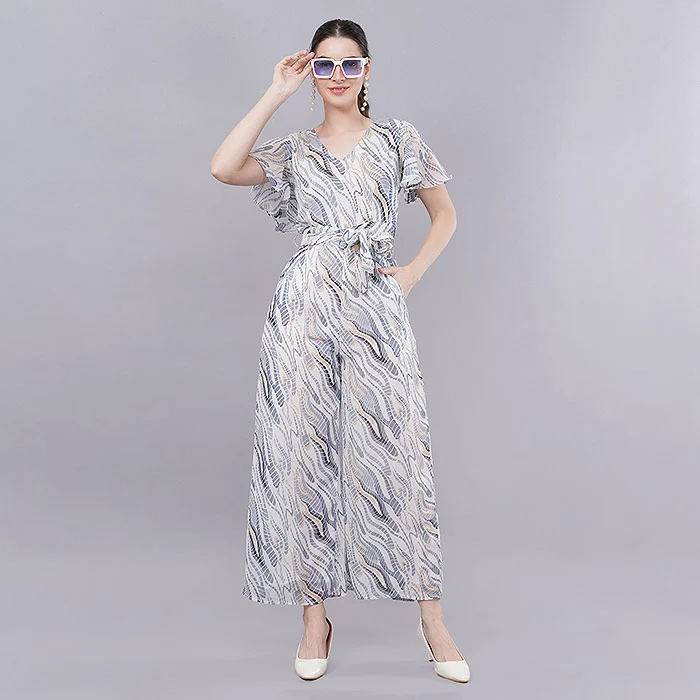
When we explain Meesho vs Flipkart for sellers in workshops, we say: think of Meesho as a fast, crowded street market where price and the first thumbnail decide the sale, and Flipkart as a large department store where a buyer compares ratings, brand names and photo quality before adding to cart. Both can work beautifully for a new fashion label. The question is which one fits your price band, paperwork and catalogue quality today, and the table below summarises the nine differences we see most often with sellers who walk into our Kalkaji studio.
| Factor | Meesho | Flipkart |
|---|---|---|
| 1. Commission on fashion | 0% across categories | 0% on all fashion since July 2026 |
| 2. Other fee lines | Weight and zone based shipping, reverse shipping on returns, GST on fees | Fixed (closing) fee, collection fee, shipping, reverse logistics fee, GST on fees |
| 3. GST requirement | GSTIN or GST Enrolment ID (non-GST route) | GSTIN needed for clothing |
| 4. Typical buyer | Price-sensitive, many smaller-town shoppers, high COD share | Wider mix, more brand and rating conscious |
| 5. Sweet-spot price band | Budget and value styles | Value to mid-premium styles |
| 6. Return exposure | High; reverse shipping hits low-margin styles hard | High in fashion; reverse logistics fee plus SPF claim process |
| 7. Catalogue QC | Simple but strict on overlays, watermarks and collages | More structured listing fields and image checks |
| 8. Payment cycle | Usually about 7 days after delivery | Tier based; faster for higher seller tiers |
| 9. Performance penalties | Late dispatch, cancellations and quality returns affect visibility | Per-order penalties for missed dispatch and cancellations after 3 months |
How do Meesho and Flipkart fees compare in 2026?
On paper both now take no commission on clothing, so your margin is decided by the other deductions. Meesho mostly deducts shipping by weight and zone plus GST, while Flipkart adds a fixed fee and a collection fee on top of shipping, which makes Meesho slightly cheaper per order on very low price points and the gap narrower as price goes up.
What does Meesho actually deduct from a fashion order?
Meesho keeps a 0% commission model for suppliers, and registration, listing and catalogue uploads are free. What you pay is forward shipping, charged by weight slab and delivery zone on delivered orders, plus 18% GST on those service charges. Non-GST sellers on an Enrolment ID cannot claim that GST back, so it becomes a real cost. We have mapped every slab, return charge and settlement rule in our detailed Meesho seller fees and shipping charges guide, so use that as your pricing sheet.
What does Flipkart charge after zero commission on fashion?
In July 2026, Flipkart extended its zero-commission policy from fashion items under ₹1,000 to all fashion products at every price point, as reported by Outlook Business. Commission is only one line, though. A Flipkart fashion order still carries a fixed fee that depends on price slab and seller tier, a collection fee on prepaid and COD orders, shipping based on actual or volumetric weight, and GST on each of these. Always open the live rate card on Flipkart Seller Hub before you set MRP and selling price.
How should you compare Meesho vs Flipkart for sellers on one product?
Do not compare headline fees; compare net settlement per delivered order after returns. Take the selling price, subtract every fee line for that marketplace, then subtract a return allowance (your expected return rate multiplied by reverse shipping plus the value of damaged or unsellable pieces). The marketplace with the higher number after returns is the better home for that style, even if its headline fee looks bigger.
- Selling price: what the buyer pays, inclusive of GST on the product.
- Fee lines: shipping on Meesho; fixed fee, collection fee and shipping on Flipkart; plus GST on all fees.
- Return allowance: expected return share multiplied by reverse shipping and lost stock value.
- Product and packing cost: fabric, stitching, polybag, tag and label.
- Net margin: the number left after steps 2–4, compared side by side.
Satyam’s pricing tip: many sellers price a ₹499 kurti for Meesho and copy the same price to Flipkart. Because Flipkart adds a fixed and collection fee, the same style often needs a small price lift there, which its buyers usually accept when the photos look more premium.
Which marketplace has higher return risk for clothing sellers?
Fashion returns are high on both, but they hurt differently. On Meesho, reverse shipping on a low-priced style can wipe out the margin of several delivered orders, while on Flipkart the reverse logistics fee is similar and the bigger risk is damaged or swapped items that need a well-documented SPF claim.
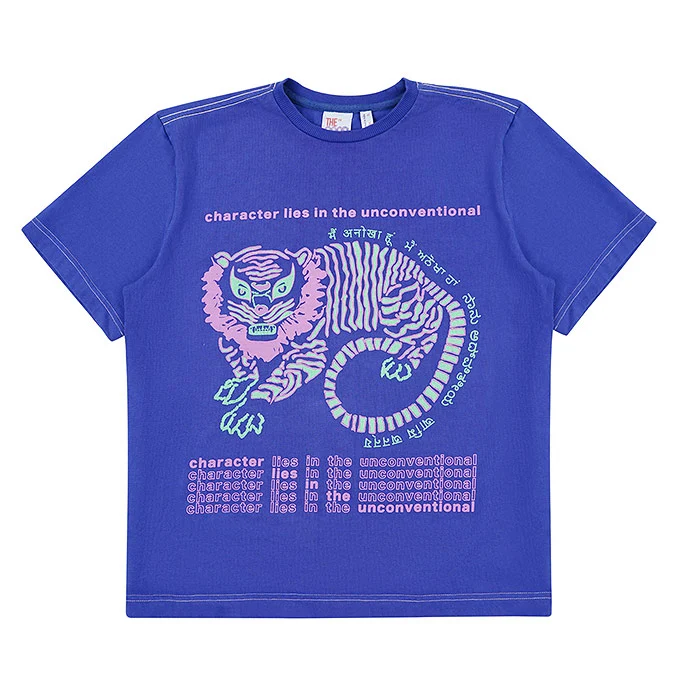
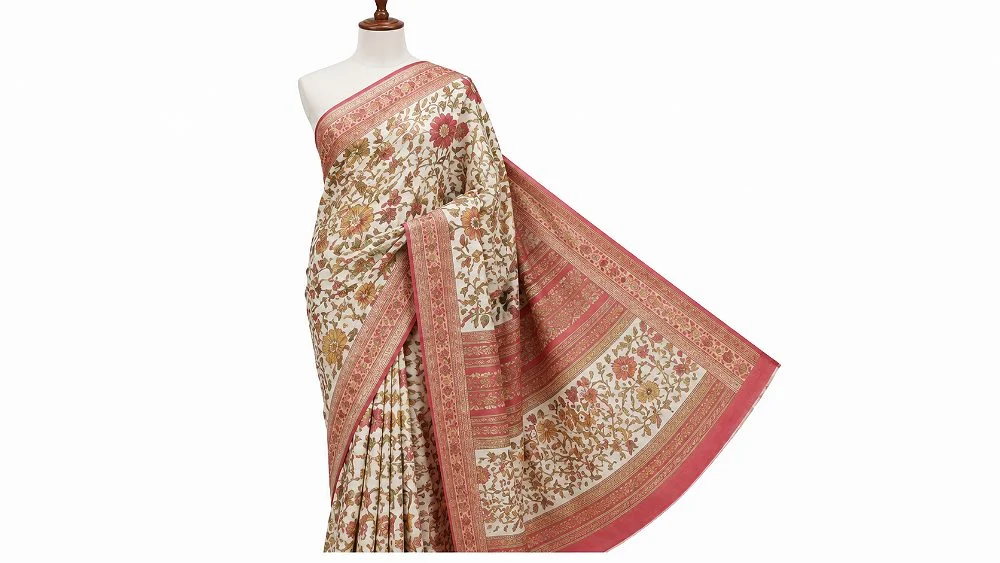
Most clothing returns we review with sellers trace back to three avoidable causes: the colour on screen did not match the fabric, the fit looked different from what arrived, or the size chart was wrong. None of these are marketplace problems; they are catalogue problems. That is why accurate, colour-true images are your cheapest insurance on either platform, and for shirts, kurtas and tops, ghost mannequin shots show the garment’s real shape and neckline without a model’s styling hiding the fit.
How do Meesho returns and RTO affect a new seller?
On Meesho, a customer return usually carries a reverse shipping charge, while an RTO (undelivered order) usually does not, but it blocks your stock and packaging for days. Because a large share of Meesho orders are cash on delivery, RTO can be meaningful for new sellers with unproven listings. Clear photos that show fabric texture, a real size chart and honest colour names are the first things to fix before you scale.
How do Flipkart returns and SPF claims work for fashion?
On Flipkart, commission is reversed on returned orders and the fixed fee applies only to delivered orders, but a reverse logistics fee still applies to returned shipments. When a returned item comes back damaged, used or swapped, you raise a seller protection (SPF) claim within the window shown in Seller Hub, backed by packing and unboxing evidence. Sellers who photograph every SKU properly before dispatch find these claims far easier to win.
How are catalogue and image rules different on Meesho and Flipkart?
Meesho’s image rules are simpler but strictly enforced on overlays: no watermarks, logos, prices, phone numbers or collage front images. Flipkart asks for more structured listing fields and a cleaner, more consistent image set, so a catalogue built to Flipkart’s standard almost always passes Meesho QC, but not always the other way round.
For Meesho, we recommend a 4:5 ratio for apparel (1200 × 1500 px), a plain white, off-white or light grey front image, and four to six images per product — front, back, side, one or two close-ups and a fit image. Our full checklist lives in the Meesho photography guidelines for catalogue QC. Flipkart expects the same honesty, a sharper main image on a clean background, consistent angles across colour variants, and correctly filled attributes such as fabric, fit and sleeve length in the listing itself.
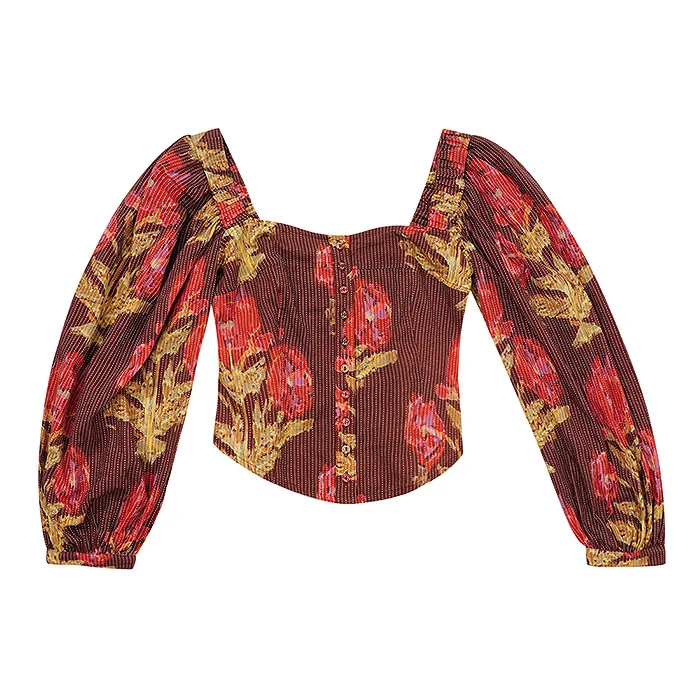
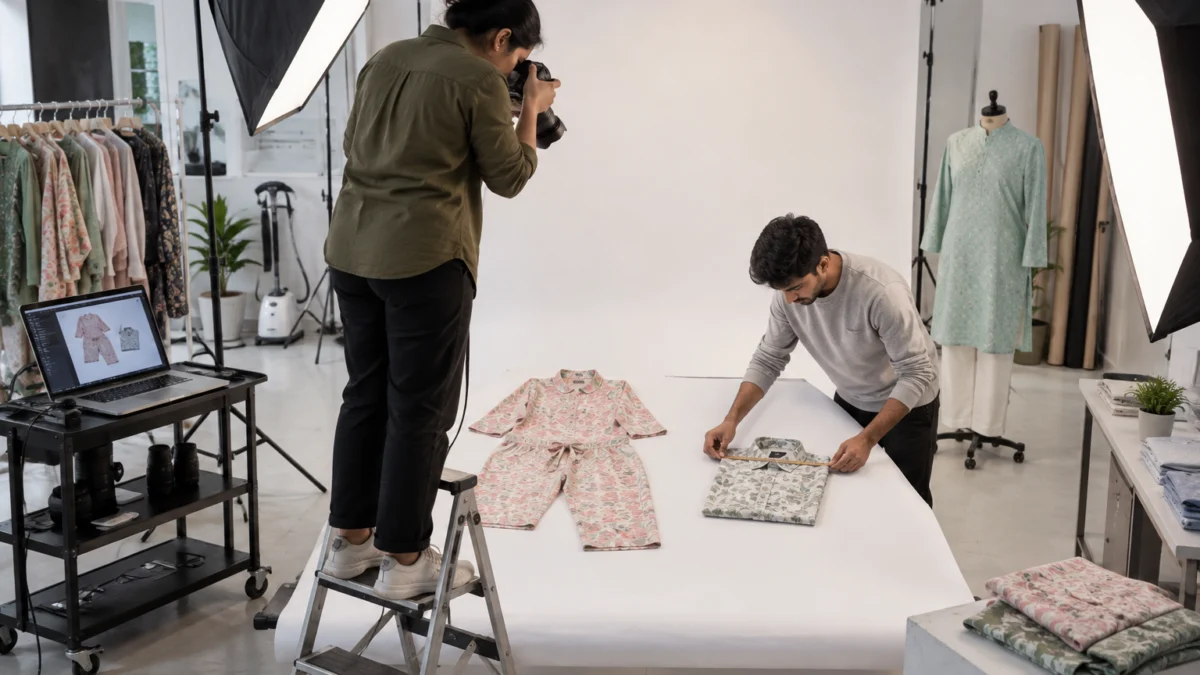
Kids’ wear, folded sets, combo packs and accessories often look best from above, and flat lay photography gives you neat, top-down shots that work for Meesho’s mobile thumbnails and Flipkart’s gallery alike. Short vertical videos help too: Meesho buyers scroll fast on phones, and a 20–25 second clip that shows fabric movement answers the “how will it look on me” question before the buyer orders.
What image mistakes get rejected on both marketplaces?
- Text, price tags, “best seller” badges or phone numbers on the front image.
- Collages or before/after splits used as the main image.
- Different backgrounds and crops across colour variants of the same style.
- Over-edited colours that do not match the real fabric.
- Images copied from a supplier or another seller, which can trigger takedowns.
Who should start on Meesho, and who should start on Flipkart?
Start on Meesho if you are a first-time seller, non-GST or selling budget styles and want to test demand with low setup effort. Start on Flipkart if you already have a GSTIN, a brand name, slightly higher price points and the operational discipline to dispatch on time every day.
| Your situation | Start on | Why |
|---|---|---|
| No GSTIN yet | Meesho | Enrolment ID route lets you sell intra-state while you sort GST. |
| Budget kurtis, nightwear, basics | Meesho | Value buyers and low fixed costs per order suit low price points. |
| Branded label, mid-range prices | Flipkart | Buyers compare brand and photos; better catalogues earn better prices. |
| Small manufacturer with steady stock | Both | Test styles on Meesho, scale proven bestsellers on Flipkart. |
| Reseller with no own photos | Neither, yet | Copied images risk takedowns; shoot your own catalogue first. |
For most first-time fashion sellers in Delhi NCR, our honest answer to Meesho vs Flipkart for sellers is simple: launch on Meesho for 60–90 days, learn which styles, sizes and colours actually sell, fix returns, and only then add Flipkart with your top styles. If you have not registered yet, our Meesho seller registration steps for GST and non-GST suppliers walk you through the panel screen by screen.
Can you sell on both Meesho and Flipkart with one photoshoot?
Yes, and it is the smartest way to control cost. Plan one shoot with both image specs in mind — a clean white-background front image, consistent back and side angles, close-ups and a short vertical video — and export two sets of files, one sized for each marketplace.
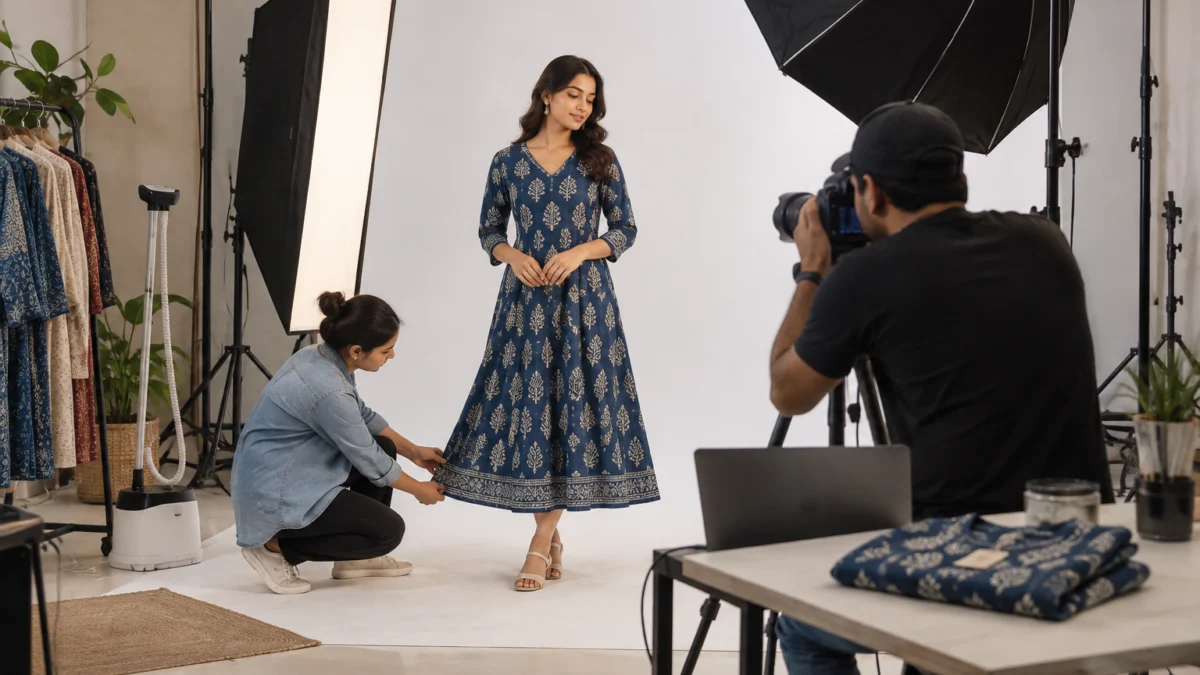
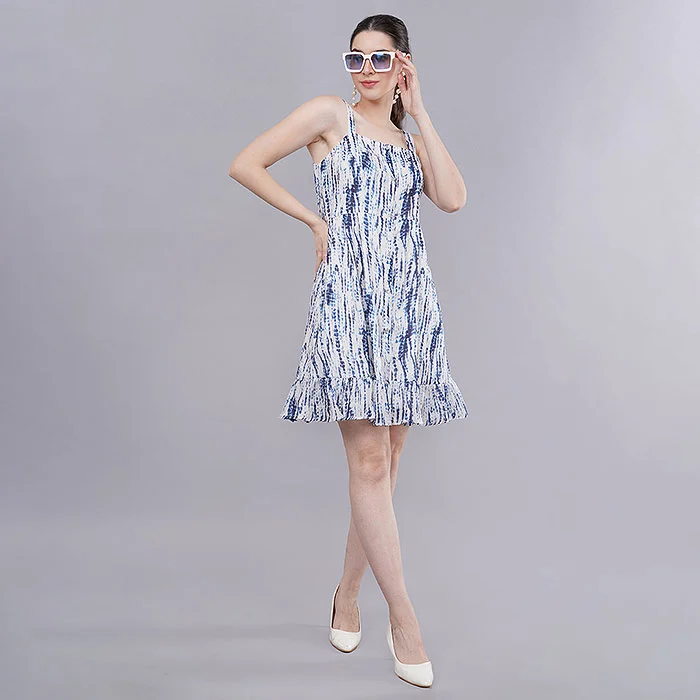
At Uniqs Studio, we plan these dual-marketplace shoots around a single shot list. The model frames come first, then detail shots, then flat or mannequin angles for the same SKU, so colour and lighting stay identical across every image. For womenswear labels that want buyers to see fit and drape, on-model fashion photography usually lifts Flipkart conversion the most, while the same frames, cropped to 4:5, keep Meesho thumbnails clean and consistent.
How much does a dual-marketplace catalogue shoot cost?
Uniqs Studio prices shoots per product or per image, so you pay once and use the files on every marketplace. These are our standard rates for the apparel shoot types most new sellers need:
| Shoot type | Images | Turnaround | Price |
|---|---|---|---|
| Ghost mannequin | 1 angle | 3–4 days | ₹250 / image |
| Flat lay | 2–3 angles | 6 days | ₹290 / product |
| Model Photography | 5–6 angles | 4–5 days | ₹400 / product |
| Ecommerce Reels Video | 20–25 seconds | 4–5 days | ₹900 / product |
| Garment Video with Model | 25–30 seconds | 4–5 days | ₹1,200 / garment |
Prices are per product/image as listed; call or WhatsApp +91-8076745824 for bulk catalogue quotes.
Planning your first catalogue for Meesho and Flipkart? Call Satyam on +91-8076745824 or send your style list on WhatsApp at +91-8076745824 for a shot list and quote.
What mistakes do new fashion sellers make when choosing between Meesho and Flipkart?
The most common mistake is choosing a marketplace on headline fees alone. Close behind are launching on both at once without the stock or dispatch discipline, and using supplier or phone photos that cause rejections and returns.
- Comparing commission instead of net settlement. With zero commission on both, the real gap is shipping, fixed fees and returns.
- Launching on both marketplaces in week one. Two panels, two dispatch deadlines and two return queues overwhelm a small team.
- Copying the same price everywhere. Each marketplace’s fee lines need their own price check.
- Skipping the size chart. Wrong or missing measurements are one of the biggest drivers of fashion returns.
- Using supplier photos. Duplicate images look untrustworthy and can lead to listing takedowns.
- Ignoring dispatch timelines. Flipkart now applies per-order penalties for missed dispatch and cancellations once a seller crosses three months.
How should you launch your first 30 days on Meesho or Flipkart?
Launch with a small, well-photographed catalogue, watch returns closely, and expand only what sells. Here is the 30-day plan we suggest to new clothing sellers who shoot with us.
- Days 1–5: Paperwork and panel. Register, add bank and pickup details, and decide GST or Enrolment ID route.
- Days 3–8: Pick 15–25 styles. Choose styles you can restock, in your strongest sizes and colours.
- Days 6–12: One professional shoot. Model front, back, side, close-ups, a flat or mannequin angle and one short video per hero style.
- Days 10–14: List carefully. Correct attributes, real size chart, honest colour names, no text on images.
- Days 15–30: Measure. Track orders, returns and reasons per style; drop or re-shoot what returns most.
Satyam’s insight from 9+ years in ecommerce shoots
After working with 500+ D2C brands and marketplace sellers, the pattern is clear: sellers who start small with a clean, consistent catalogue grow faster than sellers who upload two hundred styles with mixed photos. Marketplaces reward listings that convert and do not come back. Good images are not decoration; they are your returns policy, your brand and your first salesperson rolled into one.
Implementation checklist before you go live
- Net margin calculated for each style on the marketplace you chose.
- 4–6 images per product, same background and crop across variants.
- Size chart measured from the actual garment, not copied from a template.
- No watermark, logo, price or phone number on any image.
- One short vertical video for your top styles.
- Packing and unboxing video process ready for return claims.
What will change for Meesho and Flipkart sellers in 2026-2027?
For Meesho vs Flipkart for sellers, expect the commission war to shift into a quality war. With zero commission on fashion on both platforms, marketplaces will compete on delivery speed, return control and video-led discovery, and sellers with better catalogues and faster dispatch will win visibility.
Flipkart has also applied zero commission across Shopsy, its value app, which puts it in more direct competition with Meesho for budget buyers. Meesho continues to push video-led discovery and its supplier tools, documented on the Meesho Supplier Panel. For sellers, the practical takeaway is that short garment videos, colour-true photos and accurate size data will matter more each quarter, whichever marketplace you start on. If you want a broader view of shoot styles before planning, our comparison of ghost mannequin, model and flat lay images for marketplaces explains which style suits which product.
Frequently asked questions about Meesho vs Flipkart for sellers
Quick answers to the questions new clothing sellers ask us most often before choosing a marketplace.
For most first-time clothing sellers, Meesho is the easier start because it allows a non-GST Enrolment ID route, charges no commission and suits budget styles. Flipkart is better once you have a GSTIN, a brand name, slightly higher prices and reliable daily dispatch.
No. In July 2026 Flipkart extended zero commission to all fashion products at every price point. Sellers still pay a fixed fee, collection fee, shipping and reverse logistics fees, plus GST on those fees, so check the live rate card in Seller Hub.
For clothing, Flipkart requires a GSTIN to sell. Meesho allows eligible suppliers to sell within their state using a GST Enrolment ID, which is why many sellers without GST begin on Meesho.
Fashion returns are high on both. Meesho’s high COD share can raise RTO, while Flipkart’s main return risk is damaged or swapped items that need SPF claims. Accurate photos, true colours and a measured size chart reduce returns on both.
Yes, if they are your own photos on a clean background with no text, logos or collages. Shoot once with both specs in mind, then export a 4:5 set for Meesho apparel and the size Flipkart’s listing tool recommends.
At Uniqs Studio, ghost mannequin images are ₹250 per image, flat lay is ₹290 per product, model photography is ₹400 per product and an ecommerce reels video is ₹900 per product. The same files can be used on both marketplaces.
What is your next step after choosing a marketplace?
Once you have picked Meesho, Flipkart or both, the next challenge is keeping returns low while you grow. That is where most new sellers either protect their margin or lose it.
Your next step is to read our practical guide to cutting Meesho returns and RTO, which covers the listing, packing and photo fixes that keep more orders delivered. When you are ready to shoot, email [email protected] or call +91-8076745824, and the Uniqs Studio team will plan a catalogue that works on both marketplaces from day one.
Ready to build a catalogue that sells on Meesho and Flipkart?
Uniqs Studio is an in-house ecommerce, fashion and product photography and video studio in Kalkaji, New Delhi, shooting for sellers across Delhi, Gurgaon, Noida, Faridabad and Ghaziabad. Call Satyam on +91-8076745824, WhatsApp +91-8076745824 or write to [email protected]. Mon–Sat, 10 am–7 pm.