
Clothing Photography for Ecommerce Brands: 10 Proven Ways to Win Customer Trust in 2026
A trust-first, conversion-focused clothing photography playbook from Satyam and the Uniqs Studio team — Delhi NCR.
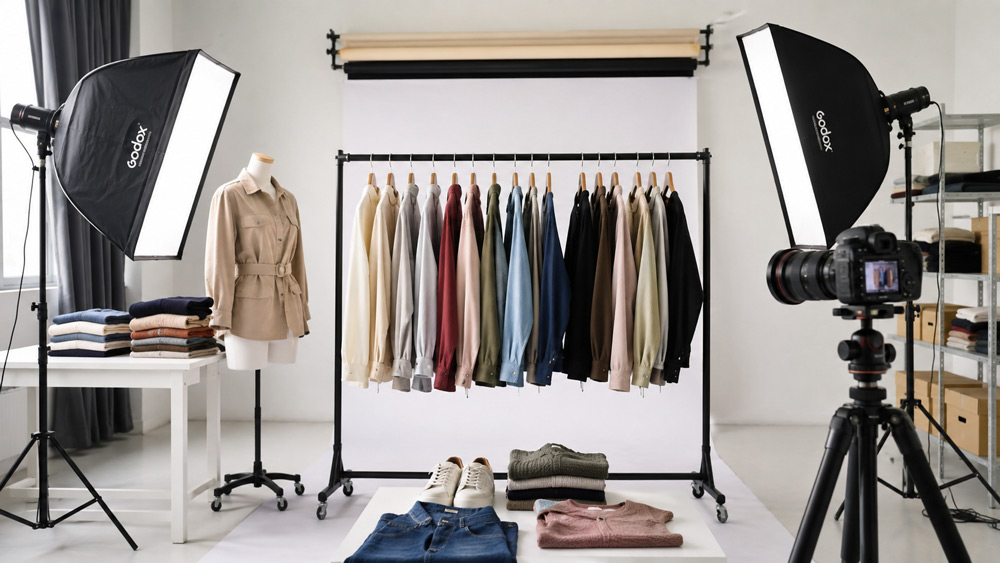
Every shopper landing on your product page makes a snap judgement — often in under a second — based on one thing alone: your images. In apparel ecommerce, clothing photography is no longer a design detail; it is the single most powerful trust signal your brand owns. At Uniqs Studio, Satyam has spent 9+ years watching the same story repeat across Shopify stores, Myntra listings and D2C brands: great garments quietly underperform because their ecommerce clothing images fail to earn buyer confidence. This guide shows you the exact clothing product photography rules, formats and workflows we use to build product images customers trust — and buy from — without hesitation.
- What Is Clothing Photography for Ecommerce?
- 10 Proven Ways to Create Clothing Photography Customers Trust
- Types of Clothing Photography Every Ecommerce Brand Needs
- Studio Setup — Lighting, Backdrops & Equipment
- Post-Production Workflow for Trustworthy Images
- How Clothing Photography Reduces Returns
- Marketplace-Specific Guidelines (India Focus)
- Clothing Photography Pricing in India
- Why Choose Uniqs Studio
- Frequently Asked Questions
- Final Thoughts
- Trust in apparel ecommerce is a visual signal — accurate colour, true fabric texture and consistent lighting drive it more than copy.
- The winning combination is ghost mannequin + flat lay + on-model — each answers a different shopper question.
- Consistent, marketplace-compliant clothing photography can cut fashion returns by 15–25% in a single quarter.
- Studio-grade lighting, calibrated colour and clean post-production separate professional apparel product images from DIY attempts.
- Uniqs Studio in Delhi NCR delivers ecommerce-ready garment images optimised for Shopify, Amazon India, Myntra and D2C stores.
What Is Clothing Photography for Ecommerce?
Clothing photography for ecommerce is the professional practice of photographing apparel — clothes, garments, outfits, attire — specifically for online sales, where images must sell the product without the customer ever touching it. Unlike editorial fashion imagery, ecommerce clothing photography is engineered around clarity, colour accuracy, silhouette and fit. At Uniqs Studio, we treat each garment as a conversion asset, not just a subject. The goal is not to look pretty — it is to show the truth beautifully, so the shopper can decide with confidence and the brand can protect its margin from returns.
The discipline covers everything from ghost mannequin shots that reveal invisible fit, to flat lay compositions that showcase styling, to on-model photographs that provide human scale. Together, these formats form a complete ecommerce clothing photography system. If you are new to the workflow end-to-end, our garment photography services page lays out the studio production model in detail, and our companion post on garment photography for ecommerce covers the pipeline step by step.
Why Trust-Building Images Matter More Than Ever
Online shoppers have grown sharper. They scroll fast, judge harder and abandon carts the moment something feels off. Research from usability labs like Baymard consistently shows that shoppers form a purchase judgement within the first few seconds — and ecommerce clothing images are the first thing they process. Weak imagery does not just lower conversions; it triggers doubt that no product description can rescue. Strong clothing photography, on the other hand, builds instant buyer confidence and gives your listing permission to command its full price.
The Business Cost of Poor Clothing Photography
Weak clothing photography quietly bleeds profit. Return rate climbs because customers feel misled, conversion rate drops because trust never forms, and repeat purchase collapses because the brand feels amateur. In Indian fashion ecommerce, apparel return rates often sit between 25–40%, and a meaningful chunk of that comes from unclear or misleading garment images. When Uniqs Studio migrates a brand from DIY to professional catalogue imagery, we typically see returns drop noticeably within one selling season — with no change to the underlying product.
10 Proven Ways to Create Clothing Photography Customers Actually Trust
Trust in apparel ecommerce is not a feeling — it is a checklist. Every trustworthy clothing photography image satisfies specific visual signals that shoppers subconsciously scan. Here are the ten rules Uniqs Studio applies to every clothing product photography brief, refined over hundreds of D2C and marketplace shoots.
1. Show True Color With Accurate White Balance
Colour is the number one reason apparel gets returned. If the shopper receives a shade that does not match the screen, the sale becomes a refund. Studio-grade clothing product photography starts with a calibrated grey card, controlled colour temperature and a monitor that renders true tones. At Uniqs Studio, every shoot begins with a white balance check against the physical fabric swatch, so the on-screen tone matches the parcel. Our fashion photography team treats colour accuracy as a non-negotiable, and the fashion photography for ecommerce workflow we publish walks through the exact calibration steps.
2. Capture Fabric Texture in High Resolution
Shoppers cannot touch your fabric, so your camera has to speak on its behalf. High-resolution capture of weave, sheen, drape and hand-feel is what separates premium apparel product images from flat, plasticky visuals. A tight macro or half-body detail shot instantly tells the buyer whether the garment is soft cotton, structured linen or silky viscose. This is where studio lighting and lens choice matter — a 90mm or 100mm macro paired with a soft key light reveals texture without harshness. If you want to see how this looks for close-quarters detail, the same discipline drives our macro photography for jewellery work.
3. Use Consistent Lighting Across the Full Catalogue
Nothing signals “unprofessional store” faster than a listing page where every product looks lit differently. Consistent softbox lighting, identical camera angles and a repeatable backdrop across every SKU makes your entire catalogue feel like one brand. Uniqs Studio locks lighting diagrams per client so the tenth garment shot on day seven looks identical to the first garment shot on day one. If you are still comparing environments, our post on fashion photography studio vs outdoor shoot breaks down why controlled indoor lighting is the safer default for catalogues.
4. Choose the Right Format — Ghost Mannequin, Flat Lay, or Model
Format is a strategic decision, not a stylistic one. Ghost mannequin works brilliantly for shirts, kurtas, dresses and structured wear because it shows silhouette without distraction. Flat lay suits knits, accessories and lifestyle bundles where styling and colour palette matter. On-model photography is essential for fit, drape and lifestyle context. Most winning listings use two or three formats together — and marketplaces increasingly reward brands that do. Our ghost mannequin photography service handles the invisible-fit look at scale, and the deep-dive comparison in ghost mannequin vs model vs flat lay for Amazon, Flipkart and Myntra shows exactly when each wins.
5. Show Fit From Multiple Angles
A single front-facing image is a trust killer. Customers need to see the back, the side, the neckline, the hem and how the outfit falls on a body. Best-in-class clothing product photography for ecommerce delivers a minimum of five to seven angles per SKU — front, back, side, three-quarter, close-up detail and a lifestyle shot. This is the same multi-angle standard we follow across our model photography service, and it aligns with how the top D2C brands photograph their catalogues.
6. Include Detail and Close-Up Shots
Buttons, zippers, embroidery, print quality, stitching, tags — these small details are what convert a browsing shopper into a confident buyer. Detail shots do the silent work of proving craftsmanship. In our studio, we allocate at least one dedicated close-up per garment, shot on a macro lens with soft frontal fill so the texture reads clearly. For heavier embellishment work, the same detail-first discipline runs through bridal wear ghost mannequin photography where zardozi and hand-embroidery must be visible.
7. Style With Realism, Not Over-Retouching
Aggressive retouching destroys trust. If the on-screen garment looks flawless and the delivered parcel shows normal weave and stitching, the review will punish the brand. Professional online clothing photography retouches for cleanliness — removing lint, hangers and dust — but preserves natural drape, real texture and honest fabric behaviour. Real photos always outperform AI-generated apparel visuals in the long run, because shoppers are getting better at spotting synthetic imagery. Always use real professional garment photography, not AI-generated substitutes — the trust delta compounds over time.
8. Follow Marketplace Image Standards Precisely
Amazon India, Myntra and Flipkart each publish specific image specs — dimensions, background colour, model policies, frame fill percentages and file size caps. Getting these wrong means listing rejection, delayed launches and lost sales windows. Uniqs Studio maintains a per-marketplace checklist so every delivery ships pre-compliant. Guidelines evolve, so we recommend cross-checking the official Amazon India Seller Central resources for the latest requirements before every bulk shoot.
9. Add Model Height, Size Worn, and Scale Reference
A tiny caption — “Model is 5’8″, wearing size M” — solves half the fit anxiety for a shopper. Scale references, whether human or object-based, help buyers translate a screen image into a physical expectation. This is one of the cheapest, highest-ROI additions any brand can make to its clothing photography output. The right context reduces “size didn’t fit” returns dramatically. If you are casting for these shots, our guide to choosing the best model photographer covers what to look for.
10. Deliver Optimized, Web-Ready Files (WebP + Correct Dimensions)
A beautiful image that takes six seconds to load is a bounced sale. Every ecommerce clothing images file we ship is exported in WebP plus a JPEG fallback, sized precisely to marketplace and Shopify requirements, and named descriptively for image SEO. Google’s official image SEO documentation confirms that filename, alt text and file weight all influence discoverability — three levers most brands forget to pull.
Types of Clothing Photography Every Ecommerce Brand Needs
Not every apparel category needs every format — but every mature clothing photography programme uses a deliberate mix. Understanding which style suits which product prevents wasted budget and inconsistent listings. Here is how Uniqs Studio maps garment categories to formats for D2C and marketplace clients.
Ghost Mannequin Photography
Ghost mannequin — sometimes called invisible mannequin — shows the garment with a three-dimensional shape but without any visible model or hanger. It is the workhorse of ecommerce apparel imaging for shirts, kurtas, dresses, jackets and structured innerwear. The result reads clean, modern and marketplace-ready. Learn more on our dedicated ghost mannequin service page, and see the pricing breakdown in ghost mannequin photography price in Delhi 2026.
Flat Lay & Knolling Shots
Flat lay photography arranges the outfit on a flat surface, shot top-down, often with complementary props, accessories or a styled background. It works beautifully for knitwear, loungewear, kidswear and lifestyle bundles where the whole “look” matters. It is fast to produce, budget-friendly and instantly Instagram-ready. Our flat lay photography service and the guide on choosing a flat lay photographer for clothing brands go deeper into styling technique.
On-Model Photography
Model shots deliver what no other format can — real human context, fit, movement and lifestyle emotion. They convert best for premium fashion, occasion wear, activewear and womenswear where drape and personality drive the purchase. On-model imagery does cost more, but for high-AOV categories, the conversion lift more than pays for it. Our model photographer service and the resource on model photography for fashion brands from casting to campaign walk through the entire process.
360° Spin & Video Product Views
360° spins and short product videos are the fastest-growing formats in ecommerce apparel. They show garment movement, back-view detail and fabric flow in one interactive asset — and marketplaces are starting to reward listings that include them. Video is especially powerful for sheer, flowy or structured garments where static images cannot capture drape. Our ecommerce video production team handles these end-to-end.
Clothing Photography Studio Setup — Lighting, Backdrops & Equipment
Great clothing photography is 60% lighting, 20% camera and 20% styling. Get the light right and everything else falls into place. Here is the equipment and setup discipline that runs every Uniqs Studio catalogue shoot.
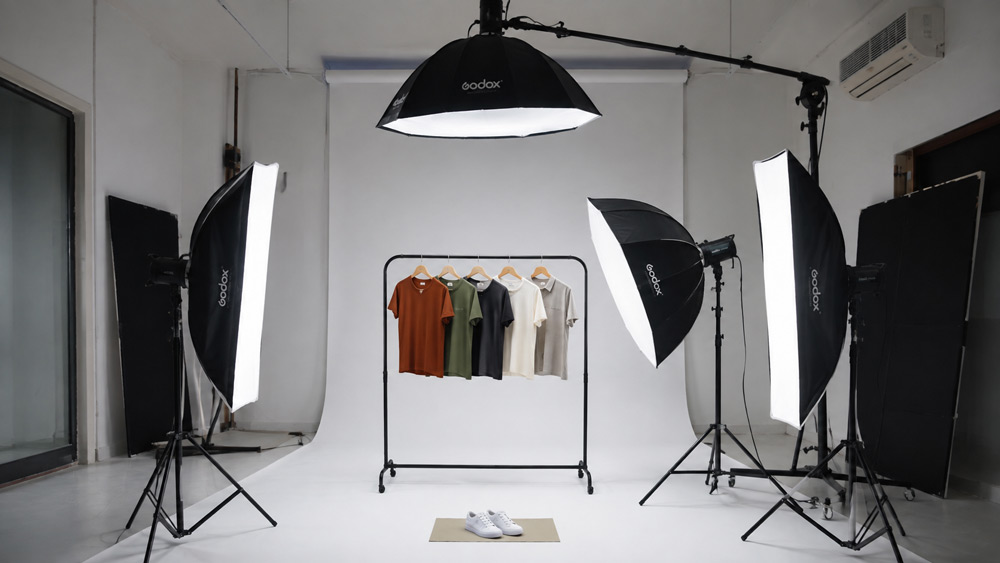
Ideal Lighting Setup for Clothing Product Photography
For flat, even clothing product photography we typically run a three-to-four light setup: two large softboxes as key and fill at 45° to the garment, a strip softbox as rim light for edge separation, and a reflector or bounce card underneath to lift shadows. Colour temperature is locked at 5500K daylight balance, and every light is metered so exposure stays identical from SKU to SKU. Uniqs Studio uses a combination of 400Ws studio strobes with strip softboxes and an octabox — the same discipline our team applies to fashion photography and editorial work.
Backdrop and Cyclorama Recommendations
For marketplace clothing photography, a pure white seamless cyclorama is the safest, most compliant choice — it clips cleanly, meets Amazon India RGB 255,255,255 spec and photographs consistently. For D2C and lookbook use, a soft warm-grey or ivory backdrop adds premium personality without competing with the garment. Backdrops must be spotless, wrinkle-free and lit separately from the subject so they render evenly across every frame.
Camera, Lens & Tethered Shooting Essentials
A full-frame mirrorless body — think Canon EOS R-series or Sony A7R — paired with a 50mm or 85mm prime for wider garment shots and a 100mm macro for details is the professional standard. Tethered shooting into Capture One or Lightroom is non-negotiable at Uniqs Studio: every frame is reviewed on a calibrated monitor in real time, so styling and exposure issues get fixed on set, not in post. This is a key reason our apparel product images ship faster and with fewer revisions.
Post-Production Workflow for Trustworthy Clothing Images
Post-production is where average clothing photography becomes ecommerce-grade. Every frame that leaves our studio moves through a four-stage pipeline built specifically to protect the truth of the garment. This is the same workflow used across the Uniqs Studio catalogue business for D2C brands, marketplace sellers and fashion labels.
Clipping Path & Background Removal
Each garment is cut cleanly from the background using pen-tool clipping paths — never automated background removal. The garment is then placed on a pure white or transparent layer, ready for marketplace upload or website integration. Clean edges matter especially for sheer fabrics, fur trims and delicate lace, where automated tools fail.
Color Correction & True-to-Fabric Editing
Colour is corrected against the on-set grey card reference and cross-checked with the physical fabric swatch. The screen tone must match the parcel tone. This step alone prevents a huge portion of colour-related returns and protects the brand’s review scores. Any tonal drift is corrected globally so the entire listing stays consistent.
Blemish Removal Without Losing Fabric Character
Lint, dust, stray threads and unwanted wrinkles are removed carefully while natural weave, drape and stitching are preserved. Over-retouching flattens fabric character and creates the tell-tale “AI look” that erodes trust. Our retouchers are trained to clean, not to sanitise.
File Naming, WebP Export & Alt Text SEO
Final files are exported in WebP with a JPEG fallback, sized to platform specs, and named descriptively — for example, “black-cotton-shirt-front-view.webp” — with focus-keyword-aware alt text. This delivers page-speed benefits, image SEO benefits and marketplace compliance in one clean pass.
How Clothing Photography Reduces Returns and Builds Buyer Confidence
Returns are the silent killer of apparel ecommerce economics. Every return absorbs shipping cost twice, restocking cost, quality inspection and often a discount cycle before the item resells. In Indian fashion ecommerce, return rates commonly hover between 25% and 40%, with the majority driven by three specific triggers — colour mismatch, size or fit surprise, and general “not as expected” disappointment. Clothing photography directly influences all three.
When Uniqs Studio migrates a D2C brand from mixed DIY imagery to standardised professional catalogue photography, the pattern is predictable. Colour returns drop first, usually within weeks, because calibrated screen tone stops setting false expectations. Fit returns drop next, once model height, size worn and multi-angle shots are added to every listing. “Not as expected” returns drop last but most meaningfully, because trustworthy product images customers trust reset the shopper’s mental model before the parcel arrives. Across our client base, we see meaningful return-rate reductions in the first quarter of a switch — often 15–25% relative improvement.
The compounding effect is even larger. Lower returns mean better marketplace ranking, higher inventory turnover, better reviews and stronger repeat-purchase behaviour. In this way, professional clothing photography stops being a cost line and starts behaving like a growth asset — one that keeps paying back long after the shoot ends.
Marketplace-Specific Clothing Photography Guidelines (India Focus)
Every Indian ecommerce marketplace has its own personality — and its own clothing photography rulebook. Ignoring these specs is the fastest way to get listings rejected or de-ranked.
Amazon India Clothing Image Requirements
Amazon India requires pure white (RGB 255,255,255) backgrounds for main images, minimum 1000px on the longest side, product filling at least 85% of the frame, and no watermarks, borders or promotional text. On-model imagery is permitted for apparel, but the main image must be clean and unambiguous. Uniqs Studio ships Amazon-ready garment images with per-SKU compliance checks built in.
Flipkart & Myntra Clothing Photography Standards
Flipkart and Myntra maintain stricter fashion image standards than most sellers realise — precise dimensions, mandatory model shots for many apparel categories, strict cropping rules and specific back-view requirements. Myntra in particular expects lifestyle-grade model photography with consistent styling across the collection. Both platforms reject imagery that fails their fashion photography rulebook, so a specialist studio partner saves enormous time.
Nykaa Fashion, Ajio & Meesho Image Guidelines
Nykaa Fashion leans premium — expect richer styling and cleaner backdrops. Ajio also emphasises lifestyle context, especially for its private-label-style listings. Meesho, being a value marketplace, accepts simpler imagery but rewards clarity and honesty. In all three, consistent, well-lit ecommerce clothing images outperform noisy, over-styled attempts.
Shopify & D2C Website Best Practices
On your own D2C store, you own the aesthetic — which is both freedom and responsibility. Best practice: match Amazon-grade cleanliness for main images, then layer in lifestyle, editorial and detail shots for storytelling depth. Optimise every file for web delivery (WebP, lazy-loading, correct dimensions) so page-speed does not undo the visual investment. Our fashion photography for clothing brands engagement model is built around exactly this multi-format need.
Clothing Photography Pricing in India — What to Expect
Professional clothing photography pricing in India varies with format, retouching depth, volume and turnaround. Ghost mannequin work typically sits between INR 150–400 per image, flat lay between INR 100–300, and on-model photography between INR 300–800 per look. Volume packages reduce per-unit cost significantly. Uniqs Studio publishes clear, transparent pricing so brands can plan season budgets accurately — you can review the detailed cost breakdown on our fashion photography cost in Delhi guide and the specialist ghost mannequin pricing article.
| Plan | What’s Included | Ideal For |
|---|---|---|
| Basic | 30 images/day, flat lay or ghost mannequin, basic retouching, 4–5 day delivery | Small Shopify sellers, new D2C brands |
| Standard | 60 images/day, ghost mannequin + on-model options, standard retouching, 3-day delivery | Growing D2C, marketplace sellers |
| Premium | 100+ images/day, full model shoot + ghost mannequin, advanced retouching, 2-day delivery | Established fashion brands |
| Enterprise | Custom volume, dedicated crew, lookbook + catalogue + video, priority turnaround | Large brands, fashion houses, marketplaces |
Why Choose Uniqs Studio for Professional Clothing Photography
Uniqs Studio has spent 9+ years quietly powering the visual side of Indian fashion ecommerce. Founded and led by Satyam, our Delhi NCR studio serves D2C brands, marketplace sellers and fashion houses across Delhi, Noida, Gurgaon, Faridabad and Ghaziabad — with a repeatable, marketplace-compliant clothing photography engine designed for volume without losing craft.
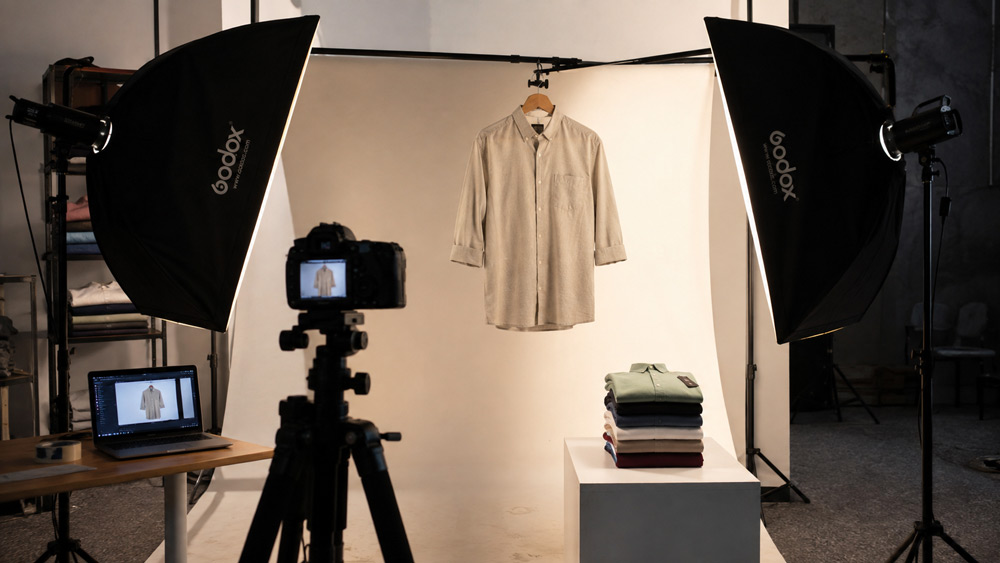
What separates us is not any single technique — it is the system. Every shoot begins with a colour-calibrated set, moves through a locked lighting diagram, tethers into a monitored capture flow, and finishes with a four-stage retouching pipeline. The result: apparel product images that look consistent, feel premium and ship compliant across Shopify, Amazon India, Myntra, Flipkart, Nykaa Fashion and Ajio. If you want to compare specialists first, our resource on how to choose the right photographer in Delhi NCR lays out a useful evaluation framework.
Ready to Build Trust With Every Product Image?
Partner with Uniqs Studio — Delhi NCR’s premium clothing photography studio. Talk directly with Satyam and get a custom quote for your catalogue this week.
Frequently Asked Questions About Clothing Photography
The most common questions D2C founders, Shopify owners and marketplace sellers ask us about clothing photography — answered honestly, without upsells.
Clothing photography for ecommerce is the professional practice of capturing apparel images optimised for online stores — combining accurate colour, consistent lighting and marketplace-ready formats to build shopper trust and reduce returns.
Professional clothing photography in India typically ranges from INR 150 to INR 800 per image, depending on style (ghost mannequin, flat lay, on-model), retouching depth and turnaround. Delhi NCR studios like Uniqs Studio offer transparent per-image and per-day packages.
A combination of ghost mannequin, flat lay and on-model shots converts best. Ghost mannequin shows silhouette, flat lay reveals styling, and on-model provides fit context — together they answer every shopper question and build trust.
Trustworthy clothing photography reduces returns by showing accurate colour, true fabric texture, multiple angles, size and fit context, and consistent lighting — helping customers make confident purchase decisions without physical inspection.
Yes. Professional clothing photography significantly increases conversions, average order value and brand credibility on Shopify and D2C stores by delivering marketplace-grade image quality that DIY setups rarely achieve.
No. Real, professional clothing photography always outperforms AI-generated apparel visuals in the long run. Shoppers are increasingly good at spotting synthetic imagery, and AI outputs cannot honestly represent real fabric drape, colour and texture — which triggers returns and erodes trust.
Final Thoughts — Turning Clothing Photography Into a Trust Engine
Great clothing photography is not a marketing expense — it is a trust engine that quietly compounds every day your listings stay live. Every accurate colour, every honest fabric close-up, every consistent lighting decision either earns buyer confidence or bleeds it. Brands that treat ecommerce clothing images as strategic infrastructure outgrow those that treat it as a checkbox — and the gap widens every quarter as shoppers grow more discerning.
If you are ready to turn your product images into a growth asset rather than a cost line, Uniqs Studio is here to build that engine with you. Whether you are launching a new D2C label, scaling an established fashion brand or fixing a marketplace catalogue that is quietly under-converting, Satyam and the team will design a shoot programme tailored to your category, volume and margin goals. Reach us on +91-8076745824, WhatsApp us at +91-8076745824, or email [email protected].
People Also Search For
- clothing product photography
- ecommerce clothing photography
- ecommerce clothing images
- apparel product images
- online clothing photography
- garment images
- clothing photoshoot for ecommerce
- fashion product photography
- apparel photography services
- clothing photography for online store
- product photography for clothing brands
- ecommerce apparel photography
- Shopify clothing photography
- clothing catalogue photography
- D2C clothing photography
Long-Tail Related Searches
- how to photograph clothes for ecommerce
- clothing photography for online store India
- best clothing photography for Shopify
- ecommerce clothing photography tips
- how to create product images customers trust
- clothing photography that reduces returns
- professional clothing photography services Delhi NCR
- clothing product photography for Amazon India
- ghost mannequin clothing photography for ecommerce
- flat lay clothing photography for ecommerce
- model clothing photography for online store
- clothing photography lighting setup
- clothing photography background ideas
- clothing photography price in India
- clothing photography for D2C brands
- how to photograph clothes without wrinkles
- clothing photography for Myntra listings
- clothing photography for Flipkart sellers
- best angles for clothing product photography
- clothing photography editing tips
- clothing photography workflow for ecommerce
- clothing photography for fashion brands
- studio vs outdoor clothing photography
- ecommerce clothing image standards
- clothing photography for small business
People Asking Question
- What is clothing photography for ecommerce?
- How much does clothing photography cost in India?
- Why do my clothing photos look unprofessional?
- How do I photograph clothes without a model?
- What size should ecommerce clothing images be?
- Which is better: ghost mannequin or model photography?
- How can clothing photos reduce returns?
- What lighting is best for clothing photography?
- How do I photograph black clothes on white background?
- What angles work best for clothing product images?
- How many images per product for ecommerce clothing?
- How do I make clothing photos look premium?
Related Voice Searches
- Who does the best clothing photography near me?
- How do I take clothing photos for my Shopify store?
- What is the best way to photograph clothes for online selling?
- How much should I pay for clothing product photography?
- Can I do clothing photography at home for ecommerce?
- What makes ecommerce clothing images trustworthy?