
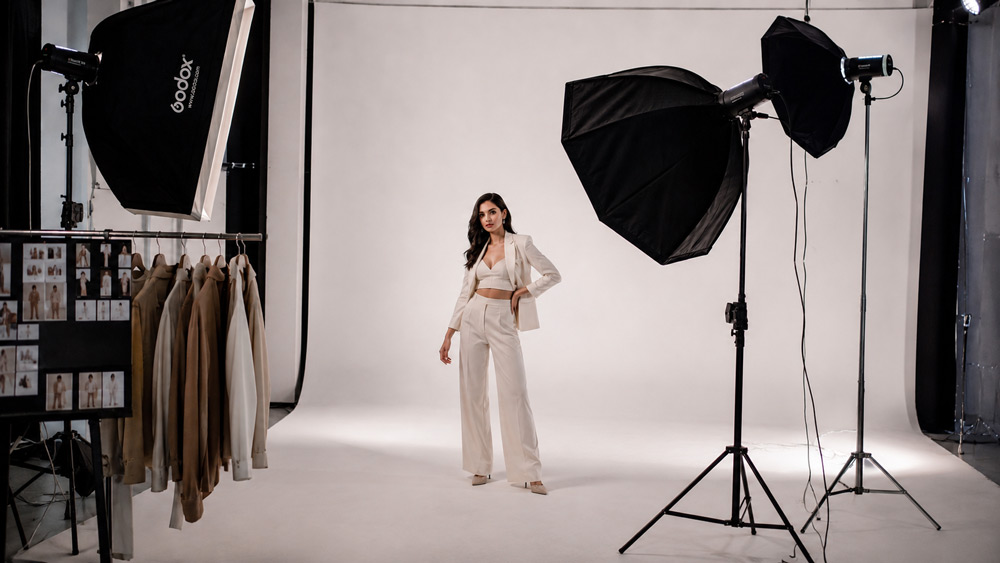
A fashion campaign lives or dies on its first frame. When a shopper opens your homepage or scrolls past your ad, that hero image has 1.7 seconds to communicate premium, desirable, credible — before the thumb keeps moving. This blueprint walks fashion brand founders through the exact casting-to-campaign workflow Uniqs Studio has refined across 200+ campaigns, so your next shoot doesn’t just look beautiful — it converts.
Key Takeaways
- Professional model photography is a 10-stage workflow — casting through delivery — not a single shoot day
- Fashion campaigns for D2C brands typically run 4–8 weeks end-to-end, with ₹35,000 to ₹3,00,000+ investment tiers
- Casting, styling, hair-makeup, direction and retouching under one roof reduces cost, timeline and creative drift
- Marketplace-ready delivery (Amazon, Myntra, Ajio, Nykaa) requires format-specific exports beyond just “pretty pictures”
- Real, professionally-shot model photography consistently outperforms AI-generated imagery on trust, fit accuracy and conversion
What Is Model Photography for Fashion Brands?
Model photography for fashion brands is a commercially-driven photoshoot where trained models wear brand apparel to produce visuals for websites, lookbooks, marketplace listings and advertising rollouts. Unlike casual portraiture, this is a full production discipline — with a moodboard, casting call, wardrobe styling, hair-makeup, art direction and retouching pipeline built around a defined brand narrative. At Uniqs Studio, every fashion brand photography engagement begins with a business goal — launch a new collection, refresh a marketplace listing, or fuel a paid social campaign — and the entire crew is briefed to serve that objective.
The output of commercial model photography is a licensed image library your marketing team can use across ecommerce, ads, print and PR. That’s the fundamental difference between hiring a friend with a camera and commissioning proper brand model photography. Serious labels also pair the shoot with a planned rollout calendar so the same campaign fuels the homepage, the Meta ad set, the Instagram grid and the Amazon A+ module.
Model Photography vs. Portrait, Editorial & Catalogue Shoots
People often confuse model photography with portraiture — but the two serve completely different masters. Portraits sell the person; model photography sells the product being worn. Similarly, editorial shoots are magazine-driven storytelling, while fashion catalogue photography is inventory-driven and grid-clean. A well-planned campaign borrows the emotion of editorial and the discipline of catalogue — which is exactly what editorial fashion photography for D2C brands should deliver.
Why Fashion Brands Invest in Professional Model Photography
Buyers form a brand opinion in under two seconds. Investing in professional model photography services compresses months of brand-building into a single visual system — one that signals price point, occasion, target customer and product category the moment someone lands. Brands who upgrade from amateur shoots to structured brand model photography consistently report higher add-to-cart rates and lower return rates because the fit, drape and colour are honestly represented. Add current-season direction to that recipe, and you get fashion campaign photography that pays for itself within the first collection drop.
The Complete Fashion Campaign Workflow — 10 Stages Explained
A great fashion campaign photography project is 70% pre-production and 30% shoot day. The visible glamour — models, lights, cyclorama — sits on top of an invisible foundation of briefs, moodboards, look sheets, call sheets and casting rounds. Uniqs Studio structures every model campaign shoot across ten sequential stages, each with a clear input, output and approval gate. This structure is what separates a chaotic shoot day from a campaign that hits its rollout deadline.
For most Indian D2C brands, the full sequence — from the first discovery call to final delivery — runs 4 to 8 weeks. Timeline compresses when the brand has ready look sheets and expands when casting has to happen from scratch. Below is the sequence Uniqs Studio uses on nearly every clothing brand photoshoot, refined over nine years and pressure-tested across ethnic wear, streetwear, bridal, athleisure and premium menswear labels.
- Discovery Call & Creative Brief — Understand goals, audience, deliverables, deadlines
- Moodboard & Visual Direction — Pin references for styling, lighting, casting
- Model Casting — Source, shortlist, fit-test, finalise
- Wardrobe & Styling — Look sheet, steaming, accessories, continuity
- Location / Set Design — Studio or outdoor, cyclorama or set-build
- Lighting & Camera Setup — Recipe locked with tethered capture
- Shoot Execution — Directed posing, movement, expression, hero frames
- Selection & Culling — Client approvals on selects
- Retouching & Grading — Skin, garment clean-up, colour consistency
- Final Delivery — Marketplace-ready files, social crops, archive originals
Stage 1 — Discovery Call & Creative Brief
Every winning campaign starts with a 45-minute discovery call. The Uniqs Studio team asks about your brand positioning, product range, target price band, previous campaign assets and — most importantly — the business outcome the campaign must drive. Is this a new collection launch? A seasonal refresh? An Amazon A+ upgrade? These answers shape the creative brief, the single document that governs every downstream decision.
A strong brief includes the shot count, aspect ratios, mood keywords, do-not-do list and rollout channels. Brands that come prepared with a rough studio vs. outdoor preference and a competitor reference set speed up the process significantly. Once the brief is signed off, Uniqs Studio locks the scope and moves to the moodboard.
Stage 2 — Moodboard Development & Visual Direction
The moodboard is where creative direction gets committed to a visual vocabulary. It’s a 12–20 image collage that answers: What does the model look like? What’s the lighting quality? What’s the colour palette? What’s the emotional register — playful, aspirational, quiet-luxury, streetwise? The moodboard is not a “vibe check” — it’s the contract between the brand and the studio. Every look on shoot day is measured against it.
Uniqs Studio builds moodboards in a shared Miro or Figma board so brand and creative can iterate in real time. This is also where we anchor the art direction for the shoot — poses, propping, background treatment and hair-makeup register. For brands running their first campaign shoot, this stage often unlocks the biggest “aha” moment: they realise their brand actually looks like something specific.
What Goes Into a Winning Fashion Campaign Moodboard
A strong moodboard layers three tracks — casting references, styling references, and lighting references — into one cohesive visual language. It also captures colour palette swatches, texture inspiration and one line of brand tone. This is where brand storytelling stops being a slide in a pitch deck and becomes a shoot-ready plan.
Model Casting for Fashion Brand Photography
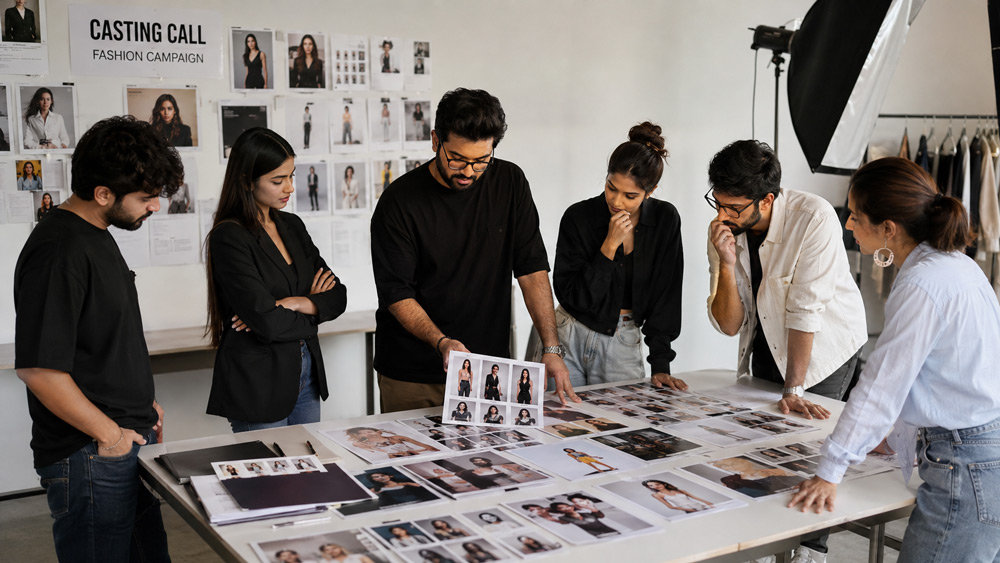
Casting is where the brand personality gets a face — and it deserves the same rigour as product design.
Model casting is the single most under-appreciated lever in model photography. The right face can elevate an average outfit; the wrong face can undermine a beautifully-styled collection. Uniqs Studio treats casting as its own mini-project — with a defined brief, a sourcing plan, shortlisting rounds, fit tests and confirmation. For premium fashion brand photography, we typically shortlist 4–6 models against the moodboard and present them with comp cards, agency rates and availability. Founders unfamiliar with the process often benefit from reading our model photography portfolio guide before the casting call.
How Model Casting Works — Sourcing, Shortlisting & Selection
Sourcing begins with a written casting brief — height range, body type, skin tone spectrum, age band, hair-length, ethnicity spread and the “vibe” pulled from the moodboard. Uniqs Studio then reaches out to partner model agencies and its own trusted talent database. Every candidate returns a comp card (also called a zed card) with recent portfolio images, measurements and past commercial work. The shortlisting stage narrows this to 2–3 finalists whom the brand approves before booking.
Before final confirmation, we always run a quick fit test — because a stunning model portfolio means nothing if the sample garments don’t sit right on the day. For brands running outdoor location shoots, we also verify stamina, comfort with public locations and previous outdoor shoot experience.
In-House vs. Agency-Sourced Models: What Fashion Brands Should Know
Agency-sourced models come with polished portfolios, professional discipline and formal contracts — but at a premium day rate. In-house or freelance models are more cost-flexible and offer fresher faces, but coordination and paperwork sit on the studio’s shoulders. Uniqs Studio maintains relationships across both pools, so brand budgets can be optimised without compromising fashion campaign photography quality. For clarity on hiring, our selection framework is a useful read alongside this section.
Model Release Forms, Usage Rights & Buyouts Explained
Every professional shoot requires a signed model release form that spells out where and for how long images can be used. Usage rights typically cover ecommerce, social organic and website — while paid ads, outdoor billboards and print campaigns often require a separate buyout at extra cost. Uniqs Studio drafts these agreements in plain English so brand founders don’t have to decode legalese.
Styling, Wardrobe & Look Development for Campaign Shoots
Wardrobe styling is the invisible engineering behind a great campaign. It’s the stylist who decides whether the shirt is tucked or loose, whether the sleeve is scrunched or straight, whether the accessory adds or distracts. Great fashion brand photography depends on a stylist who understands the brand’s target customer as deeply as the designer does. Uniqs Studio works with a rotating panel of senior stylists across ethnic, western, streetwear and premium menswear so we can match the stylist to the clothing brand photoshoot, not the other way round.
Building a Look Sheet — Outfits, Accessories & Continuity
A look sheet is the shoot day bible. It lists every outfit, in shoot order, with accessories, hair notes and background treatment. For a 12-look campaign, that means 12 mini-briefs stacked into one document. Continuity — making sure Look 3 doesn’t accidentally reuse the belt from Look 7 — is a discipline the on-set stylist owns. Brands running large catalogue-plus-campaign hybrids especially benefit from tight look-sheet discipline.
Hair, Makeup & Grooming Standards for Fashion Campaigns
Hair and makeup for fashion campaign photography is not bridal glam — it’s a controlled, camera-tested register that supports the moodboard without competing with the garment. Uniqs Studio’s HMU artists are briefed with the moodboard before the shoot, arrive with base products matched to the model’s skin tone, and stay on set through the shoot for touch-ups between looks. This is what keeps model photography looking consistent across a 10-hour day.
Location, Set Design & Studio Choices for Model Photography
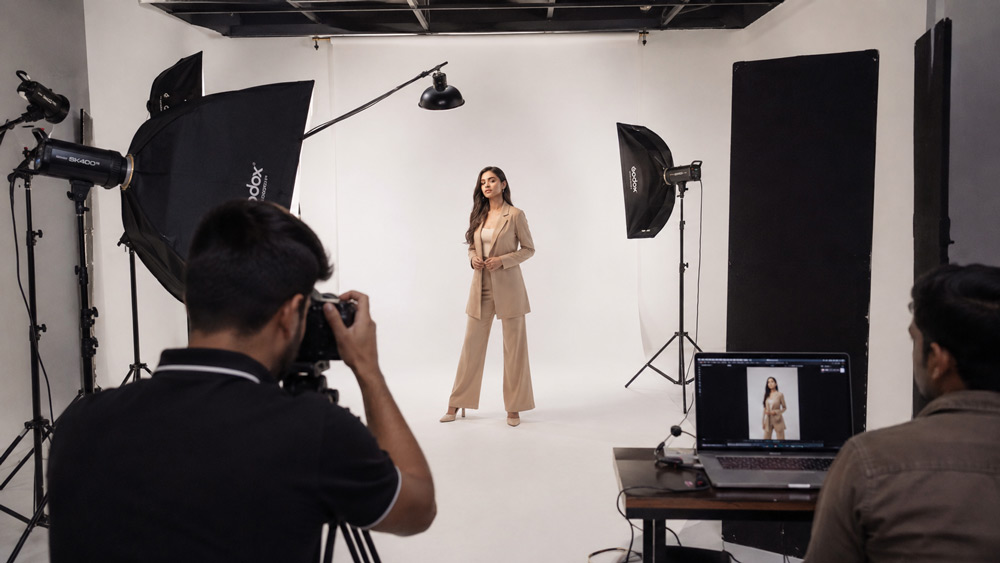
A well-configured cyclorama studio delivers repeatable, controlled campaign frames the marketing team can rely on.
The studio vs. outdoor decision shapes budget, timeline, aesthetic and shot volume more than almost any other choice. Studio shoots are controlled — weather-proof, lighting-consistent, quick to reset — and best when the campaign leads with the garment. Outdoor shoots are atmospheric — richer with location storytelling — but demand permits, weather buffers and daylight discipline. Most Uniqs Studio fashion brand photography campaigns blend both: a hero studio day for clean frames plus one location day for lifestyle context.
Studio Campaign Shoots — Cyclorama, Sets & Controlled Lighting
A cyclorama — the seamless white infinity wall — is the workhorse of commercial studio photography. It removes distraction, holds shadow predictably and gives post-production a clean canvas for extraction. Add modular set-builds (a chair, a plinth, a fabric drop) and you can produce 12–15 distinct looks in a single studio day. This is why Uniqs Studio invests heavily in a large cyclorama plus a full inventory of controlled lighting modifiers.
On-Location Campaign Shoots — Delhi NCR, Mumbai & Beyond
Location scouting across Delhi NCR opens up heritage architecture, industrial lofts, tree-lined avenues and rooftops with skyline framing — all within a 60-minute drive of the studio. Uniqs Studio maintains a scouted library of shoot-friendly locations so brands don’t lose a week to reconnaissance. Beyond Delhi, we also travel for destination fashion campaign photography across Rajasthan, Goa and Himachal, when the campaign concept demands it.
Lighting, Camera & Technical Setup for Fashion Campaign Photography
Technical setup is where fashion campaign photography earns its premium. Uniqs Studio runs a hybrid Elinchrom + Godox lighting setup that gives us fast recycle times, tight colour consistency and shaping control across large sets. Every shoot day starts with a lighting recipe — a documented setup that lets us reproduce the exact same look across multiple models and outfits. That’s what makes a 15-look campaign feel like one coherent story instead of 15 disconnected images.
Signature Lighting Styles Used in Fashion Brand Campaigns
The three most-used lighting styles in fashion brand photography are soft beauty light (large octabox key, silver reflector fill), high-fashion hard light (bare-bulb or fresnel, sharp shadow), and mixed ambient (window-quality soft with atmospheric practicals). Each carries a specific mood — the soft register signals premium and calm, the hard register signals edge and confidence, and the mixed ambient signals lifestyle. Uniqs Studio matches the light to the moodboard, not to a house-style default. For deeper reading, see how 2026 lighting trends are reshaping campaign aesthetics.
Camera, Lenses & Tethered Workflow for Campaign-Grade Output
Uniqs Studio shoots tethered on Sony A7R V and Canon EOS R5 bodies, paired with prime lenses (35mm, 50mm, 85mm) for editorial frames and zooms (24–70mm, 70–200mm) for coverage. Every frame lands on a colour-calibrated monitor in real time, so the brand can approve composition, styling and expression before we move on. That’s the difference between RAW capture discipline and shoot-and-hope.
Uniqs Studio Kit Notes
On a typical fashion campaign shoot day we deploy 4× Godox SK 400II and 2× Elinchrom FRX 400 heads through strip softboxes and octaboxes, with a beauty dish reserved for close-up hero frames. Camera bodies stay tethered via Capture One for immediate client approval.
On-Set Direction — How Photographers Guide Models for the Perfect Shot
On-set direction is the human skill that separates a technically-correct shoot from an emotionally-resonant campaign. Even the most experienced models need guidance on chin angle, weight shift, hand placement and gaze — because those micro-adjustments read differently through the lens than they feel in the moment. Satyam leads on-set direction personally for every high-stakes model campaign shoot, using a mix of verbal cues, physical demonstration and playback references from the moodboard.
Posing, Movement & Expression Direction Techniques
Posing direction works best in three-frame bursts — a base pose, then a small adjustment, then a movement variation. This gives editors a choice of frame without over-fatiguing the model. Uniqs Studio also uses music, playback jokes and short breaks to keep expression genuine — because forced smiles read as forced in every language.
Shot List Execution — Hero Images, Details & Motion Frames
Every shoot day has a written shot list that separates hero images (the big campaign frames) from detail crops (fabric, buttons, drape) and motion frames (walk-throughs, twirls). Ticking through this list keeps fashion campaign photography on schedule and ensures the marketing team gets every asset they need — homepage banner, product grid, ad creative and social reel — from a single production day.
Post-Production, Retouching & Color Grading for Campaign Images
Post-production is where a shoot day becomes a campaign. Uniqs Studio splits post into three phases: culling and selection, high-end retouching, and final color grading. Retouching is done in Photoshop with frequency separation and dodge-and-burn — never a plastic filter pass. The goal is skin that reads as real skin under scrutiny, not skin that reads as glossy for a thumbnail. This is the same discipline used across premium fashion campaign photography worldwide.
Skin Retouching Standards for Fashion Brand Campaigns
Skin retouching for fashion brand photography follows a natural-first standard — cleaning up temporary blemishes and stray hairs while preserving pores, texture and character. Uniqs Studio deliberately does not over-smooth, because campaign visuals are viewed on desktop retina displays where over-retouching becomes obvious and cheap-looking. This is what editorial retouching discipline looks like when it’s done by a specialist team, not a generic Fiverr operator.
Color Grading & Consistency Across the Campaign Set
Once retouching is signed off, the entire set moves through color grading to lock a consistent palette. Skin tones, garment colours and background whites are all balanced so the campaign reads as one visual family across every deliverable. This campaign consistency is the invisible signature of premium fashion campaign photography — and it’s what buyers subconsciously read as “this brand is serious.”
Final Campaign Delivery — Formats, Files & Marketplace-Ready Exports
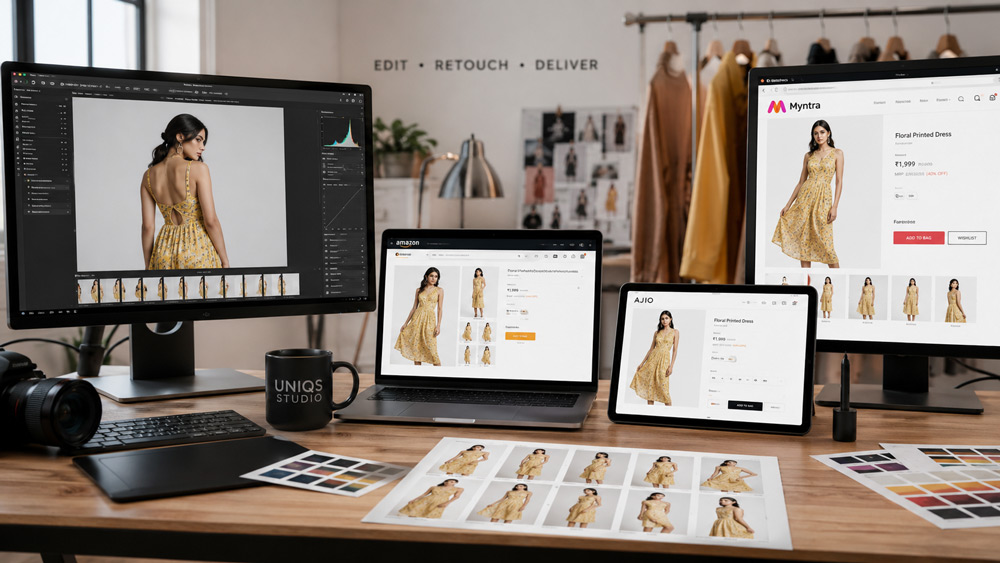
Delivery is not “one folder of JPEGs” — it’s a marketplace-specific export pipeline built for your channels.
Final delivery is where a lot of studios underdeliver — and where Uniqs Studio treats the handover as a production milestone. Every campaign ships with high-resolution JPEGs for print, WebP web-optimised files for site speed, aspect-ratio-cropped variants for social, and platform-compliant exports for every marketplace-ready channel the brand is on. This is the same rigour we bring to ecommerce fashion photography and to a full fashion catalogue photography production.
Deliverable Formats for Website, Ecommerce & Social Media
Standard Uniqs Studio delivery includes 300 dpi JPEG masters, sRGB colour space, WebP ecommerce-ready variants, plus 1:1, 4:5, 9:16 and 16:9 social crops. On request, we also provide layered PSDs for internal brand teams that want to remix crops in-house.
Amazon, Myntra, Ajio & Nykaa Image Compliance Checklist
Each marketplace has its own quirks. Amazon India demands pure-white backgrounds for the main image and a minimum 1000-px longest side. Myntra prefers 3:4 ratio at 1080×1440 minimum with strict background rules. Ajio and Nykaa each have their own crop templates. Uniqs Studio maintains a live marketplace compliance spec sheet and delivers ready-to-upload folders per channel — no extra work for the brand’s ecom team. For deeper reading, see Amazon India’s official image guidelines.
How Much Does Model Photography for Fashion Brands Cost in India?
Honest pricing for model photography in India starts around ₹35,000 for a basic single-model, single-setup campaign and climbs to ₹3,00,000+ for premium multi-model, multi-location productions with full creative direction. The variables are model day rates, number of looks, styling, HMU, location fees, retouching scope and usage rights. Below is a transparent tier structure Uniqs Studio uses with most fashion brands — a benchmark you can also cross-check against our detailed fashion photography cost breakdown and model photoshoot pricing guide.
| Tier | Ideal For | Looks | Models | Deliverables | Starting Price |
|---|---|---|---|---|---|
| Basic Campaign | New D2C brands | 4–6 | 1 | 40–60 retouched images, 1 studio setup | ₹35,000+ |
| Standard Campaign | Growing brands | 8–12 | 1–2 | 100–150 retouched images, moodboard, styling | ₹75,000+ |
| Premium Campaign | Established labels | 15–20 | 2–3 | 200+ images, video BTS, HMU, location | ₹1,50,000+ |
| Enterprise Campaign | Designer labels & agencies | 25+ | 3–5 | Full creative direction, multi-location, campaign video, unlimited usage | ₹3,00,000+ |
The most cost-efficient path for most brands is the Standard tier — enough looks for a full seasonal collection, enough retouched images for social + ecommerce + Meta ads. Enterprise-tier fashion campaign photography makes sense when a brand is running a paid rollout above ₹8–10 lakh in creative spend. All figures above are indicative and vary with model rates, usage rights and season.
Cost Breakdown — Casting, Crew, Models, Post-Production & Usage
A typical Premium-tier fashion campaign photography quote breaks down roughly as: 25% model day rates, 20% studio + equipment, 15% styling + HMU, 20% photographer + crew, 15% post-production and 5% usage rights buffer. Understanding this breakdown helps founders decide where to invest and where to trim — for instance, dropping outdoor location can save 8–10% without sacrificing shot count.
Planning Your Next Fashion Campaign?
Get a custom, transparent quote for your brand. Talk directly to Satyam and the Uniqs Studio creative team.
How to Choose the Right Model Photography Studio for Your Fashion Brand
Choosing the right model photography partner is a mix of portfolio review, chemistry check and process audit. Beautiful past work matters, but so does whether the studio can articulate its process, deliver on time, and behave like a partner rather than a vendor. Uniqs Studio recommends founders shortlist two or three fashion photography studios in Delhi and put them through the same nine-question checklist below before signing off. Also worth reading — our comparison of studio-based versus outdoor fashion brand photography.
9 Questions to Ask Before Booking a Fashion Campaign Photographer
- Can I see three recent campaigns for brands at my price point?
- Who owns the moodboard and creative direction — you or my brand?
- Do you handle casting, styling and HMU in-house, or coordinate externally?
- What’s the typical timeline from brief to final delivery?
- How many retouched images will I receive per shoot day?
- What are the usage rights included, and what triggers a buyout?
- Do you shoot tethered so I can approve frames live?
- Can you deliver marketplace-ready exports for Amazon, Myntra and Ajio?
- What’s your revision policy on retouched images?
The photographer selection process should feel collaborative, not transactional. If a studio hesitates on questions 3, 6 or 8, that’s a signal to keep looking. For brand-side prep, our model photoshoot preparation checklist covers everything a founder should have ready before the pre-production call.
Reality Check on AI-Generated Fashion Images
AI-generated models are tempting for cost reasons, but the trade-offs are real — inconsistent fit representation, subtle anatomy artefacts, and rising buyer scepticism. Real fashion brand photography with real people consistently outperforms AI imagery on trust signals, fit accuracy, return rates and marketplace policy compliance. Use AI for moodboards and ideation — not for final campaign visuals.
Common Mistakes Fashion Brands Make (and How to Avoid Them)
- Skipping the moodboard — leads to scope creep and re-shoots
- Under-briefing the stylist — results in “pretty but off-brand” looks
- Choosing model on portfolio only, without a fit test — sample garments don’t drape right
- Cheaping out on retouching — destroys the perceived value of a good shoot
- Forgetting marketplace-specific crops — creates last-minute panic during listing
- Underestimating usage-rights costs — surprise invoices when scaling ads
Why Fashion Brands Choose Uniqs Studio for Model Photography
Fashion brands choose Uniqs Studio because we run the entire campaign — casting, styling, HMU, direction, shoot, retouch, delivery — as one integrated production, not five disconnected vendors. Satyam has personally led over 200 model photography campaigns across ethnic, streetwear, athleisure and premium menswear labels, and every project is treated as a partnership rather than a booking. That’s why 70%+ of Uniqs Studio’s fashion brand photography revenue comes from repeat clients.
Whether you’re launching a first D2C collection or scaling a marketplace-native label, Uniqs Studio is set up to deliver campaign-grade imagery on a repeatable, predictable timeline. To see live work or discuss your next shoot, drop a note at [email protected] or reach out over WhatsApp at +91-8076745824.
Advanced Tips & Pro Insights from 9+ Years of Fashion Campaigns
- Book model + studio the same day — locking studio first and hunting model later almost always compresses the moodboard phase
- Shoot 20% more looks than the brief — the extras become social-only content without extra crew days
- Approve retouching on 3 hero frames first before releasing the full set — saves 5–7 days of revision loops
- Archive RAW files for at least 12 months — you’ll thank yourself when a paid ad concept needs a re-crop
- Photograph fabric details separately — texture crops are gold on Amazon A+ and Myntra deep-scroll modules
Future Trends in Fashion Brand Model Photography
The next 24 months in fashion brand photography are shaped by three forces: vertical-first framing for reels, hybrid shoot days that produce photo + video from the same setup, and honest-body diversity in casting. Brands that plan their fashion campaign photography around these trends now will have creative equity when competitors are still catching up. Explore more in the 2026 fashion photography trends breakdown.
Conclusion & Next Steps
A great fashion campaign is not luck — it’s a documented, repeatable process from casting to final delivery. Every step in this blueprint exists to serve one goal: campaign imagery that makes your brand feel bigger, more credible and more desirable than it did last season. That’s the standard Uniqs Studio holds itself to on every project, and it’s the standard your brand deserves from any studio you engage. Ready to plan your next shoot? Call Satyam directly at +91-8076745824 or email [email protected] — and let’s turn your next collection into a campaign people remember.
Frequently Asked Questions About Model Photography for Fashion Brands
What is model photography for fashion brands?
Model photography for fashion brands is a professional, campaign-driven photoshoot where trained models wear brand apparel to create visuals for websites, lookbooks, ecommerce listings, marketplaces, and advertising campaigns. It’s a full production with a moodboard, casting, styling, HMU, art direction, tethered shoot and post-production — not just clicking pictures.
How much does a fashion campaign shoot cost in India?
A professional fashion campaign shoot in India typically starts around ₹35,000 for a basic single-model package and scales to ₹3,00,000+ for premium multi-model, multi-location campaigns. Cost varies with model day rates, number of looks, styling, HMU, location fees, retouching scope and licensed usage rights.
How long does a model photography campaign take from casting to delivery?
Most fashion campaigns take 4 to 8 weeks end-to-end — 1–2 weeks for briefing and casting, 1 week for pre-production, 1–2 shoot days, and 2–3 weeks for retouching and final delivery. Rush-turnaround projects are possible in 2–3 weeks with premium fees.
Do you provide models, styling, and hair-makeup, or only photography?
Full-service studios like Uniqs Studio provide end-to-end campaign production — model casting, wardrobe styling, hair and makeup, art direction, shoot execution, and post-production — all under one roof. This significantly reduces coordination stress and creative drift versus using multiple vendors.
What deliverables do fashion brands receive after a campaign shoot?
Fashion brands receive high-resolution retouched JPEGs, WebP web-optimized files, marketplace-compliant crops (Amazon, Myntra, Ajio, Nykaa), social media aspect ratios (1:1, 4:5, 9:16, 16:9), and optionally a BTS video reel. All files are colour-graded for cross-channel consistency.