
A Meesho wrong return claim is the request you file when a buyer sends back something different from what you shipped: another product, a damaged piece, a used garment or sometimes just an empty packet. This guide is part of our Meesho seller hub for suppliers, and it answers one question in detail: what evidence do you need, and how do you present it, so that your claim gets approved instead of rejected?
At Uniqs Studio, Satyam and the team shoot catalogues for many Meesho, Myntra and Amazon sellers, and the same story comes up again and again. The seller knows the return is wrong, yet the claim fails because the proof is thin. A Meesho wrong return claim is won or lost long before you click submit. It depends on how you dispatch, how you receive and how clearly your catalogue shows the real product. If you are still fighting high return volumes in general, start with our sibling guide on cutting Meesho customer returns and RTO, then come back here for the claim side.
Key Takeaways
- A Meesho wrong return claim needs one unbroken unboxing video, from sealed parcel to revealed item, with the return label readable.
- Claim windows are short and are revised from time to time, so open every return the day it arrives and file the same day.
- Dispatch evidence (packing video, SKU label, weight) is half of your case; receiving evidence is the other half.
- Most rejections come from evidence gaps, vague descriptions or the wrong claim category, not from bad luck.
- Clear, true-to-life catalogue photos and garment videos make your reference product undeniable and reduce disputes in the first place.
What is a Meesho wrong return claim and when should you file one?
A Meesho wrong return claim is a support ticket you raise from the Supplier Panel when the item that comes back does not match the item you dispatched. You file it when the returned product is different, damaged after delivery, used, incomplete or missing, and you can prove it with video and photos.
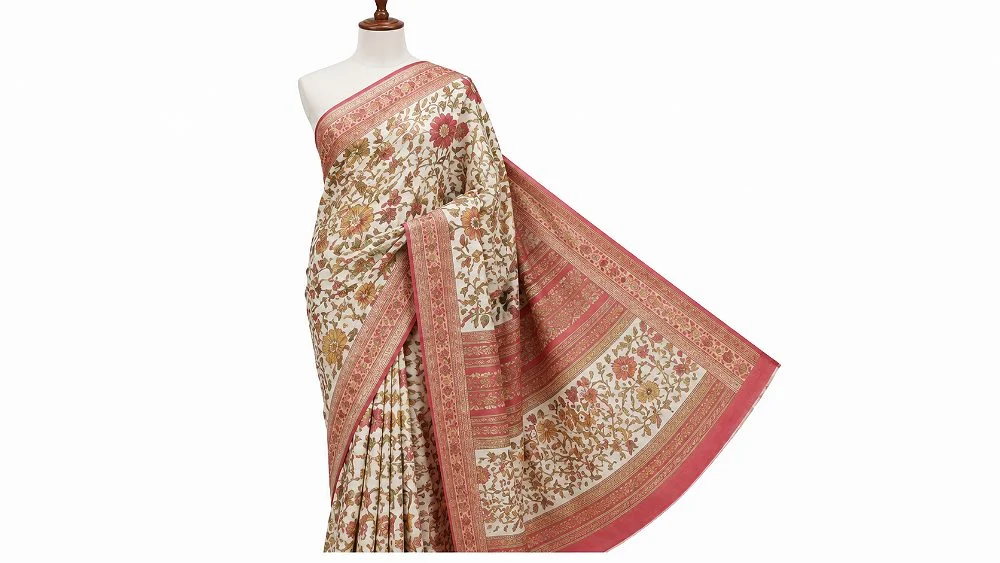
Think of every return as a small case file. The buyer has already told Meesho their side through the return reason. Your side is the evidence you collected at dispatch and at receiving. When those two sides do not match, the support team needs a simple, visual story: this is what we sent, this is what came back, and here is the moment we opened it.
Not every disappointing return is a valid claim. A buyer who returns a correct kurti because the size did not fit is using the normal return policy, even if the garment comes back slightly creased. A Meesho wrong return claim is for cases where the product itself has changed: a different design, a cheaper copy, a torn or stained piece, missing items from a set, or tags removed and the garment clearly worn. Filing only genuine cases keeps your claim history clean and your credibility high.
Which Meesho return problems can you claim for?
Suppliers usually claim for five situations: wrong product returned, damaged product, used or worn product, missing items or empty packet, and tampered RTO parcels. Each one needs slightly different proof, so pick the category that matches your evidence exactly.
| Return problem | What it looks like | Evidence that matters most |
|---|---|---|
| Wrong product | Different design, colour, brand or a cheaper copy comes back | Unboxing video, close-up of returned item next to your catalogue image, SKU label |
| Damaged product | Torn seam, stain, broken bead work, cut fabric | Unboxing video, close-ups of damage, dispatch QC photo showing it was intact |
| Used or worn | Tags removed, perfume or makeup marks, stretched fabric | Video of tag area, close-ups of marks, original tag photo from dispatch |
| Missing items / empty packet | Dupatta missing from a set, empty flyer, short quantity | Weight of parcel before opening, video of seal and contents, dispatch packing video |
| Tampered RTO | Parcel returns re-taped or re-packed before delivery | Photos of tape and label before opening, unbroken opening video |
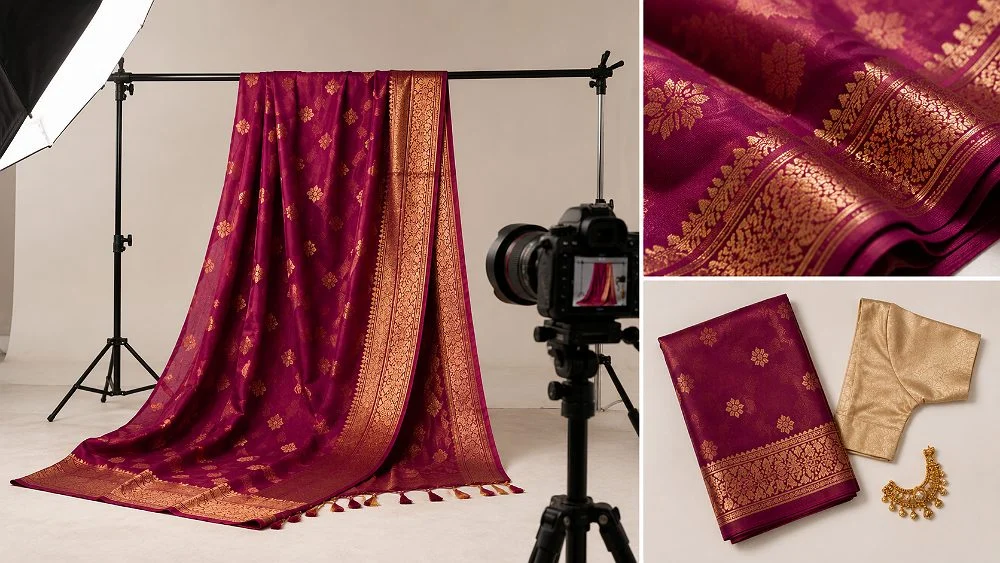
For sarees and ethnic sets, the “missing item” case is very common. A three-piece suit comes back with only two pieces, or a saree comes back without its blouse piece. If your catalogue clearly shows every component, and your dispatch photo shows all of them folded together, the claim becomes far easier to prove. Uniqs Studio often adds a single “what is in the box” flat lay to catalogues for exactly this reason.
How much time do you get to file a Meesho wrong return claim?
The claim window is short, counted from the day the return is delivered to you, and Meesho revises it from time to time. Always check the current window in your Supplier Panel, and treat the same day of delivery as your personal deadline.
Sellers often lose valid claims simply because returned parcels sit unopened in a corner for a week. In our experience, the safest rule is simple: no return stays sealed overnight. Receive it, record it, inspect it and, if something is wrong, raise the Meesho wrong return claim before the end of the working day. Late tickets are harder to approve, and some claim types have stricter timelines than others.
- Check the official window for each claim type under the returns or support section of the Meesho Supplier Panel, because rules and menu labels change.
- Keep a return log with order ID, return delivery date, opened date and claim ticket number.
- Set a daily reminder for the person who receives returns, so nothing waits for the weekend.
What evidence wins a Meesho wrong return claim?
The strongest evidence is one continuous unboxing video that starts with the sealed parcel and readable label and ends with the returned item fully shown. Add close-up photos, your dispatch record and your catalogue image so the reviewer can compare sent versus received in seconds.
Unboxing video rules for a Meesho wrong return claim
- Start recording before you touch the parcel; show all six sides and the seal.
- Hold the return label close to the camera until the order ID and AWB number are readable.
- Do not cut, pause or edit the video. One unbroken take is your strongest proof.
- Keep the parcel and your hands in frame the whole time; use a fixed overhead phone stand.
- Open slowly, lay the item flat and show the defect, the wrong design or the missing piece clearly.
- Show the product tag, SKU sticker and any label you placed at dispatch.
- Use bright, even light so colours look true; a dim video makes a “different colour” argument weak.
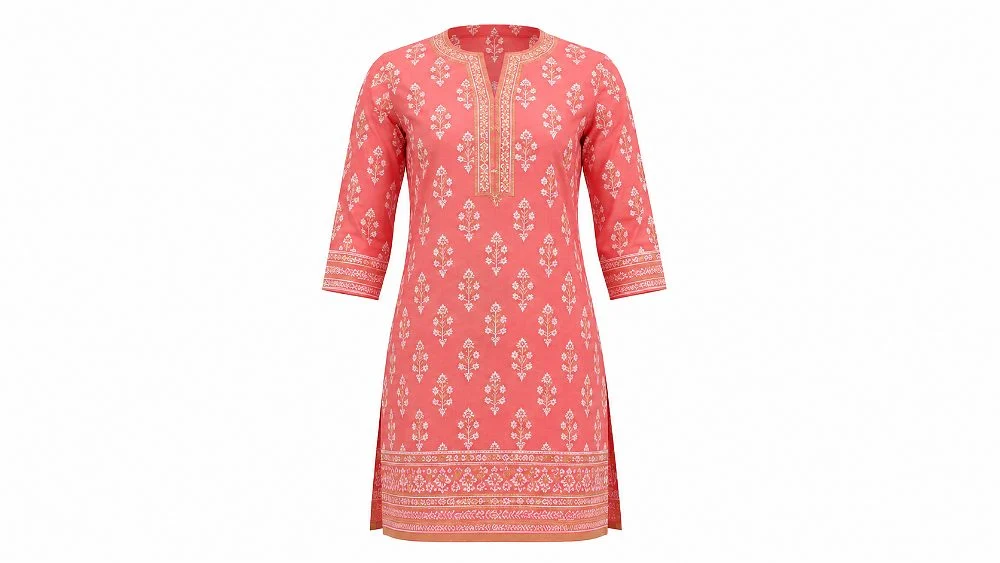
Supporting photos and documents
Next to the video, upload three to six sharp photos: the full returned item, the defect or difference in close-up, the label, and your own catalogue image or dispatch photo of the original. Many sellers also note the weight of the returned parcel before opening, which is very useful in empty-packet and short-quantity claims. Keep the invoice and packing slip copy ready in case support asks for them.
| Evidence item | Weak version | Strong version |
|---|---|---|
| Unboxing video | Starts after the parcel is already cut | Starts sealed, label readable, one take |
| Item photos | One blurry photo in yellow light | Full view plus close-ups in daylight-balanced light |
| Reference | “This is not my product” | Side-by-side with catalogue image and SKU label |
| Dispatch proof | None | Packing video and QC photo for the same order ID |
| Description | Two vague words | Two clear sentences: what was sent, what came back |
How do you build dispatch evidence before the order ships?
Dispatch evidence proves what left your warehouse. Record a short packing video for every order, photograph the item with its SKU label, and keep the parcel weight, so any later Meesho wrong return claim has a “before” to compare with the “after”.
Many suppliers only start recording when a problem appears. By then the dispatch side of the story is missing. A simple packing station fixes this: a phone on a stand above the table, good light, a printed SKU sticker on every polybag and a small weighing scale. The packer shows the garment, folds it, seals it, sticks the label and moves to the next order without stopping the video. It adds less than a minute per order and pays for itself on the first approved claim.
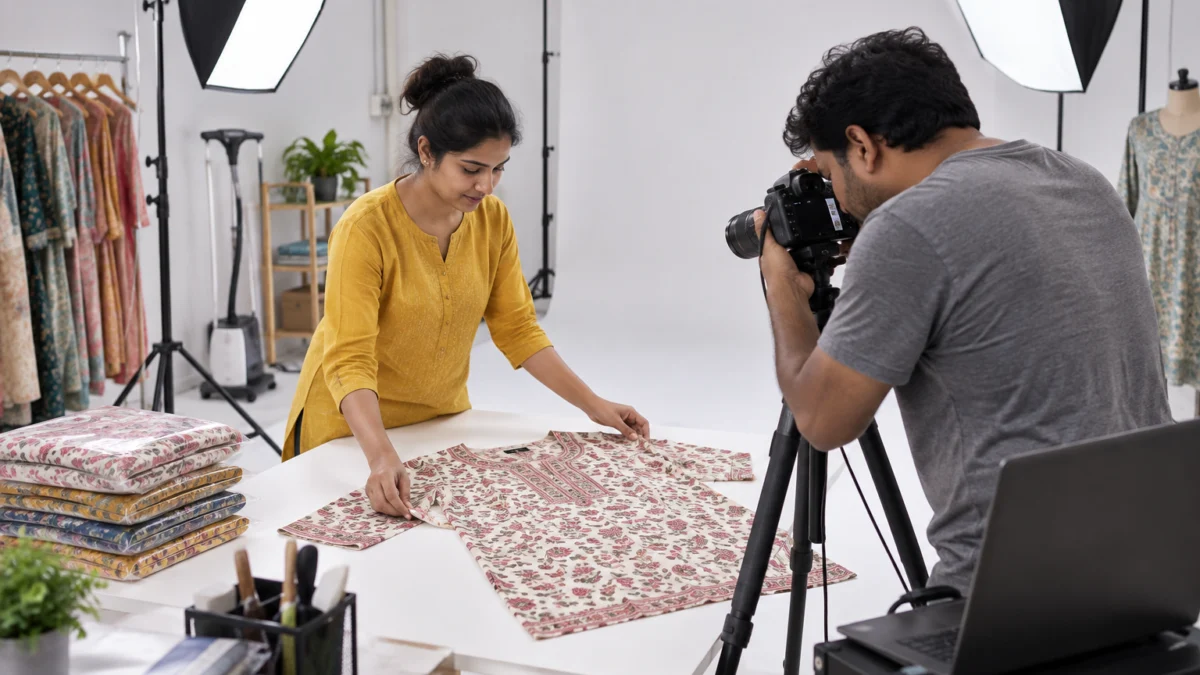
For high-value pieces such as silk sarees, bridal lehengas or embellished co-ord sets, go one step further. Keep a set of detail photos per design that show the weave, border, embroidery and tag. When a lookalike comes back, these details are what separate your product from a cheaper copy. This is also where professional catalogue images help: a sharp zoom shot of the zari border is far more convincing than a phone photo taken in a hurry.
How to file a Meesho wrong return claim: 9 steps
To file a Meesho wrong return claim, record the unboxing, inspect and photograph the item, then raise a ticket in the Supplier Panel under the wrong or defective return option, add the order ID, a clear description and your evidence, and track the ticket until it closes.
- Receive and log the return. Note the order ID, AWB number and delivery date in your return log the moment the parcel arrives.
- Weigh the parcel. Record the weight on camera, especially if the packet feels light.
- Record the unboxing. One continuous video from sealed parcel to fully revealed item, label readable.
- Inspect against the order. Compare design, colour, size, tags and set components with your catalogue and dispatch photo.
- Photograph the difference. Take a full view and two or three close-ups in bright, neutral light.
- Open a support ticket. In the Supplier Panel, go to support or the returns section and choose the option for wrong, damaged or defective return for that order. Menu names change, so follow the current labels.
- Write a two-sentence description. State what you dispatched (SKU, design, colour) and what came back. Facts only, no emotion.
- Attach evidence and submit. Upload the video, photos and, if asked, the dispatch proof. Save the ticket number in your log.
- Track and respond. Check the ticket daily, reply quickly to any request for more proof, and record the final decision and payout.
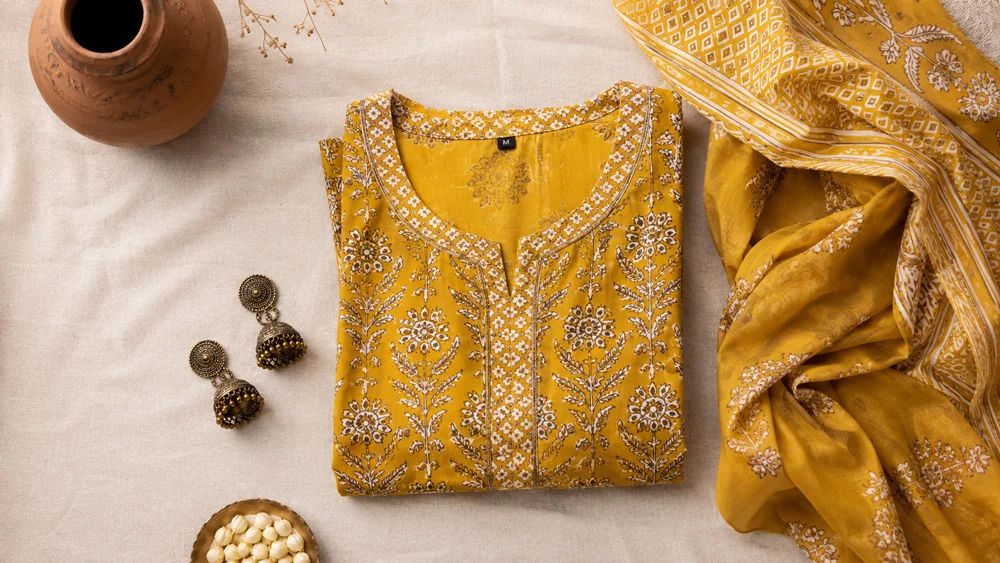
Sample description that works
“We dispatched SKU KRT-112, a mustard cotton kurti with dupatta, as shown in the attached packing video. The return contains a different blue rayon kurti without a dupatta; the unboxing video from the sealed parcel shows this at 0:40.”
Notice the timestamp. Pointing the reviewer to the exact moment in your video saves them time, and a reviewer with less work to do is more likely to approve a well-presented Meesho wrong return claim on the first attempt.
Why do Meesho return claims get rejected?
Most Meesho return claims are rejected because of evidence gaps: a video that starts after opening, an unreadable label, missing close-ups or a claim filed under the wrong category. Late filing and vague descriptions are the next most common reasons.
| Rejection reason | What went wrong | How to fix it next time |
|---|---|---|
| Video not continuous | Cuts or starts mid-way | Fixed phone stand, record before touching parcel |
| Label not visible | Order ID or AWB unreadable | Hold label to camera for three seconds |
| Wrong category | Used item filed as “damaged” | Match category to what the evidence shows |
| No reference | Reviewer cannot see the original | Attach catalogue image or dispatch photo |
| Filed late | Outside the claim window | Open and file returns the same day |
| Colour dispute unclear | Dim, warm light changes colour | Daylight-balanced light for unboxing and catalogue |
The last row deserves attention. When a buyer says “colour different” and your catalogue image was heavily filtered, the reviewer may side with the buyer even if the garment is correct. Honest, colour-accurate product images protect you twice: fewer buyers return for colour, and your claims are easier to defend. Our Meesho catalogue photography rules cover exactly how to shoot true-colour images that hold up in a dispute.
How do you escalate a rejected Meesho claim?
Read the rejection reason, find the exact evidence gap it names, and reply on the same ticket or raise one follow-up that cites the original ticket ID with the missing proof attached. Keep it short and factual, and escalate once rather than opening many duplicate tickets.
- Reply, do not restart. A follow-up on the same ticket keeps the history together; duplicates can slow everything down.
- Add only what was missing. If the reason says “label not visible”, send a clear label photo and the timestamp where it appears.
- Stay factual. Two clear sentences beat a long complaint.
- Look for patterns. If one catalogue keeps producing wrong returns, review its images, size chart and packing process.
- Know the wider rules. Buyers and sellers in India are covered by consumer protection rules for e-commerce, and the National Consumer Helpline explains the formal grievance routes if a dispute ever goes beyond the platform.
Sellers who also sell on Myntra will notice the logic is similar to their seller protection claims. Our guide to Myntra SPF claims for returned products shows how a parallel evidence routine works on another marketplace, which is handy if one team handles returns for both.
How do better catalogue images and videos prevent wrong return disputes?
Clear, accurate catalogue images and short garment videos reduce disputes because buyers know exactly what they will receive, and reviewers can see exactly what you sell. When the reference is undeniable, both false “different product” returns and rejected claims drop.
Every Meesho wrong return claim is really a comparison between two pictures: the one in your catalogue and the one in your unboxing video. If the catalogue image is a stretched supplier photo with fake colours, that comparison falls apart. A short garment video that shows fit, fall and fabric gives buyers a realistic expectation and gives you a second, moving reference of the true product. For sarees and lehengas, a 20 to 30 second drape video is one of the most persuasive assets you can have.
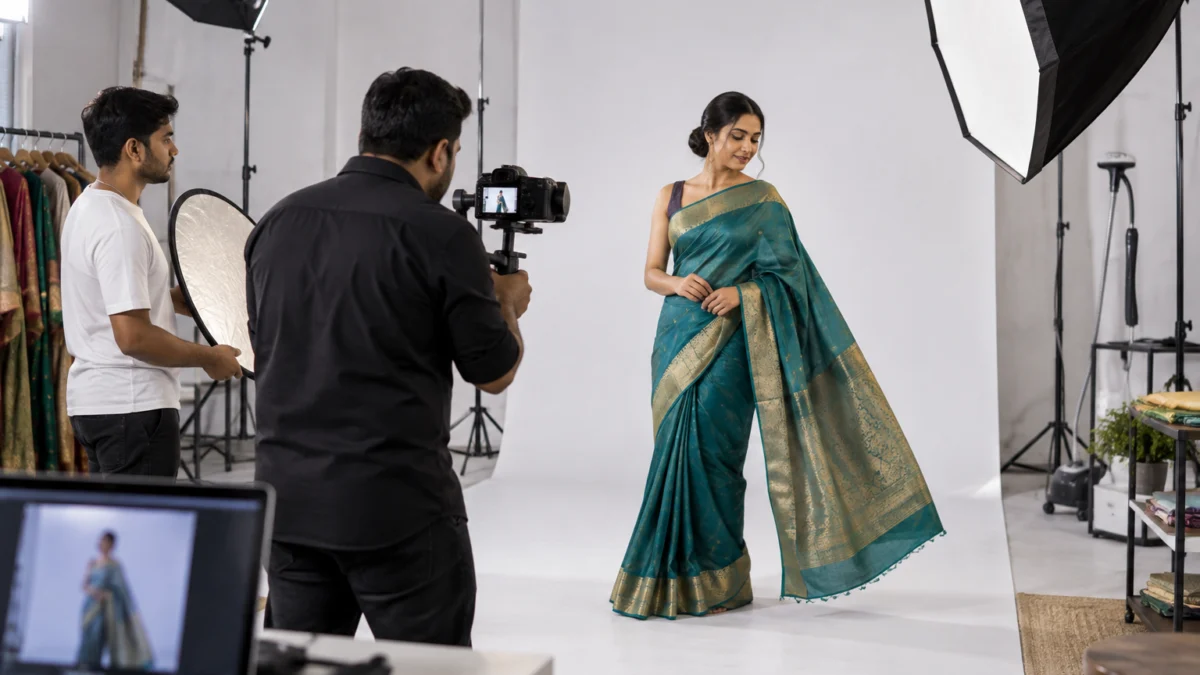
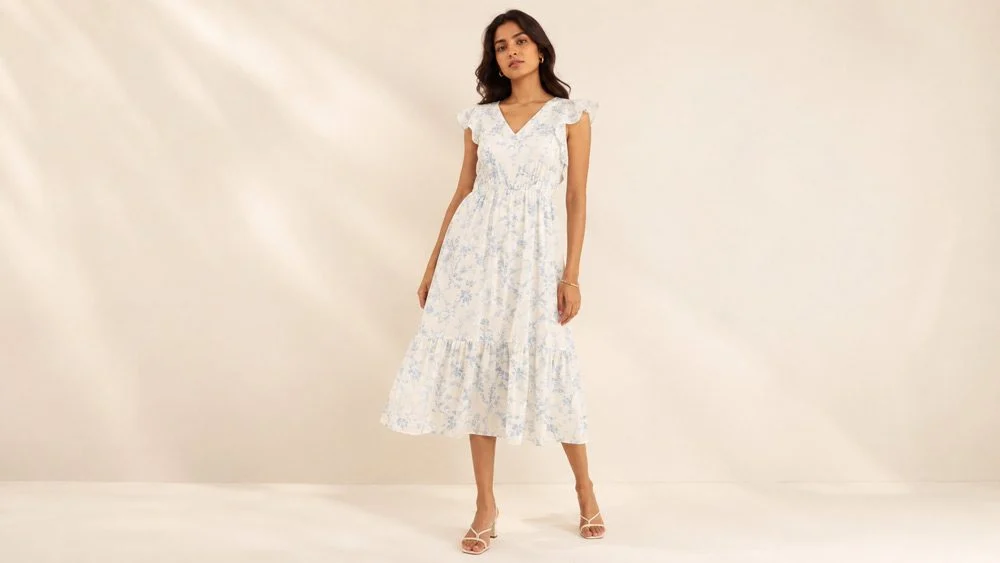
On-model images matter just as much for fit-driven categories. When buyers can see length, neckline and silhouette on a real person, fewer of them order the wrong size and then try to send back something else. Well-planned on-model fashion shoots show the garment honestly, with natural poses and consistent light, which is exactly the kind of reference a support reviewer trusts.
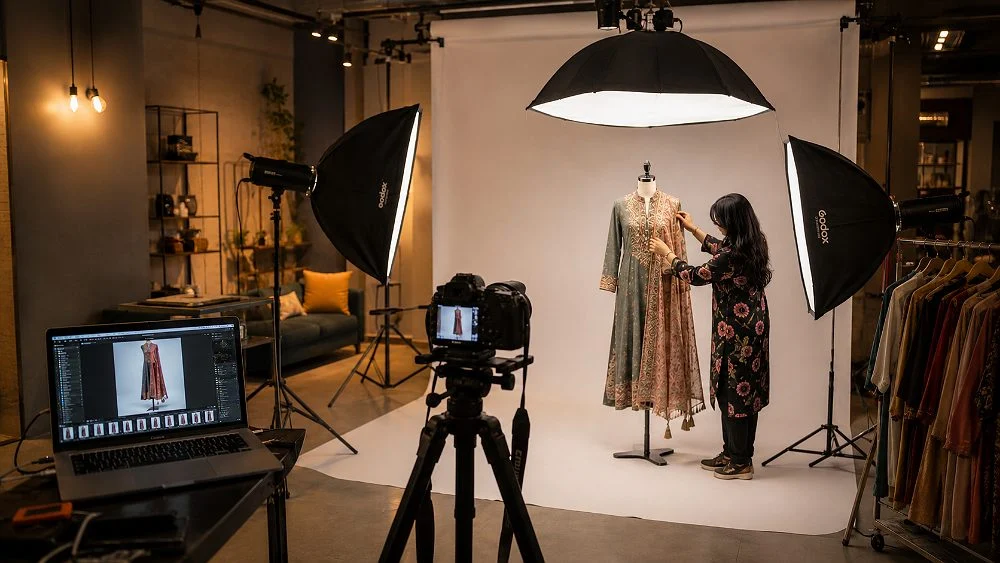
What Satyam recommends for Meesho catalogues
- One true-colour front image on a clean background, with no heavy filters.
- A back view and a fabric or print close-up for every design.
- A “complete set” flat lay for suits, sarees with blouse pieces and combo packs.
- A short garment or drape video for hero designs and high-value pieces.
- Consistent SKU naming between your catalogue files, packing labels and inventory sheet.
How much does a dispute-proof catalogue shoot cost?
At Uniqs Studio, pricing is per product or image, from ₹250 per ghost mannequin image to ₹1,200 per garment for a model video. The table below lists the official rates and turnaround for the shoot types that matter most for Meesho apparel catalogues.
| Shoot type | Images | Turnaround | Price |
|---|---|---|---|
| Ghost mannequin | 1 angle | 3–4 days | ₹250 / image |
| Flat lay | 2–3 angles | 6 days | ₹290 / product |
| Model Photography | 5–6 angles | 4–5 days | ₹400 / product |
| Ecommerce Reels Video | 20–25 seconds | 4–5 days | ₹900 / product |
| Garment Video with Model | 25–30 seconds | 4–5 days | ₹1,200 / garment |
| Jewellery (ring, earring) | 2–3 angles | 4–5 days | ₹300 / product |
Prices are per product/image as listed; call or WhatsApp +91-8076745824 for bulk catalogue quotes.
Want a quote for your Meesho catalogue? Call Satyam on +91-8076745824, message on +91-8076745824, or email [email protected] with your product count and categories.
What mistakes make a Meesho wrong return claim fail?
The biggest mistakes are opening returns off camera, filing days later, using filtered catalogue images, and writing emotional instead of factual descriptions. Each one weakens the comparison between what you sent and what came back.
- Opening first, recording later. Once the seal is cut off camera, the strongest proof is gone.
- Batch opening on weekends. Returns that wait for days risk crossing the claim window.
- Filtered or borrowed catalogue photos. If your listing does not show the real product, you cannot prove the return is different.
- No SKU labels. Without a label, two similar kurtis in different prints are hard to tell apart on video.
- Wrong claim category. Filing a worn item as “damaged” invites a rejection.
- Duplicate tickets. Many tickets for one order can slow the review instead of speeding it up.
- Ignoring patterns. Repeated wrong returns on one catalogue usually signal an image, size chart or packing problem.
Meesho wrong return claim checklist: what should your team do daily?
Use this daily checklist to keep every Meesho wrong return claim strong: record dispatch, open returns on camera the same day, compare against the catalogue, file with a clear description and track the ticket to closure.
- Packing video recorded for every order, SKU label visible.
- Parcel weight noted at dispatch for sets and combo packs.
- Returns received, logged and weighed on the day of delivery.
- One continuous unboxing video per return, label readable.
- Item compared with catalogue image and dispatch photo.
- Close-ups taken in bright, neutral light.
- Claim filed the same day under the correct category, with a two-sentence description and timestamp.
- Ticket number, decision and payout recorded in the return log.
- Weekly review of which catalogues produce the most wrong returns.
Meesho wrong return claim FAQs
These are the questions Meesho suppliers ask us most often about wrong, damaged and missing returns. Short answers first, so you can act quickly.
In practice, yes. Claims without a continuous unboxing video that starts from the sealed parcel are very often rejected, so treat the video as essential evidence for every wrong, damaged or missing-item return.
The window is short and counted from the return delivery date, and Meesho revises it from time to time. Check the current window in your Supplier Panel and aim to file on the same day the return arrives.
It should show the sealed parcel from all sides, the readable return label with order ID, the opening in one unbroken take and the returned item laid out clearly, including tags and any defect or difference.
Common reasons are a video that is cut or starts after opening, an unreadable label, the wrong claim category, no reference image of the original product or a late filing. Read the stated reason and reply on the same ticket with the missing proof.
Yes. True-colour images, back views, fabric close-ups and short garment videos set accurate expectations, which reduces “different from image” returns and gives reviewers a clear reference when you do need to file a claim.
Yes. Uniqs Studio is an in-house ecommerce, fashion and product photography and video studio in Delhi that has worked with 500+ D2C brands and marketplace sellers. Call or WhatsApp +91-8076745824 or email [email protected] for a quote.
Make your catalogue your strongest evidence
Satyam and the Uniqs Studio team shoot true-colour catalogue images and garment videos for Meesho suppliers across Delhi, Gurgaon, Noida, Faridabad and Ghaziabad. Studio: 1800/9, Kalkaji Extension, New Delhi 110019, Mon–Sat 10 am–7 pm.
What is your next step after fixing your claim process?
Once your dispatch and receiving evidence is in place, the next step is to make the catalogue itself undeniable. Accurate garment images remove the confusion that starts most wrong-product disputes.
If your kurtis, shirts or co-ord sets keep coming back as “different from image”, reshoot your best sellers so the true shape, neckline and print are impossible to misread. Clean ghost mannequin images for apparel are the fastest way to give every listing a reliable, true-colour reference. Talk to Uniqs Studio on +91-8076745824 or WhatsApp +91-8076745824, or write to [email protected] and we will plan a shoot around your highest-return catalogues.