
If you are planning videos for your catalogue, the first question is always the same: what is a fair ecommerce product video cost in India, and how much should you set aside for 20, 50 or 200 SKUs? The honest answer is that a short product video is priced per product, but the final bill depends on format, model, styling, edits and how well you batch the work.
At Uniqs Studio, our ecommerce video production team shoots reels, garment videos and product demos for D2C fashion brands and marketplace sellers every week from our Delhi studio. In this guide, Satyam breaks down the real per-video rates, the nine cost drivers that matter, and a step-by-step budget plan you can copy for your next catalogue shoot.
Key Takeaways
- At Uniqs Studio, a 20–25 second ecommerce reel is ₹900 per product and a 25–30 second garment video with a model is ₹1,200 per garment.
- Format, model, number of styles, edits and SKU volume decide most of your ecommerce product video cost.
- Batching similar SKUs and shooting stills and video on the same day cuts setup time and keeps the look consistent.
- Budget per SKU first, then add a small buffer for re-shoots, extra versions and new arrivals.
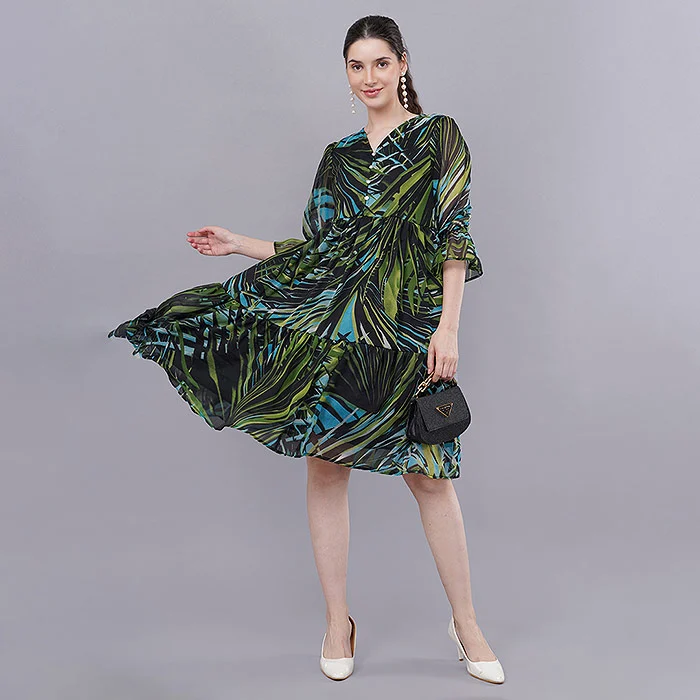
What Does an Ecommerce Product Video Cost Actually Include?
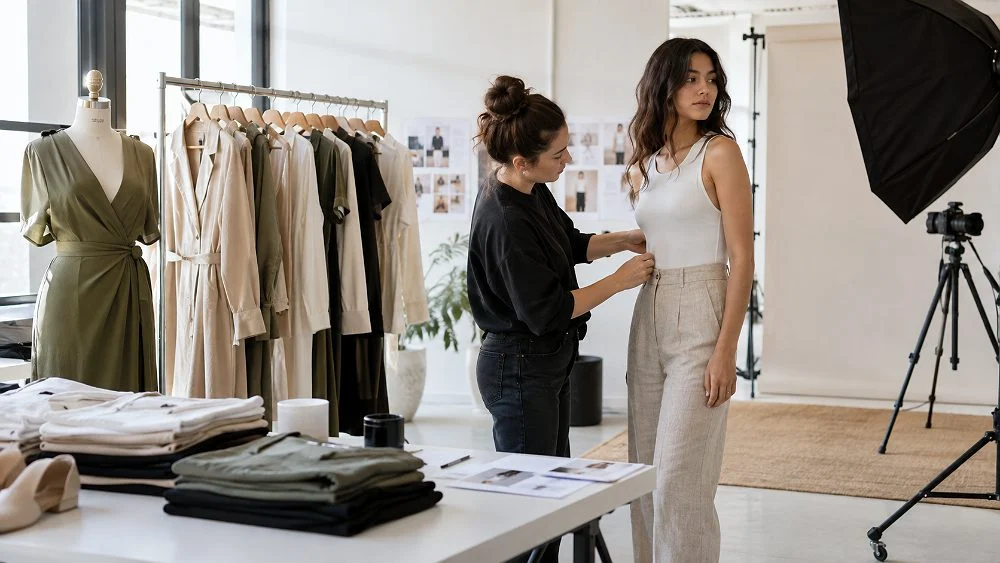
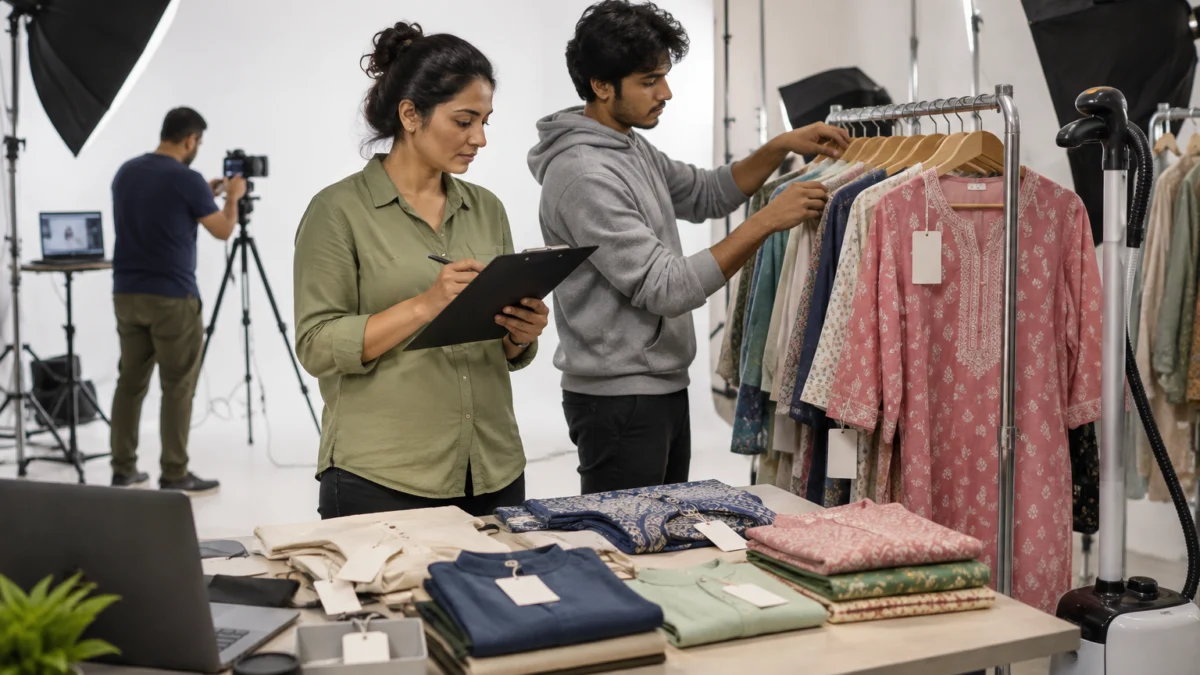
A professional per-product video price covers far more than the minutes the camera is rolling. It includes studio time, lighting, the videographer, basic styling and steaming, the shoot itself, and the edit that turns raw clips into a listing-ready file.
When sellers compare quotes, they often compare a full studio price with a freelancer’s camera-only rate and assume the studio is expensive. In reality, a fair ecommerce video shoot price bundles several jobs. Here is what a typical per-product price at a proper studio covers:
- Pre-production: reading your brief, grouping SKUs, planning the shot flow and choosing the frame ratio.
- Set and lighting: a white or neutral cyclorama, continuous or strobe lights with softboxes, and a stable camera rig or gimbal.
- Garment prep: steaming, pinning and basic styling so the fabric looks clean on camera.
- Talent direction: for model videos, directing turns, walks and detail moments that show fit and fall.
- Editing: trimming, colour matching across SKUs, stabilisation and exporting in the agreed size.
What is usually not included are things like scripted voice-over, licensed music for ads, complex motion graphics or outdoor location shoots. Those are separate productions, and you should ask about them before you sign off a budget.
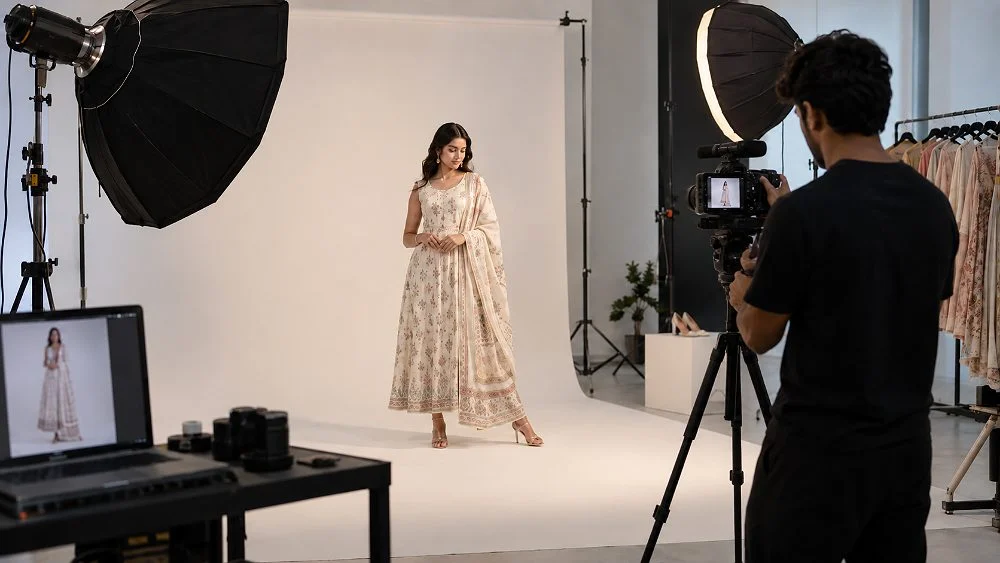
How Much Does an Ecommerce Product Video Cost per SKU in 2026-2027?
At Uniqs Studio, an ecommerce reels video of 20–25 seconds costs ₹900 per product, and a garment video with a model of 25–30 seconds costs ₹1,200 per garment, both delivered in 4–5 days. Photography rows are listed below so you can budget stills and video together.
These are our official per-product rates for 2026-2027. We keep the list simple on purpose, because most sellers want to multiply one clear number by their SKU count rather than decode a complex package. If you need both photos and videos for the same styles, plan them together, since one combined shoot day is easier to manage than two separate bookings.
| Shoot type | Images | Turnaround | Price |
|---|---|---|---|
| Footwear | 4–5 angles | 5 days | ₹245 / product |
| Bags & handbags | 4–5 angles | 4–5 days | ₹295 / product |
| Jewellery (ring, earring) | 2–3 angles | 4–5 days | ₹300 / product |
| Ghost mannequin | 1 angle | 3–4 days | ₹250 / image |
| Flat lay | 2–3 angles | 6 days | ₹290 / product |
| Model Photography | 5–6 angles | 4–5 days | ₹400 / product |
| Ecommerce Reels Video | 20–25 seconds | 4–5 days | ₹900 / product |
| Garment Video with Model | 25–30 seconds | 4–5 days | ₹1,200 / garment |
Prices are per product/image as listed; call or WhatsApp +91-8076745824 for bulk catalogue quotes.
Want a quote for your exact SKU list? Call +91-8076745824 or send your style list on WhatsApp at +91-8076745824 and we will reply with a per-SKU plan.
A quick note on how to read the table. The two video rows are per product, not per hour, so you are not paying for idle studio time or setup delays. The photography rows are there because most catalogue budgets include both, and seeing them side by side helps you decide which SKUs need motion and which only need clean stills.
What Drives the Price of an Ecommerce Product Video Shoot?
Nine factors decide most of the final bill: format and length, whether a model is used, the number of looks, SKU volume, set complexity, edit depth, versions and ratios, music or text overlays, and location. Get these clear in your brief and the quote stops being a surprise.
Satyam’s rule after 9+ years of ecommerce production is simple: the brief decides the budget. Two sellers with the same 50 kurtis can get very different quotes because one wants a single clean turn per style and the other wants three looks, voice-over and six aspect ratios. Here is how each factor moves the number.
1. Format and video length
A 20–25 second reel needs fewer setups and a shorter edit than a 25–30 second garment video that shows a front, back, side and fabric close-up. Longer brand films or explainer videos are separate productions with scripts and multiple scenes, which is why they are priced as projects rather than per SKU.
2. Model or no model
A model adds casting, styling, hair and make-up coordination and direction time. That is why the garment video with a model sits higher than a product reel. For fashion, though, the model is often the reason the video converts, because buyers want to see how a kurta falls when someone walks, sits or turns.
3. Number of looks per SKU
One look per style keeps the ecommerce product video cost predictable. Asking for a second styling, such as the same co-ord set with and without a dupatta, or a dress with two footwear options, effectively doubles the work for that SKU. Decide upfront which styles really need variants.
4. SKU volume and batching
Volume matters because setup is the hidden cost of every shoot. Once lights, backdrop and camera settings are locked for a category, each additional similar SKU moves quickly. Ten random products across five categories take longer than thirty kurtis in one batch, even though the second order is three times larger.
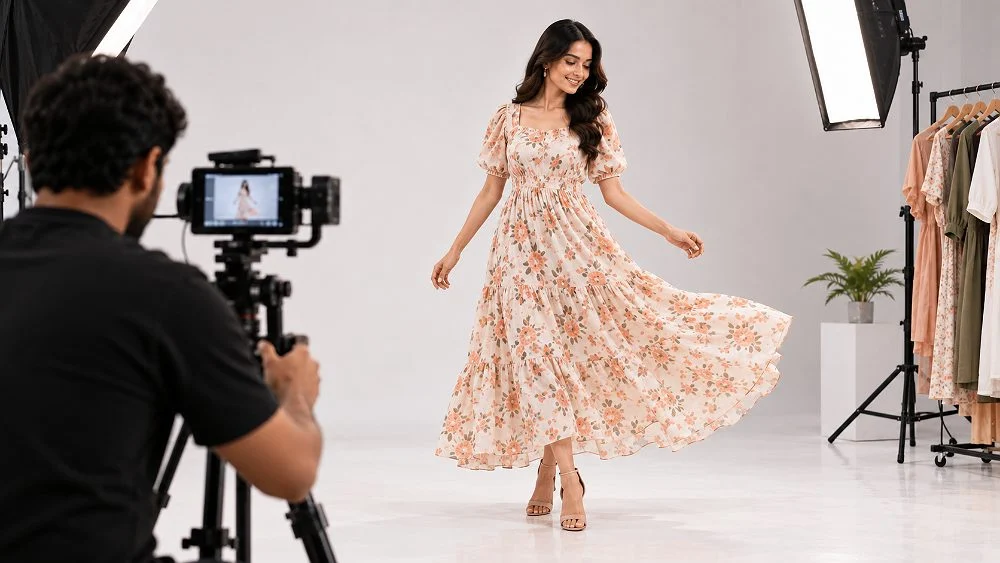
5. Set, props and background
A clean white or neutral background is the most efficient choice and works across most marketplaces. Styled sets with props, coloured paper or lifestyle corners need extra build and reset time between SKUs. Use them for hero products and campaign content, not for every catalogue item.
6. Editing depth
Basic edits cover trimming, colour correction and stabilisation. Heavy edits add speed ramps, transitions, split screens, background clean-ups or product callouts. Each extra layer adds editor time per SKU, so agree on one edit style and apply it across the batch.
7. Versions and aspect ratios
Many brands want a vertical 9:16 file for reels and marketplace apps, plus a square or 16:9 file for websites and ads. If you plan this before the shoot, the videographer frames with safe space and one shoot covers both. If you ask for new ratios after delivery, the edit has to be redone.
8. Music, text and voice-over
Simple text such as fabric name or size is easy to add. Licensed music for paid ads, professional voice-over and animated graphics are add-ons that sit outside a standard catalogue video, so flag them in your brief if you need them.
9. Location and travel
Studio shoots are the most cost-efficient because everything is already set up. On-location shoots in Delhi, Gurgaon, Noida, Faridabad or Ghaziabad add travel, equipment transport and setup time, and they depend on light and permissions. For most catalogue work, the studio wins on both cost and consistency.
Which Video Format Fits Your Budget: Reel, Garment Video or Product Demo?
Choose a reel when you need quick, scroll-friendly motion for many SKUs, a garment video with a model when fit and fabric drive the buying decision, and a product demo when the buyer needs to see a feature working. The right format, not the cheapest one, gives the best return per rupee.
| Format | Best for | Typical length | Budget fit |
|---|---|---|---|
| Ecommerce reel | Accessories, beauty, kids’ wear, quick catalogue motion | 20–25 seconds | Large SKU counts, steady listing refresh |
| Garment video with model | Kurtas, dresses, co-ords, menswear, ethnic wear | 25–30 seconds | Hero styles and best sellers |
| Product demo video | Gadgets, beauty tools, kitchen and home products | Project-based | Products with a feature to explain |
| Brand film | Launches, campaigns, website hero sections | Project-based | Separate marketing budget |
For beauty and personal-care brands, a clean product reel with smooth light, texture and close-ups often does more work than a model video. The example below shows the kind of short, polished product film that suits serums, creams and other cosmetics.
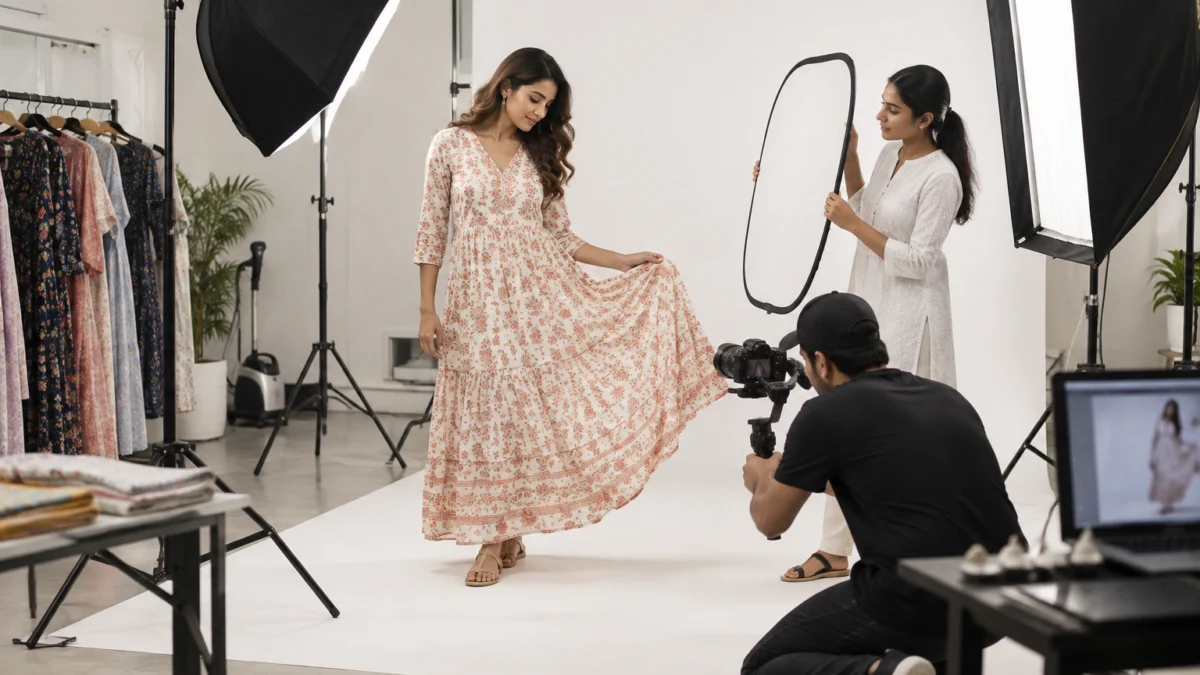
If you are still deciding whether you need a studio at all, our comparison of an AI video maker versus a professional studio explains where each option makes sense and where AI output still falls short for real garments.
How Do You Budget a Catalogue Video Shoot Step by Step?
Start with your SKU list, decide which styles need video, assign one format per style, multiply by the per-product rate, and add a buffer of about ten percent for re-shoots and late additions. This turns a vague catalogue video budget into a clear number you can approve in minutes.
- List every SKU with category, colour variants and launch date. Colour variants of the same style usually need one video, not one each.
- Tag the priority styles. Best sellers, new launches and high-return items get video first.
- Pick one format per style: a reel for simple products, a garment video with a model where fit matters.
- Multiply by the per-product rate from the price table above.
- Add photography if those styles still need stills, so both happen on one shoot day.
- Keep a buffer of around ten percent for late SKUs, minor re-shoots and extra ratios.
- Plan the roll-out: shoot in monthly or seasonal batches instead of one huge, rushed order.
Sample catalogue video budget for a fashion brand
Here is a worked example using only our list rates. Imagine a D2C ethnic-wear brand launching 40 kurtis and 15 premium co-ord sets in one season. The kurtis need quick reels for marketplace listings, while the co-ord sets are hero products that deserve a garment video with a model.
| Line item | Quantity | List rate | Subtotal |
|---|---|---|---|
| Ecommerce Reels Video (kurtis) | 40 products | ₹900 / product | ₹36,000 |
| Garment Video with Model (co-ord sets) | 15 garments | ₹1,200 / garment | ₹18,000 |
| Model Photography (co-ord sets) | 15 products | ₹400 / product | ₹6,000 |
| Total at list rates | — | — | ₹60,000 |
The subtotals are simple multiplication of the official rates, so you can swap in your own SKU counts. For bulk catalogues, call +91-8076745824 for a final quote, because the exact number depends on your styling list and delivery dates.
Do Amazon, Myntra and Meesho Need Different Product Videos?
The core footage can be the same, but the export and focus change. Vertical 9:16 files suit app-first platforms and reels, while wider files suit websites and some listing slots, so plan your ratios before the shoot rather than after it.
On Amazon, video placement and upload options depend on your seller and brand status, so check the current rules on Amazon’s official seller portal before you finalise formats. On Myntra, fashion buyers respond to clear fit and fabric movement, which is why our clients often pair a garment video with an on-model still set. Meesho sellers usually work with tighter per-SKU margins, so short reels on priority styles make more sense than full model videos for every product.
The practical takeaway is that you do not need a separate shoot for each marketplace. You need one well-lit shoot with enough safe space around the product, and then smart exports. That single decision often saves more money than any discount.
What Hidden Costs Inflate a Product Video Budget?
Most budget overruns come from unclear briefs, unprepared garments, last-minute ratio changes and repeated revisions, not from the per-video rate itself. Fix these before the shoot and your final bill stays close to the quote.
- Unsteamed or damaged stock: wrinkled garments slow the set and show badly in motion.
- Missing accessories: footwear, dupattas or belts that arrive late hold up whole batches.
- Changing the brief mid-shoot: new looks or poses on the day add time for every SKU after that point.
- Post-delivery ratio requests: asking for a 16:9 version after a 9:16 delivery means re-editing.
- Endless revision rounds: agree on one feedback round with consolidated comments.
- Cheap re-shoots: a low-cost video that looks inconsistent often gets redone within months.
That last point is where many sellers lose money. A video that does not match your other listings, or shows the wrong colour, is a cost you pay twice: once for the shoot and once for the returns and lost trust it causes.
Is a Studio Video Cheaper Than DIY or AI Video in the Long Run?
DIY and AI videos look cheaper on day one, but a studio video is usually cheaper per sale over a season because it is consistent, colour-accurate and shows the real product. For fashion, buyers notice when fabric movement or colour looks wrong, and that shows up as returns.
A phone video shot at home can work for a quick social story. For a catalogue, though, the hidden costs are your own time, inconsistent lighting across SKUs and colour that changes from one video to the next. AI-generated videos add another risk: the garment’s real drape, print scale and fit can be altered, which is exactly what customers complain about when the parcel arrives. We always recommend real footage of your real product for listings.
According to Wyzowl’s annual video marketing research, a large share of consumers say watching a video helped convince them to buy a product. That is why the real question is not the lowest ecommerce product video cost, but the best cost per sale.
How Can You Lower Video Cost Without Losing Quality?
Batch similar SKUs, shoot stills and video on the same day, lock one edit style and one set of ratios, and save model videos for styles where fit truly matters. These four habits cut cost far more reliably than chasing the lowest per-video rate.
- Batch by category and colour family so lights and camera settings stay locked for longer.
- Combine stills and motion: pairing a reel with on-model fashion shoots on the same day avoids paying for a second model day.
- Use ghost mannequin stills for basics: for plain tees, shirts and innerwear, ghost mannequin shots plus one short reel often do the job.
- Repurpose one shoot into listing videos, reels and ad cuts, as explained in our guide to turning one shoot into multiple video assets.
- Send a clean brief with SKU codes, styling notes and reference videos before the shoot day.
If you are budgeting photography as well, our garment photography cost guide explains how still-image pricing works, so you can plan one combined catalogue budget.
What Should Your Pre-Shoot Video Budget Checklist Include?
Before you approve any quote, confirm the SKU list, format per style, length, ratios, edit style, delivery date and who approves the final files. A one-page checklist like the one below prevents most of the extra costs sellers face.
- Final SKU list with codes, sizes and colour variants
- Format chosen for each style: reel or garment video with model
- Video length agreed: 20–25 or 25–30 seconds
- Aspect ratios listed before the shoot
- Edit style and any text overlays agreed
- Garments steamed, tagged and grouped by category
- Accessories and footwear packed with each look
- Delivery date and one consolidated feedback round
- Buffer of about ten percent kept aside
How Will Product Video Costs Change in 2026-2027?
Expect video to move from a nice extra to a standard part of every fashion listing, with more vertical-first formats and more brands asking for one shoot to cover listings, reels and ads. Per-SKU pricing will stay popular because it makes catalogue budgets predictable.
Three trends stand out for sellers planning their next year. First, vertical 9:16 video is becoming the default because shopping is increasingly app-first. Second, AI tools will keep improving for backgrounds and simple edits, but real garment footage will remain the trust signal buyers look for. Third, brands are moving from one big annual shoot to smaller monthly batches that match their launch calendar, which spreads the cost and keeps listings fresh. Google’s own Think with Google insights regularly highlight how online video shapes purchase decisions, so this shift is unlikely to reverse.
Frequently Asked Questions About Ecommerce Product Video Cost
These are the questions D2C brands and marketplace sellers ask us most often before booking a video shoot.
At Uniqs Studio, an ecommerce reels video of 20–25 seconds is ₹900 per product and a garment video with a model of 25–30 seconds is ₹1,200 per garment. Other studios price differently, so always compare what is included.
Catalogue videos at Uniqs Studio are priced per product, so you know the total before the shoot. Brand films and complex campaign videos are quoted as separate projects.
Both ecommerce reels and garment videos with a model are delivered in 4–5 days as per our current price list. Large catalogues are usually shot and delivered in planned batches.
Pick one format per style, multiply the count by the per-product rate, add photography if needed, and keep around ten percent as a buffer. Call +91-8076745824 for a bulk quote.
No. Use a model where fit and drape decide the purchase, such as kurtas, dresses and co-ords. Bags, beauty products and basics often work well with a short product reel.
Yes, if the ratios are planned before the shoot. The videographer frames with safe space so the same footage can be exported in vertical and wider sizes.
What Is the Next Step After Setting Your Video Budget?
Once you know your SKU count and formats, the next step is a short call to lock the shoot plan, dates and delivery batches. A clear plan is what keeps your ecommerce product video cost exactly where you budgeted it.
Next step: share your SKU list and book a video shoot consultation with Uniqs Studio. Satyam or the production team will suggest the right format for each style, confirm the per-SKU price and give you a delivery plan. You can also email [email protected] or WhatsApp +91-8076745824.
Plan your catalogue videos with Uniqs Studio
Reels at ₹900 per product and garment videos with a model at ₹1,200 per garment, shot in our Delhi studio. Call Satyam on +91-8076745824 or write to [email protected].