Amazon India Seller Guide · Delhi NCR · Updated September 2026
Amazon Fashion Photography: 7 Essential Images Every Clothing Listing Should Have in 2026
A seller-ready, slot-by-slot photography brief for apparel brands that need compliant main images, useful secondary views, accurate fabric detail and a repeatable visual standard across every SKU.
By Satyam14 September 202618–20 min readLast checked: September 2026
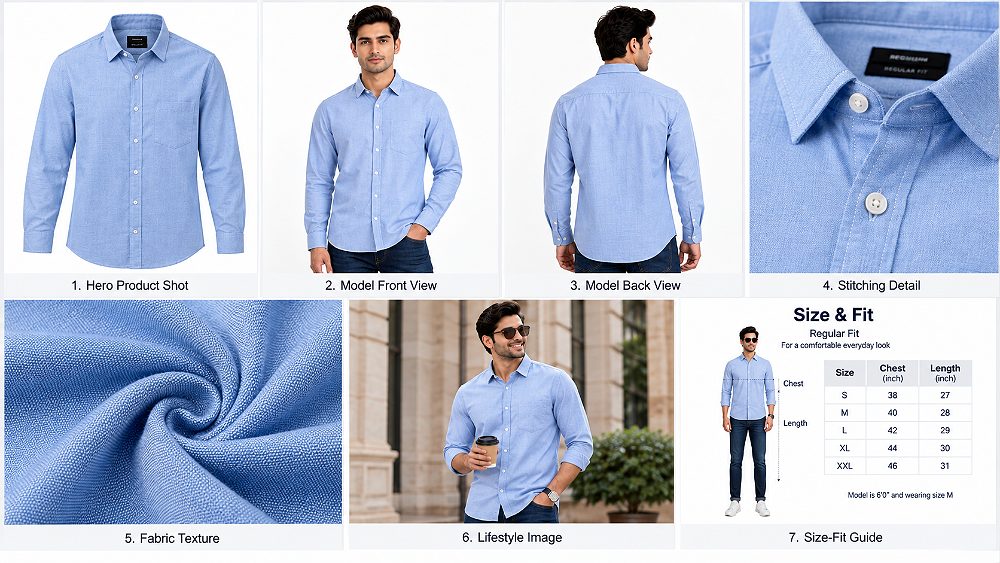
The complete seven-frame clothing coverage strategy recommended in this guide. Replace this WordPress image with the final approved production visual before publishing.
Amazon Fashion Photography is not simply about making garments look attractive. For an online buyer who cannot touch a fabric, check a back neckline or try a fit, the image set becomes the product inspection. A weak listing may leave crucial questions unanswered even when the garment itself is excellent.
For Amazon India sellers, D2C clothing brands, apparel manufacturers, marketplace managers and catalogue teams, the most practical approach is to separate Amazon compliance from conversion-focused coverage. The MAIN image follows stricter rules; the secondary images should remove uncertainty about silhouette, construction, texture, styling and fit. The same production discipline also helps brands that sell on Flipkart and Myntra, where catalogue consistency matters across high-SKU workflows.
This guide gives a precise seven-image shot stack that sellers can hand directly to a photographer: Main/Hero, Front or On-Model, Back, Detail, Fabric, Lifestyle, and Supporting Size/Fit/Feature. Seven is the recommended coverage framework used here, not a claim that Amazon universally requires exactly seven images. Amazon’s own seller guidance distinguishes the MAIN image from additional images and advises sellers to check the category-specific Product Page Style Guide before upload.
Quick answer
The seven images Uniqs Studio recommends for a complete Amazon clothing listing are: 1) main hero, 2) front/on-model, 3) back, 4) garment detail, 5) fabric close-up, 6) lifestyle, and 7) supporting size, fit or feature image.
Key Takeaways for Amazon Clothing Sellers
Get the MAIN image compliant before spending time on creative secondary images.
Use each secondary frame to answer a different buyer question instead of repeating near-identical angles.
Keep model fit, garment colour, fabric texture and retouching realistic so the listing accurately represents the SKU.
Build the seven-image sequence into the shoot brief before production to reduce missing shots and avoid reshoots.
For large catalogues, repeatable camera height, crop, lighting and filename conventions are as important as individual image quality.
Compliance first
Amazon Fashion Photography in 2026: Requirements vs Recommended Images
The first practical distinction is between the MAIN product image and secondary images. Amazon Seller Central guidance says the MAIN image should accurately represent the actual product, use a pure white background with RGB values 255, 255, 255, keep the product prominent in the frame, and avoid text, logos, borders, watermarks or unrelated graphics. Amazon India seller guidance also states that the product should fill at least 85% of the image frame and recommends images of at least 1,000 pixels for zoom.
For current policy context, sellers should review Amazon’s official Product Image Requirements and the Amazon India seller guidance on product photos. Category-specific apparel rules can differ, so a fashion seller should re-check the relevant style guide before uploading a final catalogue.
Recommended coverage is a separate strategy. Secondary Amazon fashion images can show the product in use, different views, important details and supporting information. That is where a seller can explain back design, sleeve construction, fabric weave, drape and real-world styling. For broader marketplace planning, Uniqs Studio’s ecommerce fashion photography guide for Myntra, Amazon and Flipkart explains how one disciplined shoot can support several marketplace destinations without treating every platform as identical.
Amazon Compliance Check — September 2026MAIN-image rule and technical guidance checked against Amazon Seller Central / Amazon India seller guidance. Always confirm the current category-specific apparel style guide before publication.
Element
MAIN Image
Secondary Images
Seller Action
Background
Pure white for the MAIN product image
Can use product, lifestyle or informative settings where permitted
Keep slot 1 compliance-led
Product presentation
Actual product, clear and prominent
Angles, model fit, context and features
Assign one buyer question per frame
Text / graphics
Avoid promotional overlays
Supporting information may be used when compliant
Keep infographics factual and readable
Angles
Primary identification view
Front, back, detail and texture
Do not repeat redundant views
Lifestyle
Not the job of slot 1
Useful for context and styling
Keep garment visibility dominant
Size / fit
Not a promotional overlay
Useful as a supporting image
Answer the final purchase objection
Amazon Fashion Photography Main Image Checklist
✓ Pure white MAIN-image background✓ Correct product and SKU✓ Product fills 85%+ of frame✓ Complete garment visible✓ Sharp and properly exposed✓ Accurate colour✓ No watermark✓ No promotional text✓ No decorative border✓ No unrelated props✓ High-resolution export✓ Category guide checked
Secondary Amazon Fashion Images Should Answer Buyer Questions
A useful secondary-image strategy starts with questions rather than camera angles. What does the front look like? What does the back look like? How does the garment fit? What does the fabric feel like visually? Which construction feature justifies the price? How can it be styled? What size, fit or included component could still be unclear? This approach turns Amazon listing photography into a visual decision path instead of a random gallery.
The core shot stack
7 Amazon Fashion Photography Images Every Clothing Listing Should Have
The following seven-image stack is designed for Amazon fashion photography for clothing sellers who want a complete, repeatable listing standard. It combines compliance, garment documentation and conversion-focused secondary coverage. A brand can adapt the exact composition by category, but the logic stays consistent: each slot should communicate something the previous slot did not.
The MAIN image is the listing’s primary product identification frame, so Amazon clothing photography should begin with accuracy rather than styling. Keep the entire garment visible, preserve its actual shape, and make sure the background is genuinely clean rather than slightly grey or warm. The image should be sharp enough that hems, collars, cuffs and product edges survive marketplace compression cleanly.
For a men’s formal shirt, for example, the seller should be able to confirm sleeve length, collar geometry, placket alignment and hem shape immediately. Avoid crop decisions that hide the lower hem or sleeve end. Retouch dust, loose threads and small temporary imperfections, but do not change the real cut, colour or construction. This is the foundation of Amazon product photography for clothing.
Consistency matters across colour variants too. A catalogue looks more professional when the camera position, scale and whitespace remain stable from SKU to SKU. Sellers planning broader branded content can also read the fashion catalogue photography complete guide for a structured approach to shot consistency beyond a single listing.
Main Image QC Before Upload
Correct SKU and colour
Pure white background
Full garment and clean crop
Sharp fabric edges with no masking artefacts
No text, watermark or unrelated prop
High-resolution final export
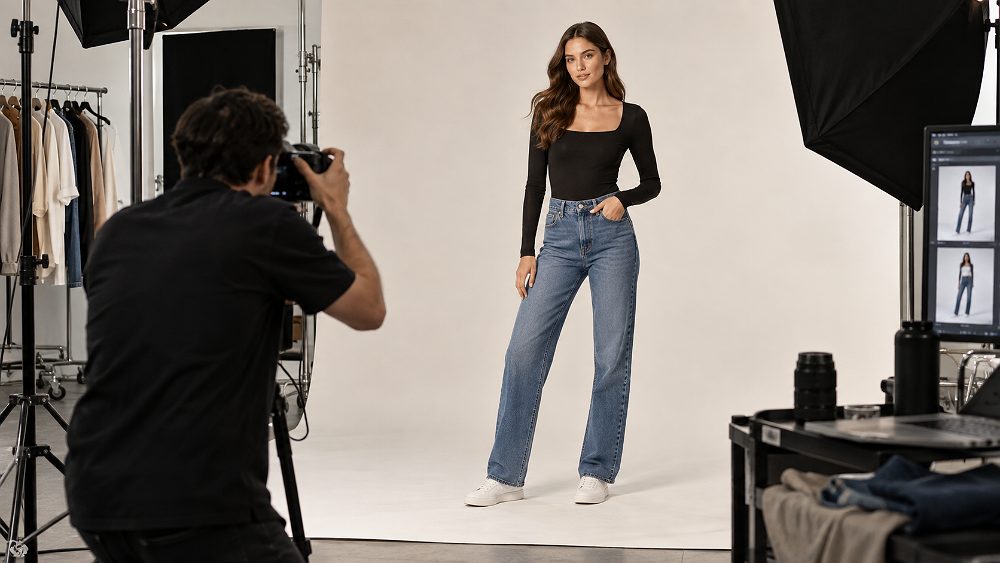
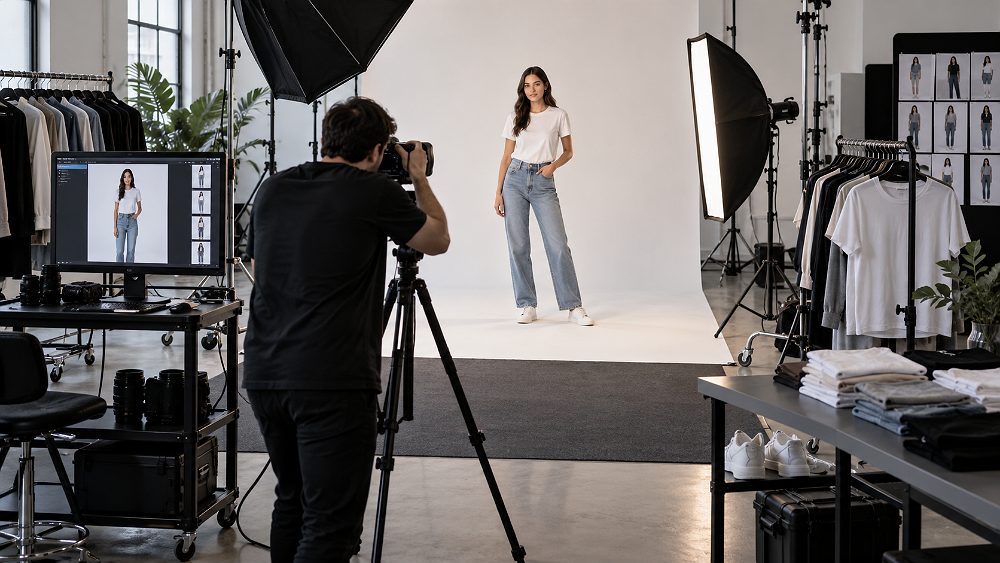
Free stock visual reference: professional fashion studio production. For final brand publishing, real SKU photography is preferable.02
Front or On-Model Image: Show Fit and Silhouette
Fashion photography for Amazon should show how the garment actually sits on a human body without letting the pose hide the product. Keep arms positioned so the neckline, waist, sleeve shape and hem remain readable. Use a realistic stance, appropriate camera height and consistent lens position across a catalogue to make fit comparisons easier.
Amazon model photography is especially useful for kurtis, dresses, T-shirts, shirts, co-ord sets and other products where silhouette is a major buying factor. The model frame can communicate drape and proportion much better than a flat view, but it should not exaggerate the shape with aggressive retouching. If the MAIN-image presentation rules differ for a specific apparel category, keep the model view in a secondary slot after checking the category guide.
A back view is one of the simplest ways to reduce uncertainty in Amazon apparel photography. It reveals back neckline depth, rear embroidery, garment length, pleats, pockets, closures, seams and panel construction. Use the same styling, lighting and camera position as the front frame so shoppers can compare the garment logically.
For a kurti with a decorated back yoke, a jacket with a rear panel, or a dress with a zip closure, skipping the back image removes information that a buyer would normally inspect in-store. It also creates inconsistent Amazon clothing listing images when some SKUs show the rear design and others do not. A clean back frame is usually more valuable than a second front pose that communicates nothing new.
04
Detail Image: Highlight Construction and Product Features
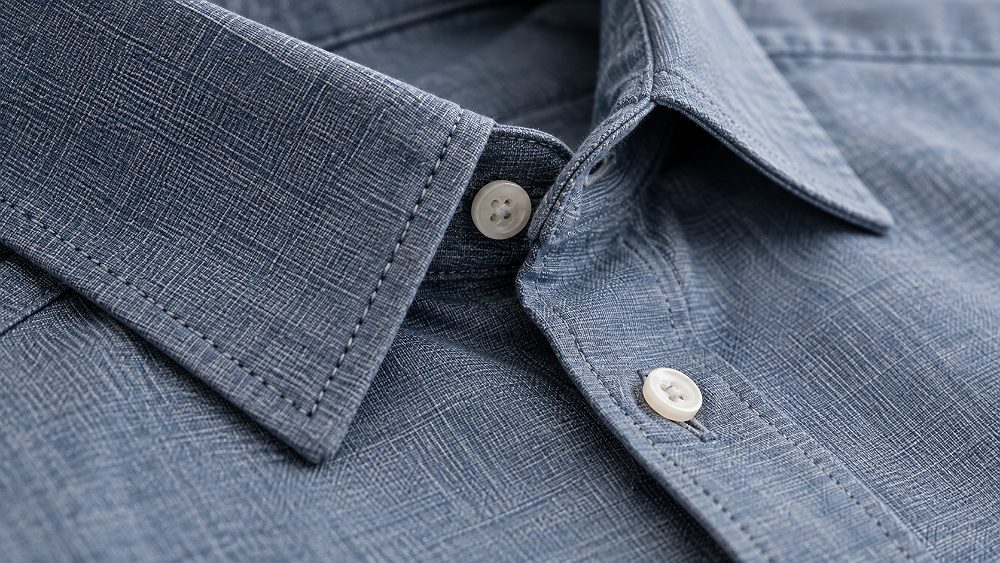
Amazon garment detail photography should focus on the feature that materially changes the buying decision: buttons, zipper quality, embroidery, pocket construction, collar shape, neckline, cuffs, stitching, print alignment, trims or hardware. The goal is not to create a decorative macro frame; it is to show craftsmanship that the buyer cannot inspect physically.
A good rule is to photograph the feature that supports the product’s value proposition. If the SKU is sold on its embroidery, show the embroidery. If the premium claim comes from a distinctive cuff, show that cuff. In Amazon listing photography, generic details create gallery volume but not decision value. Strong detail selection is one reason professional pre-production planning matters.
Fabric and construction close-ups should show the real weave, stitching and surface instead of artificially over-sharpening texture.05
Fabric Close-Up: Let Buyers See Texture
Amazon fabric close-up photography helps shoppers understand material appearance when touch is impossible. Show the weave, knit, surface sheen, embroidery, zari, ribbing or print texture with controlled sharpness and accurate colour. Cotton, denim, linen, rib knit and satin all respond differently to lighting, so the close-up setup should be adjusted to the fabric rather than copied mechanically from the full-body shot.
Soft directional light can create enough depth to reveal texture without turning the material into a harsh, contrast-heavy surface. Avoid extreme clarity, sharpening or AI texture enhancement that makes the fabric appear different from the real garment. High-quality Amazon clothing product images should help the buyer form a more accurate expectation, not a more dramatic one.
For ecommerce teams, the same principle applies on Nykaa fashion extensions, Shopify D2C stores and catalogue landing pages: the fabric close-up should explain material quality. Where apparel teams also need clean product-only imagery, Uniqs Studio’s garment photography services can support repeatable SKU-level documentation.
06
Lifestyle Image: Show How the Clothing Fits Into Real Life
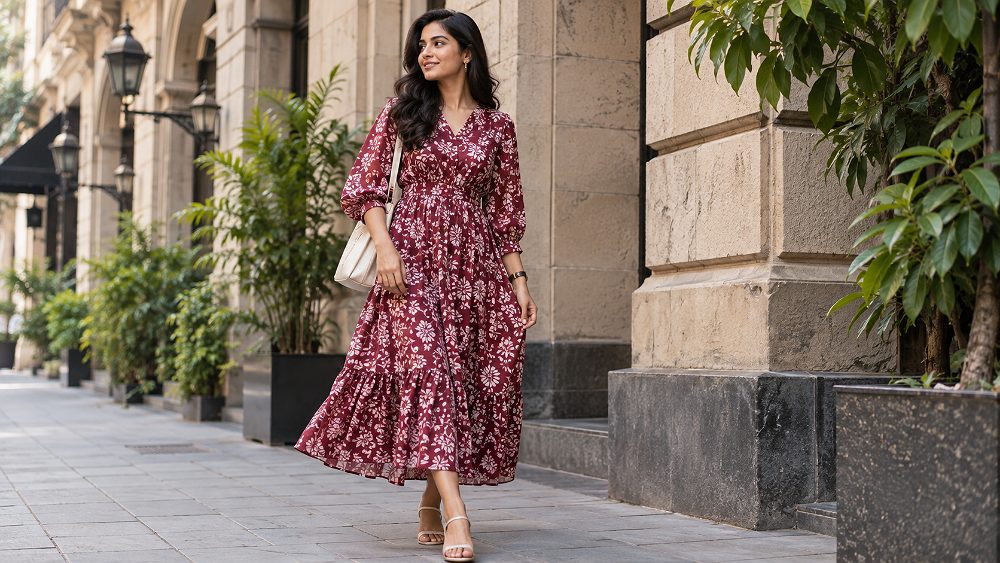
Amazon fashion lifestyle photography adds context after the product has already been documented clearly. An office shirt can be shown in a refined workplace, a summer dress in natural daylight, activewear in a fitness setting, a kurta in an occasion-appropriate environment, and streetwear in a clean urban location. The setting should support the garment, not compete with it.
Keep the outfit as the visual priority, maintain accurate colour and avoid distracting props that make the shopper search for the product. Lifestyle images are useful for brand storytelling, especially when the same creative system feeds Amazon, Ajio and Shopify campaigns. Sellers deciding between controlled indoor looks and location imagery can compare the practical differences in fashion photography studio vs outdoor shoots.
A lifestyle image should add context while keeping the clothing easy to evaluate.07
Supporting Image: Size, Fit, Variant or Product Benefit
The seventh frame should not be filler. Use it for the biggest unanswered purchase question after images one through six. Depending on the garment, it can show size and fit reference, length, product dimensions, included components, colour variants, a special fabric benefit, wash-care guidance, a feature infographic or an alternative styling option.
For a three-piece ethnic set, the supporting image might clearly identify the kurta, bottom and dupatta included in the purchase. For a longline shirt, it might clarify back length. For a performance garment, it might explain a construction feature. This makes the final slot a strategic part of Amazon apparel listing photography instead of one more repeated pose.
How to Choose the Seventh Image
Ask one question: “What is the biggest unanswered purchase question after someone sees images 1–6?” Use image seven to answer it as simply and accurately as possible.
Reusable catalogue order
Best Amazon Clothing Photography Order: The 7-Image Sequence
The best photo angles for Amazon clothing are not valuable because they are angles; they are valuable because they answer questions. A seller can use the sequence below as a pre-shoot brief for Amazon product listing photography for garments, then adapt it by product type. It gives the catalogue manager, photographer, stylist and retoucher one shared order.
Main/Hero
Front/On-Model
Back
Detail
Fabric
Lifestyle
Supporting Size/Fit/Feature
Slot
Image Type
Main Job
Buyer Question Answered
1
Main/Hero
Search + product identification
What exactly am I buying?
2
Front/Model
Fit and silhouette
How does it look when worn?
3
Back
Rear construction
What does the back look like?
4
Detail
Construction/features
What makes it different?
5
Fabric
Material visibility
What does the fabric look like?
6
Lifestyle
Context/styling
How can I wear it?
7
Supporting
Remove final objection
What else do I need to know?
This Amazon fashion product image sequence is especially useful when a brand is producing dozens or hundreds of SKUs. The shot order can be converted into filenames, capture folders and retouching queues so missing assets are identified before delivery. For clothing brands building an entire marketplace catalogue, the fashion photography for clothing brands in Delhi guide gives additional planning context.
Quality control
7 Amazon Listing Photography Mistakes Clothing Sellers Should Avoid
1. Off-white or grey MAIN-image background.Why it matters: it can fail the clean Amazon presentation standard. Fix: measure the final background and ensure a true white export.
2. Garment too small in frame.Why it matters: details become harder to evaluate. Fix: frame the product to remain prominent and consistent.
3. Only one meaningful angle.Why it matters: shoppers cannot inspect construction. Fix: add front, back, detail and material coverage.
4. Exaggerated model poses.Why it matters: sleeves, waist, neckline or hem may be hidden. Fix: prioritise garment readability over editorial drama.
5. No fabric close-up.Why it matters: buyers cannot judge visible material texture. Fix: add one true-to-life macro or close detail.
6. Over-retouching colour or shape.Why it matters: the image stops accurately representing the SKU. Fix: correct imperfections without redesigning the product.
7. Seven repetitive photographs.Why it matters: image count grows without reducing uncertainty. Fix: assign a unique buyer question to every secondary image.
These mistakes are common when clothing photography for Amazon sellers begins without a written brief. They also create downstream problems when the same assets are reused on Flipkart, Paytm catalogue pages or a brand’s own Shopify store. A structured shot list keeps production useful across channels while preserving Amazon-specific compliance where it matters.
Production workflow
Amazon Fashion Photography Shoot-Day Checklist for Clothing Sellers
An Amazon apparel photography shot list should be final before the garment reaches the set. Satyam’s production approach is to map each SKU against required outputs first, then confirm garment condition, sample size, colour variants and model requirements. That reduces the chance of discovering after the shoot that one SKU is missing a back, fabric or feature frame.
Before Shoot
Final SKU list
Colour variants
Garments steamed
Defects removed
Size/sample confirmed
Styling plan
Image slots assigned
During Shoot
Main image
Front/model
Back
Details
Fabric
Lifestyle
Supporting image
Colour checked
Focus checked
Before Delivery
Correct filenames
Correct SKU mapping
White-background QC
Consistent crop
Resolution checked
Colour checked
Retouching artefacts checked
For high-volume teams, filename discipline is part of photography quality. A delivery with beautiful images but confusing SKU mapping slows listing creation and introduces mistakes. Marketplace managers for Amazon and Myntra should agree on naming conventions before production, while brands building product videos can align the same SKU references with an ecommerce videoshoot shot-list workflow.
A repeatable production setup makes framing and colour easier to keep consistent across large apparel catalogues.Trust and accuracy
Real Amazon Clothing Photography vs AI-Generated Fashion Images
AI can help with moodboards, concept exploration and creative planning, but the product listing itself needs visual truth. For Amazon seller product photography, the safest commercial standard is real professional garment photography of the actual SKU. AI-generated fashion images can alter seam placement, fabric texture, embroidery, drape, colour, fit or included components—even when the result looks polished.
That makes AI-generated product imagery risky for a listing whose job is to represent exactly what the customer will receive. Uniqs Studio recommends using real product and model photography for Amazon apparel product images, especially for MAIN images, fit frames, fabric close-ups and construction details. AI can remain a supporting creative tool, not a substitute for accurate product documentation.
DIY vs Professional Amazon Product Photography for Clothing
DIY can work when a seller is testing a handful of products and can control lighting, background, colour and post-production. The difficulty begins when the catalogue grows. Repeating camera height, garment scale, model pose, white background, colour accuracy and retouching across dozens of SKUs requires a workflow, not just a camera.
Factor
DIY
Freelancer
Professional Fashion Studio
Cost
Lowest
Medium
Higher
Image consistency
Variable
Medium
High
Model / styling access
Limited
Variable
Available
High-volume SKU workflow
Difficult
Medium
Strong
Colour consistency
Variable
Medium
Strong
Retouching
Self-managed
Variable
Included / available
Marketplace delivery workflow
Manual
Variable
Structured
Best for
Small tests
Small batches
Growing catalogues
Professional production becomes more useful when consistency, models, frequent launches and large SKU counts matter. Uniqs Studio handles fashion, model and garment workflows from Delhi NCR, and brands can review professional fashion photography or model photography services depending on the catalogue requirement.
Commercial planning
Amazon Fashion Photography Pricing in India in 2026
Amazon fashion photography price depends on the number of SKUs, whether the set is product-only or model-led, styling complexity, retouching level and turnaround. For sellers comparing Amazon clothing product photography India options, the useful question is not only the per-SKU number—it is whether the package produces enough non-redundant frames to complete the listing without a reshoot.
Package
Indicative Pricing
Images / Deliverables
Best For
Basic
₹199–₹349 per SKU
5–6 shots
Basic catalogue requirements
Standard — Recommended
₹399–₹699 per SKU
8–10 shots
Amazon sellers using the complete 7-image strategy
Premium
₹899–₹1,499 per SKU
10–12 shots
Model + richer fashion coverage
Enterprise
From ₹1,50,000 per cycle
Custom catalogue production
Large-volume brands
The Standard tier is the natural fit for a seven-image Amazon clothing framework because an 8–10 image allowance leaves room for one or two extra variation or feature frames. Final pricing should be confirmed against SKU volume, model requirement, styling, retouching and turnaround. Sellers comparing broader fashion budgets can also review fashion photography cost in Delhi.
Planning an Amazon clothing catalogue?
Send the SKU count, garment category and required image style. Satyam can help structure a practical seven-frame production plan before shoot day.
Professional Amazon Fashion Photography for Clothing Sellers
A seller can hand this seven-image brief directly to a photographer, but large catalogues need more than a list. They need consistent framing, calibrated colour decisions, organised garment preparation, repeatable model direction and delivery files that map cleanly to SKU codes. That is where a studio workflow becomes commercially useful.
Uniqs Studio operates from Delhi NCR and supports fashion brands that need professional Amazon fashion photography India workflows, Amazon fashion photography services Delhi support and Amazon clothing photography services Delhi NCR execution. For enquiries, call +91-8076745824, email [email protected], or message +91-8076745824.
Multi-channel reuse
How the Seven-Image Brief Extends Beyond Amazon
Amazon is the primary focus of this guide, but a disciplined source shoot can also support Flipkart, Myntra and Ajio catalogues, provided each channel’s current specifications are respected. D2C teams may reuse accurate product, model and fabric frames on Shopify, while campaign teams can adapt lifestyle assets for Nykaa, Paytm or social commerce. The important principle is to create truthful source photography first, then format it for each destination.
Video production can follow the same logic. A brand already capturing seven structured still-image questions can plan complementary motion assets such as turnarounds, fit movement, fabric behaviour or product reels. The ecommerce product video types guide, one-shoot product reels workflow and Amazon garment video guide can help teams extend the same production day into useful motion assets without weakening still-image coverage.
Other sellers may also work with Meesho, eBay or Etsy depending on product and market. Those channels have their own presentation expectations, so a shared source library is helpful only when the final export is adapted to the destination rather than copied blindly.
People also ask
Amazon Fashion Photography FAQs
A strong Amazon clothing listing should show a main product image, front or on-model view, back view, important garment details, fabric texture, lifestyle context and a final supporting image covering fit, size or another important product feature. This seven-frame structure is a recommended coverage strategy, not a universal Amazon requirement.
Use enough images to answer the buyer’s main product questions without repetition. Amazon does not universally mandate exactly seven images. This guide recommends seven because clothing shoppers typically need product identification, fit, back construction, details, fabric, context and one final size, fit or feature explanation.
Amazon’s MAIN product image should accurately represent the item, use a pure white background, keep the product prominent and avoid promotional overlays, borders or watermarks. Images should be clear and high resolution. Sellers should confirm the current category-specific Amazon Seller Central style guide before uploading apparel images.
No. Seven images are the complete clothing-photography framework recommended in this guide, not a universal Amazon requirement. Amazon requires a valid MAIN product image and provides additional image opportunities that sellers can use for angles, features, fit and product context.
The MAIN image should accurately show the product for sale on a pure white background, keep the product prominent in the frame, and avoid text, watermarks, borders or unrelated graphics. Amazon India seller guidance states the product should fill at least 85% of the frame. Check category-specific rules before upload.
Yes, model photography can be valuable for communicating garment fit and proportion, particularly in secondary images. The permitted MAIN-image presentation can depend on the apparel category, so verify the current Amazon category-specific style guide before deciding whether the primary frame should use a model or another presentation.
Use high-resolution files and aim for at least 1,000 pixels on the longest side so zoom can be supported. Amazon India guidance has described an overall 500–10,000 pixel range on the longest side. Professional studios often deliver larger master files, then export according to current Seller Central requirements.
Amazon requires a pure white background for the MAIN product image under its general product-image guidance. Secondary images can be used for additional angles, details, lifestyle context and supporting information, subject to category rules. The MAIN image should remain the cleanest and most compliance-led frame.
Prioritise a main product view, front/on-model fit, back view, one important construction detail and a fabric close-up. Then add lifestyle context and one supporting size, fit or feature frame. The purpose of the angles is to answer distinct buyer questions rather than maximise the number of photographs.
Lifestyle images can be useful secondary assets because they show styling and real-world context. They should complement, not replace, clear product documentation. Keep the garment visually dominant and make sure the lifestyle frame does not misrepresent colour, fit, included components or product features.
Use a sharp close-up with soft directional lighting that reveals the real weave, knit, embroidery or surface without excessive sharpening. Keep colour accurate and ensure the close-up comes from the actual SKU. The fabric image should help the buyer understand material appearance, not create an exaggerated texture effect.
Secondary Amazon product images should show different product angles, fit, key construction details, fabric texture, lifestyle use and any size, feature or included-component information that remains unclear after the main image. Each frame should answer one useful buyer question.
Final checklist
Final Amazon Fashion Photography Action Plan
Get the MAIN image compliant first.
Photograph the front and fit.
Photograph the back.
Capture the most important garment detail.
Capture the fabric texture.
Add one lifestyle frame.
Use the final image to answer the biggest remaining buyer question.
Use this seven-image list as the brief for the next Amazon clothing shoot. The strongest Amazon Fashion Photography workflow is the one that keeps compliance separate from creative coverage, gives every image a job and stays consistent across the full catalogue.
Need a consistent seven-image workflow across dozens or hundreds of SKUs?