
If you run a clothing label in India, Myntra vs Ajio for sellers is usually the first serious marketplace decision after your own website. Both are fashion-first, both want brands rather than resellers, and both reject catalogues that look rushed. This guide sits inside our marketplace seller resource hub, where we compare channels before you spend on onboarding and shoots.
If Myntra is already your shortlist favourite, keep our Myntra seller hub open alongside this post. At Uniqs Studio, Satyam and the team have spent 9+ years shooting catalogues for 500+ D2C brands and marketplace sellers, so the differences below come from what we see on real apparel briefs — not from copying a fee calculator.
Key takeaways
- Myntra has the bigger fashion audience and stricter brand-led onboarding; Ajio is smaller but curated, with a strong ethnic, premium and international-label mix.
- Commission on both is category-based and agreement-specific — published “rate cards” from agencies vary widely, so read your own contract.
- Returns are the real cost on both; fit, colour and fabric accuracy in your images decide how much you lose.
- Catalogue rules overlap heavily (3:4 vertical images, clean background, full attributes, size charts), so one well-planned shoot can serve both.
- Start where your price band and customer already shop, then expand with the same image set.
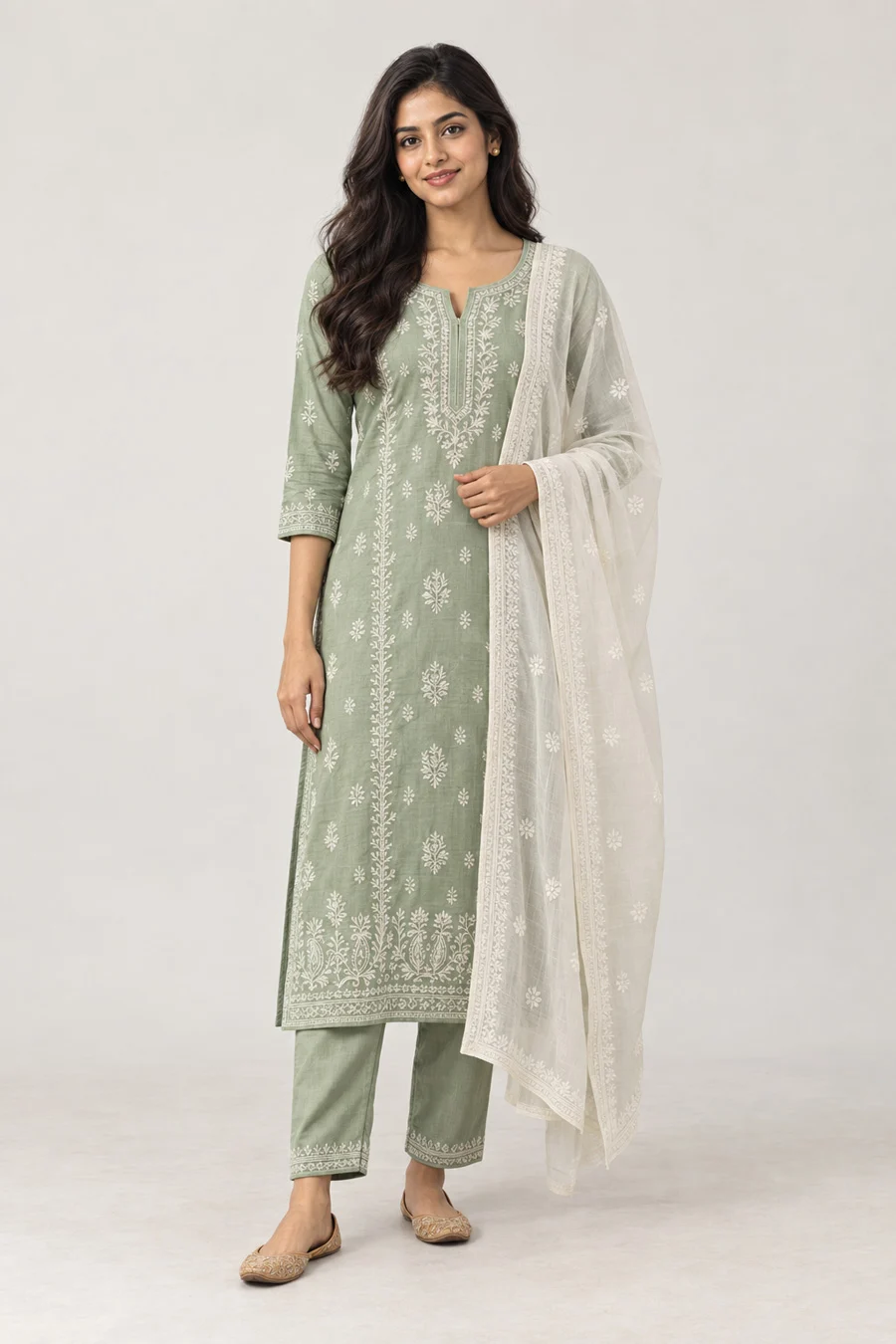
What is the real difference between Myntra and Ajio for sellers?
Myntra is the larger, trend-led fashion marketplace with high traffic and intense competition; Ajio is a more curated, Reliance-backed fashion platform with a strong ethnic, premium and international-label mix. For most sellers the deciding factors are customer fit and price band, then onboarding effort, commission terms and return exposure.
Here is the honest, at-a-glance version of the Myntra vs Ajio for sellers comparison. Each row is explained in its own section below, with what to verify before you sign anything.
| # | Difference | Myntra | Ajio |
|---|---|---|---|
| 1 | Audience | Very large, young, trend-driven, mobile-first | Smaller, curated, stronger in ethnic, premium and global labels |
| 2 | Price band | Wide; heavy discount events | Wide; separate value and luxury formats |
| 3 | Commission | Category- and agreement-based; zero-commission programme for eligible new D2C brands | Category- and agreement-based; agency estimates vary widely |
| 4 | Payouts & deductions | Settlement after return window; logistics and fixed fees deducted | Settlement after return window; logistics and fees deducted |
| 5 | Onboarding | Partner Portal, brand and category fit review, trademark proof | Seller Central, business and brand approval, trademark or self-declaration |
| 6 | Selling models | Marketplace plus inventory-led options for some brands | Marketplace plus inventory-led options for some brands |
| 7 | Returns & claims | High fashion returns; SPF claims for damaged or wrong returns | High fashion returns; return QC and claim process via portal |
| 8 | Image rules | Vertical 3:4, light background, 5–7 images, on-model preferred | Vertical, clean background, product fills most of frame, no props |
| 9 | Catalogue QC | Automated checks + manual QC, strict attributes and size chart | Automated checks + manual QC, strict attributes, variant hierarchy |
Policies change often. Treat this table as a decision map, then confirm each point inside the seller portal you are applying to.
How do Myntra and Ajio audiences and price bands differ?
Myntra reaches a much larger, younger, trend-hungry audience that shops heavily during sale events. Ajio’s shoppers are fewer but more curated in taste — they browse ethnic edits, premium labels and international brands. Your brand should match where your typical buyer already spends.
Difference 1: who actually buys on each platform
On Myntra, the biggest volumes we see from client briefs are in women’s western wear, everyday kurtas, men’s casuals and athleisure — fast-moving styles where newness matters. Ajio buyers respond well to ethnic sets, handloom-inspired prints, premium denim and statement menswear. That does not mean a kurta brand cannot win on Myntra; it means competition, discount pressure and the depth of your catalogue look different on each side.
A simple test: search your top three styles on both apps, filter by your price band and count how many near-identical products appear. Fewer lookalikes usually means a faster path to visibility.
Difference 2: price bands and discount culture
Both platforms run big sale events, and both show heavy markdowns. Myntra’s sale calendar is especially intense — our Myntra fees and profit guide walks through how discounts, logistics and returns stack up on a single order. Ajio also runs separate formats for value fashion and luxury, so check which storefront your brand would actually appear in before you price.
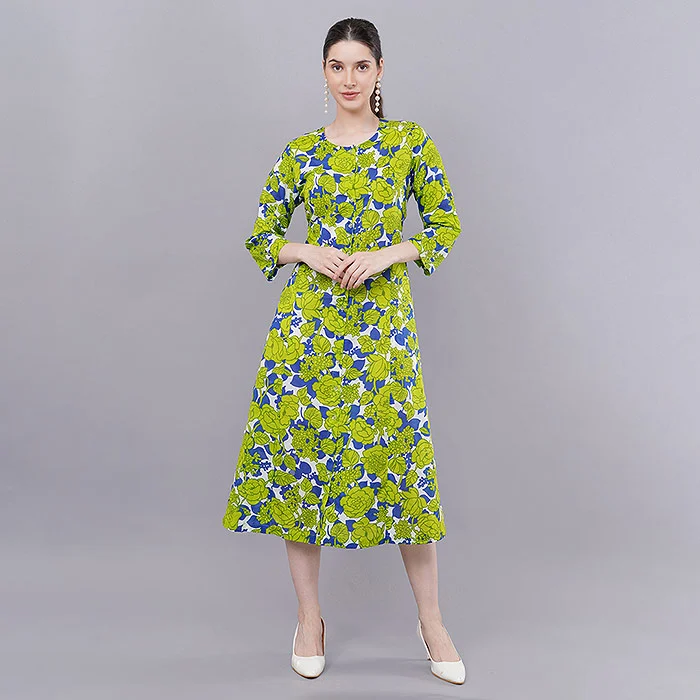
How does commission compare on Myntra vs Ajio?
On both marketplaces, commission depends on category, brand agreement, selling model and negotiation — there is no single public rate that applies to every seller. Third-party “rate cards” for Ajio range from single digits to around 30 percent depending on the source, which tells you to trust only your own agreement.
Difference 3: ajio vs myntra commission in practice
When sellers ask us about ajio vs myntra commission, we show them how inconsistent public numbers are. Some agency guides quote Ajio at roughly 8–10 percent per sale, others publish category tables between 15 and 30 percent. Myntra’s rates are equally agreement-specific, and in 2026 it has promoted a zero-commission construct for eligible new homegrown D2C brands under its Rising Stars programme.
So compare the whole deduction, not the headline percentage. Commission plus fixed fees, forward and reverse logistics, payment collection, GST on fees and TDS together decide your margin. Build one sheet per marketplace with your real cost price, expected discount and a conservative return rate before you choose.
Difference 4: payouts and deductions
Both platforms settle after the customer return window closes, then deduct logistics, fees and any return charges. The practical difference is in how each settlement report is structured and how claims are credited. Ask your account manager for a sample settlement file during onboarding — it saves hours of reconciliation later.
Want help pricing catalogue images into your margin sheet? Call +91-8076745824 and Uniqs Studio will share per-product shoot costs for your SKU list.
Which is easier to onboard: Myntra or Ajio?
Neither is “instant”. Both check GST, PAN, bank and business documents, then review your brand and category fit before your catalogue goes live. Myntra tends to be stricter about brand ownership and category saturation; Ajio accepts a trademark application or self-declaration in some cases but still curates closely.
Difference 5: myntra seller onboarding vs ajio seller onboarding
Myntra seller onboarding starts on the Myntra Partner Portal with GSTIN, PAN, bank details, pickup address and business registration. Brand approval then asks for ownership or authorisation documents, a trademark certificate or application, logo files and product or packaging images that show your branding.
Ajio seller onboarding runs through Reliance’s seller platform with similar business documents. A regular GST registration is expected, and brand approval may ask for a trademark certificate or application, a brand authorisation letter for resellers, logo files and a lookbook. You can check the status of a trademark application on the IP India website before you apply.
In both cases the product images you submit for brand review act like a first impression. Sellers who send phone photos often get stuck in back-and-forth; sellers who send a small, consistent set of studio images usually move faster. For Myntra vs Ajio for sellers who are brand-new, we suggest preparing one approval pack — documents, logo and studio images — and using it for both applications.
- GSTIN (regular, not composition), PAN and cancelled cheque ready
- Trademark certificate or application number for your brand name
- Logo files plus 5–10 studio images across your hero styles
- Size charts measured on production samples, not tech packs
- Pickup and warehouse address that matches your GST records
How do the selling models differ on Myntra and Ajio?
Most new brands join both platforms on a marketplace model, where you hold the inventory and ship on order. Inventory-led arrangements, such as sale-or-return or outright buying, are offered selectively to brands the platform wants to scale, and the terms are negotiated case by case.
Difference 6: who holds the stock and the risk
In a marketplace model you control pricing within platform rules, keep stock in your own warehouse and carry return risk. In inventory-led models the platform holds stock and often has more say on pricing and markdowns. Before you accept any model, ask three questions: who decides discounts, who pays for unsold or returned stock, and how quickly is cash settled.
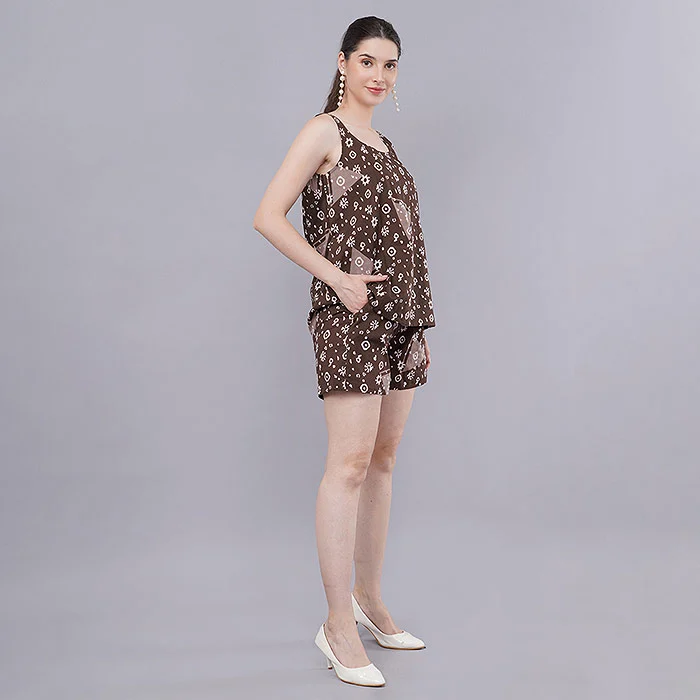
How do returns and claims compare on Myntra and Ajio?
Fashion returns are high on both platforms, because buyers order multiple sizes and return what does not fit or match the photos. Myntra handles damaged, used or wrong returns through its Seller Protection Fund claims; Ajio uses return quality checks and a claim process inside its seller portal.
Difference 7: return exposure and how you fight it
The process differs, but the root cause is the same: a gap between what the image promised and what arrived. The top return reasons we hear from sellers are size not as expected, colour different from photo and fabric feeling different. All three are partly an image problem — wrong colour calibration, no fit reference, no close-up of the weave.
Clear evidence wins claims on both sides. Keep packing videos, label photos and QC notes for every outward shipment, and keep your catalogue images colour-accurate so a “colour mismatch” return can be challenged. For on-model styles, on-model fashion shoots with a stated model height and size give buyers the fit reference they need before ordering.
What are the Myntra catalogue rules and Ajio catalogue rules for images?
Both want vertical, high-resolution images (around 1500×2000 pixels, a 3:4 ratio) on a clean white or light background, with no watermarks, text overlays or props. Myntra recommends 5–7 images with on-model shots preferred for apparel; Ajio also prefers model shots and asks that the product fill most of the frame.
Difference 8: myntra catalogue rules vs ajio catalogue rules
Myntra catalogue rules for apparel focus on a consistent vertical set: front, back, side, a detail of fabric or print, and a full look, with a size chart mandatory. Ajio catalogue rules are close, with extra emphasis on the product filling roughly 75–85 percent of the frame, close-up detail shots for ethnic wear and a clean Parent Style → Colour → Size variant hierarchy. Our Myntra product photography guidelines list the exact shot order we use.
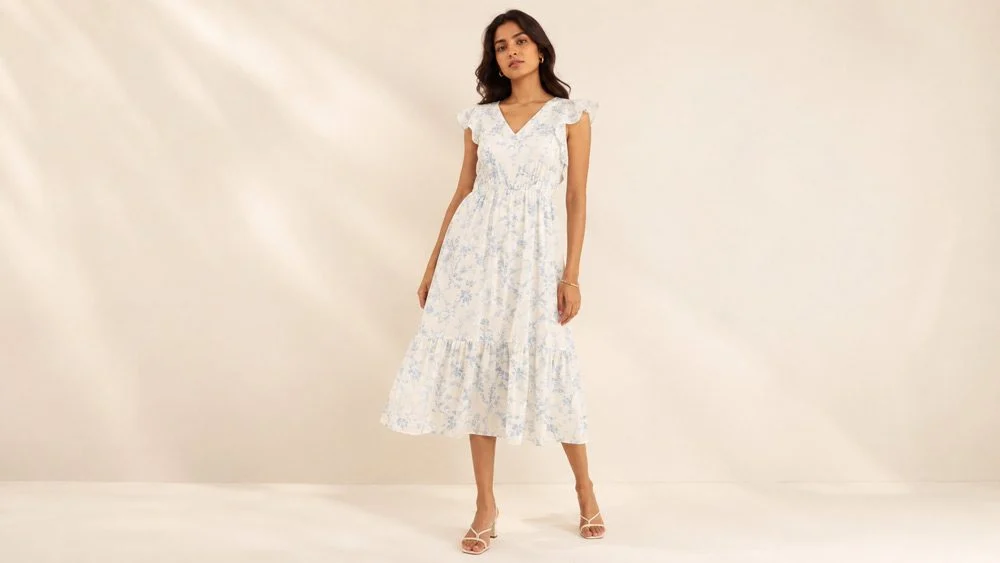
Difference 9: how catalogue QC rejects listings
Both platforms run automated checks followed by manual QC. Common rejections overlap: missing style attributes, wrong fabric or fit values, inconsistent colour names, low-resolution images, missing model images where the category expects them, missing size charts and wrong category mapping. Ajio also flags variant hierarchy errors; Myntra flags duplicate style IDs. Our Myntra listing and catalogue QC checklist is a good pre-upload filter for both.
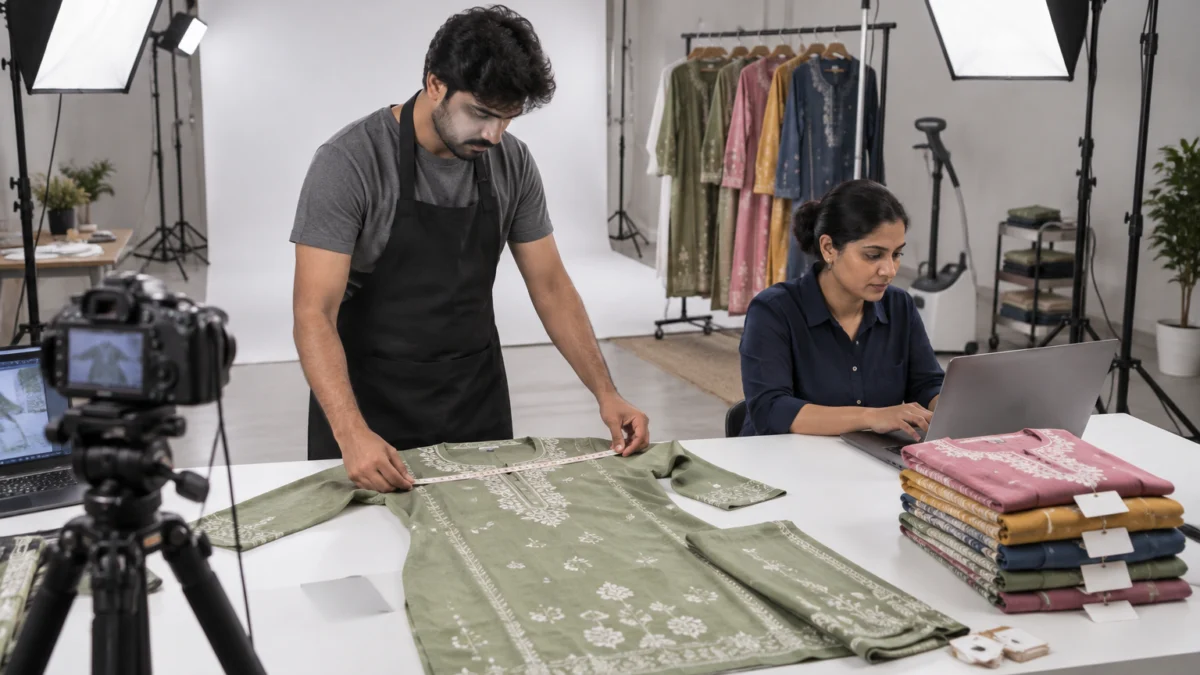
For ethnic sets, a short model video adds the movement and drape that still images cannot. This kurta set clip shows the kind of footage both platforms’ video slots accept.
Which marketplace should your fashion brand sell on first?
Choose Myntra first if your styles are trend-led, priced for volume and you can handle fast catalogue refreshes. Choose Ajio first if your strength is ethnic, premium or design-led collections that benefit from curation. If you can manage both, launch on one, fix returns and QC, then expand with the same image set.
For anyone wondering whether to sell on Ajio or Myntra first, this decision table is the version we walk clients through on the studio floor. It is the most useful part of any fashion marketplace comparison India sellers can run, because it starts from your brand rather than the platform.
| Your brand looks like… | Start on | Why |
|---|---|---|
| Trend-led women’s western wear, fast drops | Myntra | Bigger trend audience; newness rewarded |
| Ethnic sets, handblock, festive wear | Ajio, then Myntra | Curated ethnic edits; detail shots valued |
| Premium menswear or denim | Ajio | Strong premium and global-label neighbourhood |
| Athleisure and basics at volume | Myntra | High search volume in everyday categories |
| New D2C label, small catalogue | Myntra (check Rising Stars eligibility) | Possible zero-commission entry for eligible brands |
| Existing Myntra seller expanding | Add Ajio | Reuse the same image set and attributes |
There is no universal best marketplace for clothing brand owners. The honest answer to Myntra vs Ajio for sellers is the one where your product, price and photos already look like the top results.
How can one photoshoot serve both Myntra and Ajio?
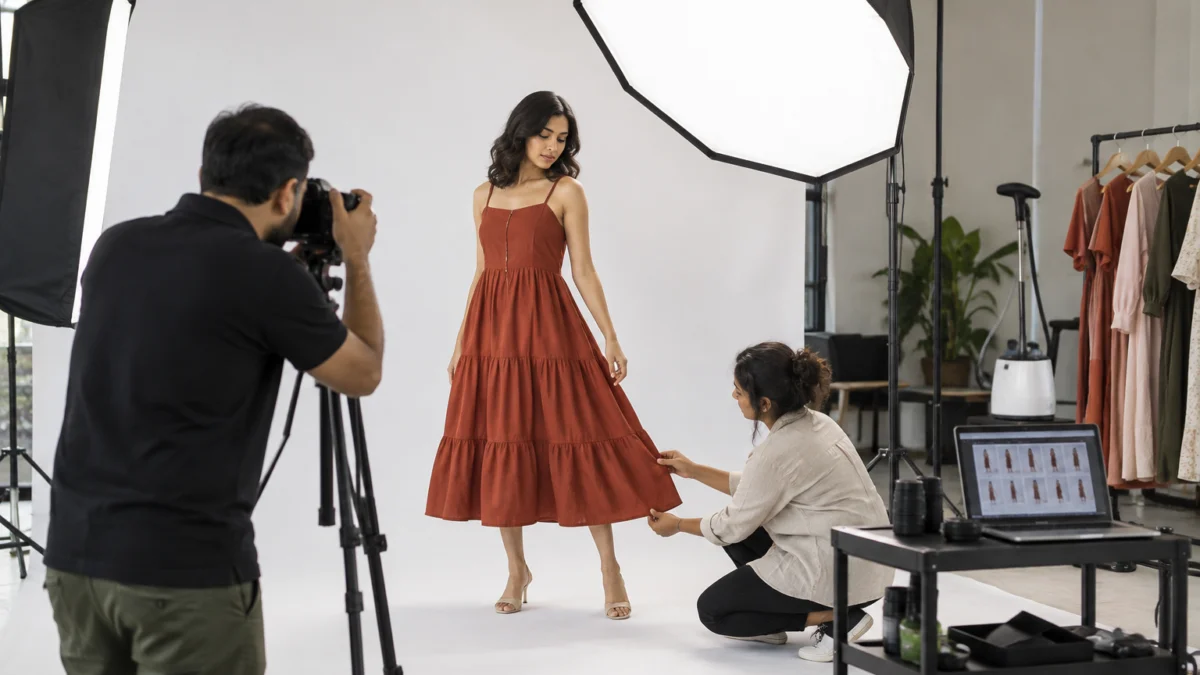
Plan one shoot to the stricter rule on every point: vertical 3:4 framing at 1500×2000 pixels or more, a clean light background, product filling most of the frame, and a fixed shot order per style. Export one master set, then crop or reorder per platform instead of reshooting.
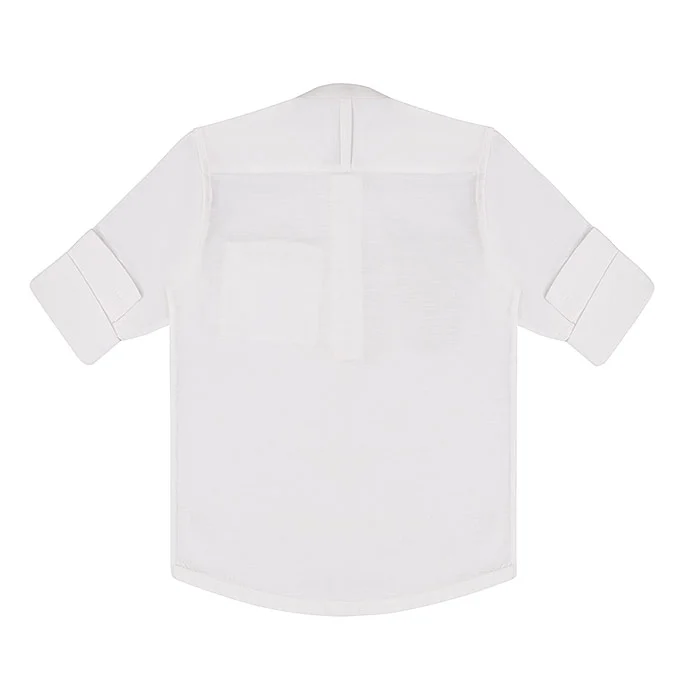
At Uniqs Studio we lock the shot list before the first garment is steamed: front, back, side, detail, full look and one styled image per style, plus a packshot for brand review. For shirts, kurtas and tops that need a clean product view, ghost mannequin images show the real shape and neckline without a model, and they stay consistent when you list the same style on both apps.
What does a two-marketplace catalogue shoot cost?
These are Uniqs Studio’s standard per-product rates for the apparel formats both marketplaces use. The same images are delivered in a master size you can upload to Myntra and Ajio.
| Shoot type | Images | Turnaround | Price |
|---|---|---|---|
| Ghost mannequin | 1 angle | 3–4 days | ₹250 / image |
| Flat lay | 2–3 angles | 6 days | ₹290 / product |
| Model Photography | 5–6 angles | 4–5 days | ₹400 / product |
| Ecommerce Reels Video | 20–25 seconds | 4–5 days | ₹900 / product |
| Garment Video with Model | 25–30 seconds | 4–5 days | ₹1,200 / garment |
Prices are per product/image as listed; call or WhatsApp +91-8076745824 for bulk catalogue quotes.
Planning a launch on both apps? WhatsApp +91-8076745824 or email [email protected] with your SKU count and categories.
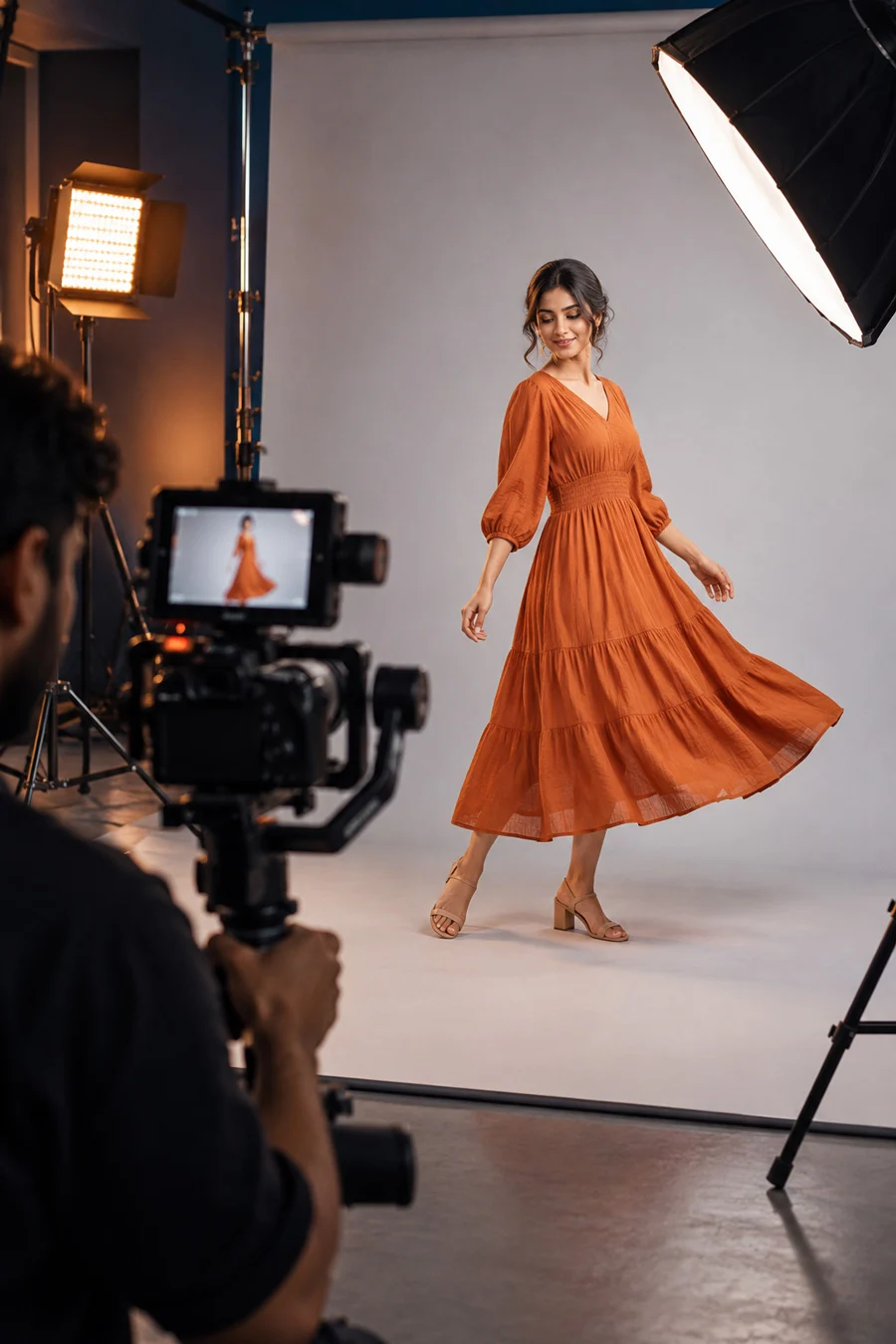
Video is where many brands stop short. Adding short garment videos from the same shoot day shows fit in motion and is especially useful for denim, cargos and flowing dresses, as in this menswear clip.
What mistakes do sellers make when comparing Myntra and Ajio?
The biggest mistake is choosing on the headline commission alone. Close behind are underestimating returns, applying with phone photos, and copying one platform’s attributes into the other without checking category templates.
- Trusting a generic rate card instead of the commission and fee schedule in your own agreement.
- Ignoring return cost — a lower commission with a higher return rate can lose more money.
- Sending phone photos for brand approval, which slows review on both platforms.
- Reusing templates across platforms, leaving required attributes blank or mismatched.
- One generic size chart for all fits, which drives size-related returns.
- Different colour names on each platform for the same style, which confuses QC and buyers.
What should you check before applying to Myntra or Ajio?
Check your documents, margins, catalogue data and images in that order. If any one of the four is weak, fix it before you apply — onboarding goes faster and your first listings go live without rejection loops.
- Regular GST, PAN, bank proof and brand trademark status confirmed
- Margin sheet per marketplace with commission, logistics, returns and GST on fees
- Category templates downloaded fresh from each seller portal
- Attributes above 90 percent complete, with one colour vocabulary
- Size charts per fit, measured on production samples
- 5–7 vertical studio images per style, plus a fabric close-up
- Optional 20–30 second garment video for hero styles
- Packing video and label photo process for return claims
How will Myntra vs Ajio for sellers change in 2026-2027?
Expect faster delivery promises, more programmes aimed at new D2C brands and stricter, more automated catalogue checks. Image quality and data accuracy will matter more each season, not less.
Myntra is pushing quick fashion delivery through M-Now and continues to court homegrown labels, while Ajio keeps building separate value and luxury formats alongside its core store. Both are investing in AI-led catalogue checks, which tend to reject inconsistent colour names, low-resolution images and incomplete attributes faster than human reviewers ever did. Sellers who treat images and attributes as one dataset — shot and filled once, reused everywhere — will adapt fastest.
Frequently asked questions about Myntra vs Ajio for sellers
Short answers to the questions fashion brands ask us most often while comparing the two marketplaces.
For trend-led, volume-priced styles Myntra is usually the better first step, especially if you qualify for its programmes for new D2C brands. For ethnic, premium or design-led collections Ajio’s curated audience can be a better fit. Many brands start on one and add the other within a year.
Neither has one public rate. Both set commission by category, selling model and agreement, and third-party estimates vary widely. Compare total deductions — commission, logistics, fees and returns — from the agreements you are actually offered.
Brand approval on both usually asks for a trademark certificate or an application number. Ajio may accept a self-declaration in some cases, and resellers need a brand authorisation letter on both platforms.
Yes, if you shoot to the stricter rule: vertical 3:4 images of at least 1500×2000 pixels on a clean light background, no props or text, with the product filling most of the frame. Keep colour names and shot order consistent across both.
Buyers order multiple sizes and return what does not fit or match the photos. Accurate size charts, a stated model size, true colour and a fabric close-up reduce avoidable returns on both marketplaces.
Standard rates are ₹250 per image for ghost mannequin, ₹290 per product for flat lay, ₹400 per product for model photography, ₹900 per product for an ecommerce reel and ₹1,200 per garment for a garment video with model. One shoot covers both marketplaces.
What is your next step after choosing a marketplace?
Once you have picked a side in the Myntra vs Ajio for sellers decision, protect your margin from day one. Fashion returns are the cost that surprises most new sellers, so read our guide to Myntra SPF claims and return protection before your first sale event.
Ready to build one catalogue for Myntra and Ajio?
Uniqs Studio shoots marketplace-ready apparel catalogues in our Kalkaji, New Delhi studio for brands across Delhi, Gurgaon, Noida, Faridabad and Ghaziabad.
Call Satyam on +91-8076745824, WhatsApp +91-8076745824 or email [email protected]. You can also book a studio visit — Mon–Sat, 10 am–7 pm.