
Garment Photography for Online Marketplaces: 7 Proven Rules for Amazon, Myntra, Flipkart & Meesho
The definitive 2026 playbook for Indian sellers — image specs, ghost mannequin vs on-model workflows, pricing and compliance from Uniqs Studio Delhi NCR.
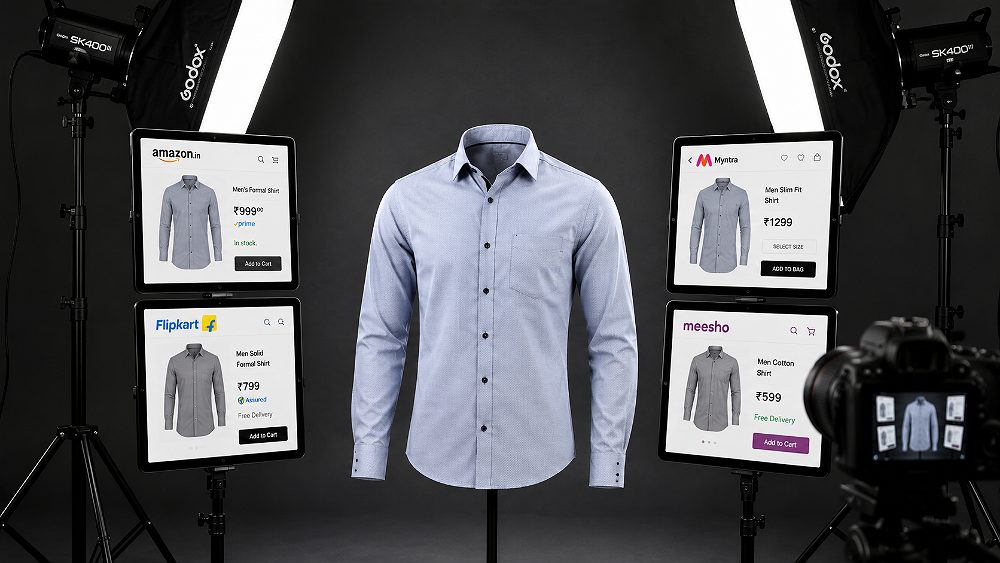
Garment photography for online marketplaces is specialised apparel imaging built to meet the compliance rules of Amazon India, Myntra, Flipkart and Meesho. It blends ghost mannequin, on-model and flat lay styles on pure white or editorial backgrounds at 1600px+ resolution, then exports platform-specific variants from one master shoot.
Table of Contents
- What Is Garment Photography for Online Marketplaces?
- Confirmed Requirements vs Platform Recommendations
- Amazon India Apparel Image Requirements
- Myntra Apparel Image Specifications
- Flipkart Apparel Image Guidelines
- Meesho Clothing Images & Catalog Photography
- Shoot Once, Sell Everywhere Workflow
- Ghost Mannequin vs On-Model vs Flat Lay
- Common Reasons Marketplace Images Get Rejected
- Garment Photography Pricing in India
- How to Choose the Right Studio in Delhi NCR
- Frequently Asked Questions
- Final Verdict & Next Steps
What Is Garment Photography for Online Marketplaces?
Garment photography for online marketplaces is a highly specialised discipline that sits at the intersection of fashion imaging, catalog production and platform compliance. At Uniqs Studio, we approach every marketplace apparel shoot as a compliance-first exercise where each frame is engineered to satisfy the exact rules of Amazon India, Myntra, Flipkart or Meesho — while still communicating fabric texture, silhouette and drape. This is very different from a lookbook or editorial fashion shoot; here, technical accuracy takes priority alongside aesthetics.
In India’s competitive ecommerce ecosystem, the same kurta, shirt or dress may need to appear on Amazon with a pure white background, on Myntra with an editorial on-model treatment and on Meesho with a bright, reseller-friendly presentation. That’s the real challenge of marketplace-ready clothing imagery. Our team of stylists, photographers and post-production specialists at our garment photography studio plans every SKU with these platform differences baked into the brief.
Why Marketplace-Specific Apparel Photography Matters in 2026
The Indian ecommerce fashion market is projected to cross US$40 billion by 2027, driven by tier-2 and tier-3 city buyers. In such a crowded landscape, listing conversion is decided in the first two seconds — largely by the hero image. Poor garment photography for online marketplaces doesn’t just look bad; it triggers rejections, listing suppressions and lost search visibility. This is why sellers increasingly hire a specialised fashion photographer instead of relying on phone-shot images.
Marketplaces are also tightening their moderation. Amazon’s automated image checks now flag mannequin visibility, watermarks and off-white backgrounds within minutes of upload. Myntra’s catalog QC increasingly rejects flat-lit, low-styling images that don’t match its editorial standard. If your apparel marketplace visuals aren’t calibrated for these systems, your growth stalls before it starts.
Core Deliverables in Marketplace Garment Photography
A complete marketplace apparel shoot typically produces four categories of imagery: ghost mannequin hero shots for structured silhouette display, on-model photography for lifestyle and fit context, flat lay compositions for accessory pairing and detail shots for fabric texture and stitching. For premium brands we also add professional model photography and 360-degree spin videos to enrich the listing experience.
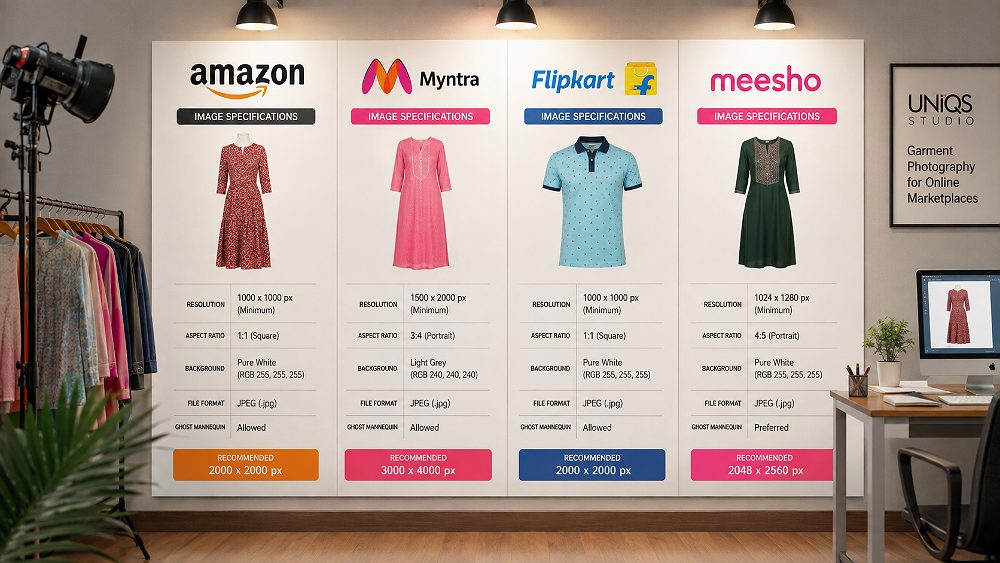
Each deliverable follows a specific technical spec sheet — resolution, aspect ratio, background, file weight and colour space — that we cross-check against the seller portal requirements of Amazon, Myntra, Flipkart and Meesho. This is the invisible architecture behind reliable ecommerce garment photography that scales across four platforms without rework.
Confirmed Requirements vs Platform Recommendations — Why the Distinction Matters
One of the biggest sources of confusion in garment photography for online marketplaces is the gap between confirmed platform requirements and best-practice recommendations. Confirmed requirements are the hard rules published inside your seller portal — violate them and your image gets rejected. Recommendations come from category managers, agencies and experienced sellers and generally improve conversion but aren’t strictly enforced. Mixing these up is what causes most re-shoots.
At Uniqs Studio, we maintain an internal changelog of what each marketplace has officially confirmed versus what falls into the “strongly recommended” bucket. This lets us prioritise which frames are non-negotiable and which are enhancements you can layer on later. A confirmed rule breach on Amazon can suppress your entire listing; a missed recommendation may only cost you a few conversion points.
How to Verify Current Specs in Your Seller Portal
Always cross-reference specs inside Amazon Seller Central India, the Myntra Partner Portal, Flipkart Seller Hub and Meesho Supplier Panel before every major shoot. These portals are the single source of truth. Our production team at Uniqs Studio does this verification at the shot-list stage so no frame is captured against outdated rules.
Why Third-Party Guides Sometimes Conflict
Third-party guides — including blogs, YouTube videos and agency PDFs — often quote specs from a policy version that has since been updated. Marketplaces revise image guidelines two to four times a year in India. Any guide older than six months should be treated as directional, not authoritative. Our editorial team refreshes this article whenever a platform publishes new garment photography for online marketplaces rules.
Amazon India Apparel Image Requirements (Confirmed + Recommended)
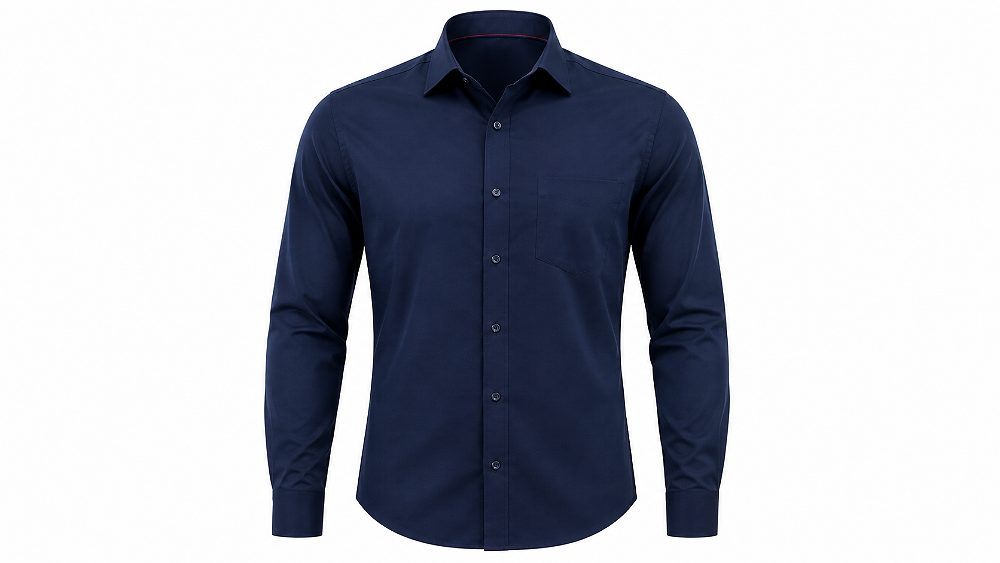
Amazon India has the strictest hero image rules of any major Indian marketplace. The primary image must sit on a pure white background (RGB 255,255,255), the product must fill 85%+ of the frame and no props, watermarks or borders are permitted. These are hard rules — get them wrong and your listing is automatically suppressed. This is why so many Amazon sellers hire a dedicated ghost mannequin photography specialist for their catalog work.
Amazon Main Image (Hero) Specifications
Amazon India’s recommended minimum resolution is 1600px on the longest side to enable the zoom feature — and zoom-enabled listings historically convert significantly better. The image must show only the product, no human models in the main frame for most apparel categories (with specific exceptions for shoes and lingerie), and no accessories that aren’t included in the SKU. Our Amazon garment photography workflow builds these checks into every capture.
Resolution, Aspect Ratio & File Format
Amazon accepts JPEG, TIFF, PNG and GIF, but JPEG in the sRGB colour space is standard for apparel. Square aspect ratio (1:1) is preferred for the hero and 1600px minimum on the longest edge unlocks the zoom feature that lifts conversions. File size should stay under 10MB for smooth uploads.
Ghost Mannequin vs On-Model for Amazon
For most Amazon India apparel categories, ghost mannequin is the safest hero-image choice — it delivers a clean 3D silhouette without violating the “no human model” rule that governs several sub-categories. On-model imagery is permitted (and encouraged) in secondary slots. Guidance from our ghost mannequin vs model vs flat lay guide unpacks this decision in more detail.
Amazon Secondary Images & Lifestyle Shots
Amazon allows up to eight additional images per listing. Use this real estate to show back and side angles, fabric close-ups, styling context and scale references. Lifestyle shots featuring a model are permitted here even for categories where the hero must be product-only. These frames are where you build trust and reduce returns — a well-planned secondary set at Uniqs Studio typically covers seven angles per apparel SKU.
Amazon A+ Content & Brand Store Imagery
Amazon A+ Content and Brand Store modules use different image specs — often larger, wider crops with lifestyle context and infographic overlays. These aren’t governed by the strict hero-image rules and give brands room for storytelling. For registered brands, A+ modules can lift conversion by double-digit percentages when paired with strong ecommerce garment imagery. Our team builds these assets alongside the standard catalog set so nothing is captured twice.
Myntra Apparel Image Specifications for Marketplace Sellers
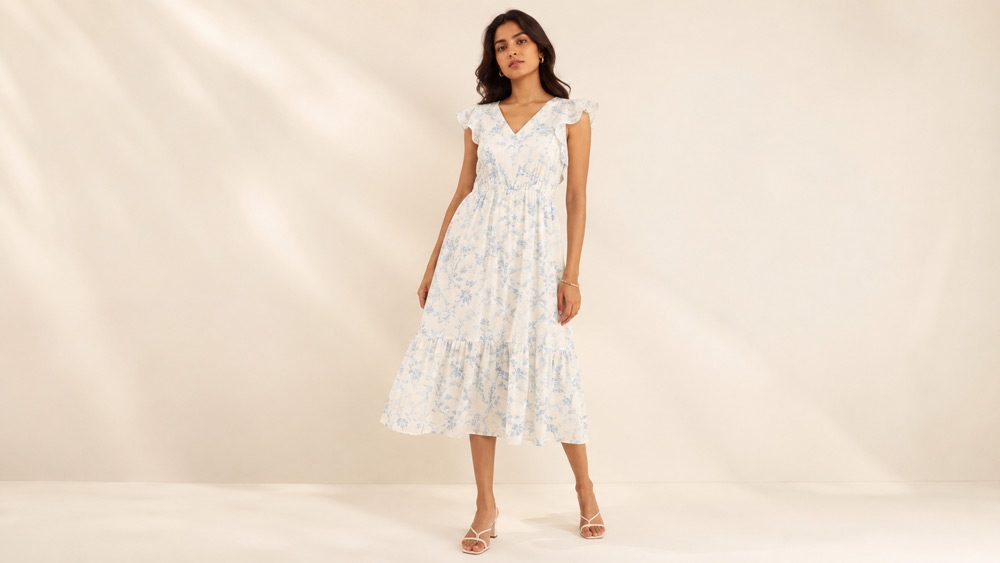
Myntra plays by different rules. Where Amazon rewards clinical clarity, Myntra rewards fashion-forward editorial imagery. The platform’s on-model requirement is one of the strictest in Indian ecommerce — the hero for most apparel categories must feature a professionally styled model on a clean but slightly editorial backdrop. This makes garment photography for online marketplaces like Myntra a very different production from an Amazon-first shoot. Our model photography team handles this end-to-end.
Myntra Hero Image & On-Model Requirements
Myntra’s hero image is the platform’s shop-window. It expects sharp full-body model shots at high resolution with tasteful styling, natural posing and gentle background separation. Cheap phone shots or awkward mannequin frames are routinely rejected. To hit this standard consistently, brands rely on studios with access to a curated model roster — the kind of setup our Delhi NCR model photography guide walks through in detail.
Model Photography Standards for Myntra
Casting matters as much as camera work on Myntra. The model should represent the brand’s target customer, pose naturally rather than in stiff catalog poses and be lit in a way that lets the garment tell its story. Our team at Uniqs Studio pairs experienced models with garment stylists to hit this brief on the first take.
Background, Lighting & Retouching for Myntra
Myntra typically prefers off-white or soft grey backgrounds with a hint of editorial atmosphere. Lighting leans soft and diffused — think large softboxes and reflectors rather than harsh key lights. Retouching is subtle: skin cleanup, fabric enhancement, no aggressive liquify. Our post-production workflow guide details how we handle this.
Myntra Additional Angles & Detail Shots
Beyond the hero, Myntra listings benefit from back views, side profiles, fabric close-ups and styled flat lays. Buyers on Myntra study fabric texture and cut with unusual attention, so detail shots often decide the purchase. Aim for six to eight images per SKU with at least two detail crops. Insight from our fashion catalogue photography guide is directly applicable here.
Flipkart Apparel Image Guidelines Every Seller Should Follow
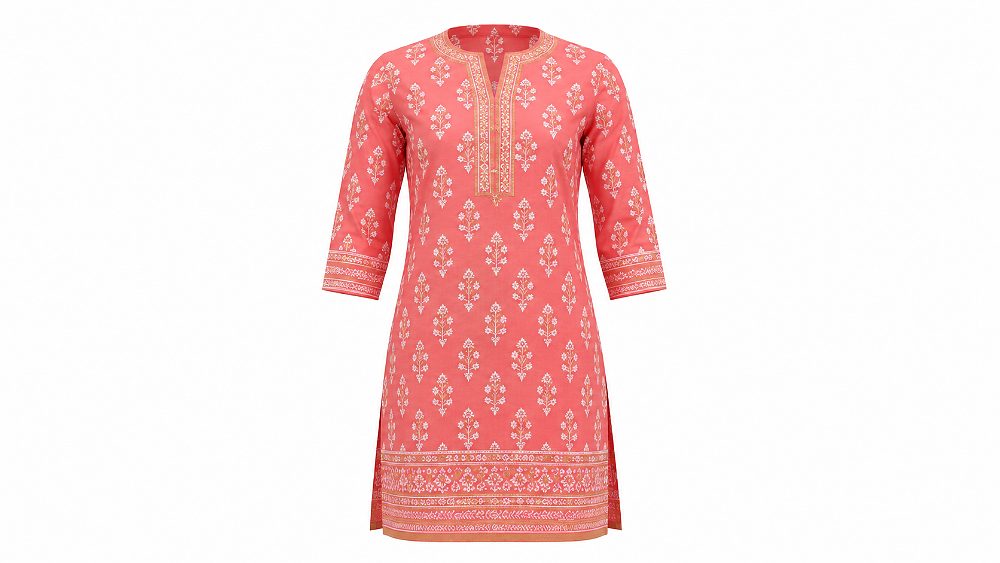
Flipkart sits stylistically between Amazon and Myntra — it accepts both ghost mannequin and on-model imagery for most apparel categories, but the primary image should still be clean, well-lit and on a white or near-white background. The platform’s Big Billion Days apparel volume makes hero-image quality a serious commercial lever. Sellers who invest in professional Flipkart clothing photography consistently outperform peers relying on smartphone captures.
Flipkart Primary Image Requirements
Flipkart recommends a minimum resolution of 1500px on the longest side with a white or off-white background. The product should occupy the majority of the frame with modest breathing space. Distortion, watermarks and promotional text on the hero are prohibited. Our Flipkart garment photography setup at Uniqs Studio meets these thresholds by default.
Flipkart Ghost Mannequin & Flat Lay Options
Ghost mannequin is widely accepted on Flipkart for structured apparel like shirts, kurtas, blazers and jackets. Flat lay is a strong secondary choice for kidswear, ethnic sets and accessory-heavy garments. For high-volume categories like women’s ethnic wear, a hybrid ghost mannequin + on-model set delivers the best conversion. Our flat lay photography service covers this end-to-end.
Flipkart Secondary & Zoom Images
Flipkart allows multiple secondary images and rewards zoom-friendly high-resolution assets. Include back views, styling shots, fabric macros and — where relevant — care-label crops. Buyers browsing on mobile use zoom heavily, so a soft or under-resolved image gets skipped fast. Our apparel shot list guide outlines a proven Flipkart-friendly frame set.
Meesho Clothing Images & Catalog Photography Specifications
Meesho is the volume king of Indian fashion ecommerce, driven by resellers and Tier-2 and Tier-3 buyers. Its imagery style leans bright, vivid and unmistakably product-forward — visuals that read clearly on modest smartphone screens and forward well through WhatsApp. Garment photography for online marketplaces like Meesho works best when you optimise for clarity and shareability rather than editorial mood. Our ecommerce video and photography team handles Meesho suppliers regularly.
Meesho Primary Image & Background Rules
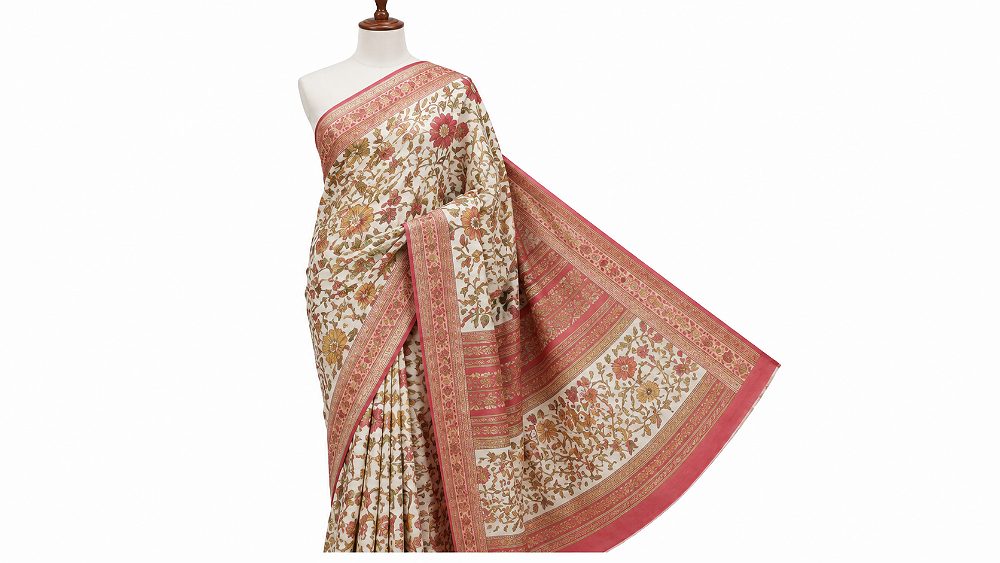
Meesho’s supplier panel expects clean, front-facing product images on a plain white or off-white background at high resolution. Watermarks, contact numbers and price tags are prohibited on catalog images. Reseller trust is fragile — anything that looks like an amateur capture hurts your reorder rate. Our Uniqs Studio Meesho package standardises this at scale.
Meesho Secondary Images, Sizing & Optimization
Meesho typically requires 1080px minimum on the longest side with well-compressed JPEG files that load quickly on 4G. Secondary images should show back, side and fabric detail. Vivid, natural colour reproduction outperforms muted editorial tones on this platform. Our ecommerce clothing photography guide deep-dives into this optimisation.
Meesho Reseller-Friendly Image Style
Because Meesho’s growth engine is resellers sharing product images on WhatsApp and Instagram, imagery must survive compression and still read cleanly on a small phone screen. Bright key light, minimal shadows and honest colour rendering matter far more than moody atmospheres. Our team designs Meesho supplier shoots specifically for this share-forward workflow.
Shoot Once, Sell Everywhere — The Unified Marketplace Photography Workflow
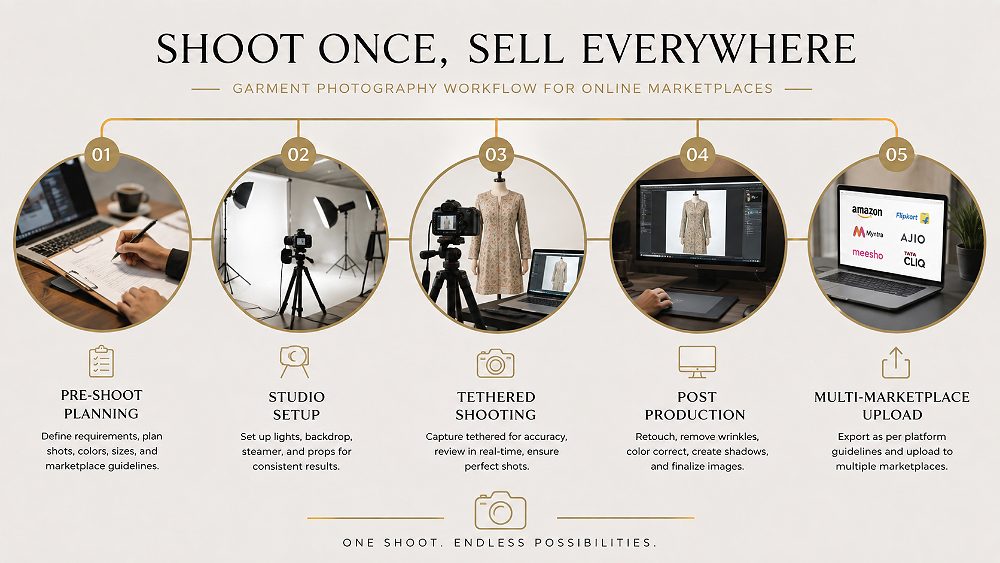
The single biggest cost saver in garment photography for online marketplaces is a properly planned “shoot once, sell everywhere” workflow. Instead of running four separate shoots for Amazon, Myntra, Flipkart and Meesho, we capture one master session engineered to yield platform-specific exports. Brands using this approach at Uniqs Studio typically cut per-SKU photography cost by 30-40% while improving turnaround. Our complete ecommerce garment photography guide maps out the underlying framework.
Pre-Shoot Planning for Multi-Marketplace Compliance
Every unified shoot starts with a marketplace-aware shot list. We map each SKU against the ghost mannequin, on-model and flat lay frames it needs per platform, then compress this into a single production plan. The apparel shot list template we’ve evolved over 500+ SKUs is the backbone of this stage. Pre-shoot also covers styling references, model calls and QC checkpoints.
Studio Setup, Lighting & Tethered Shooting
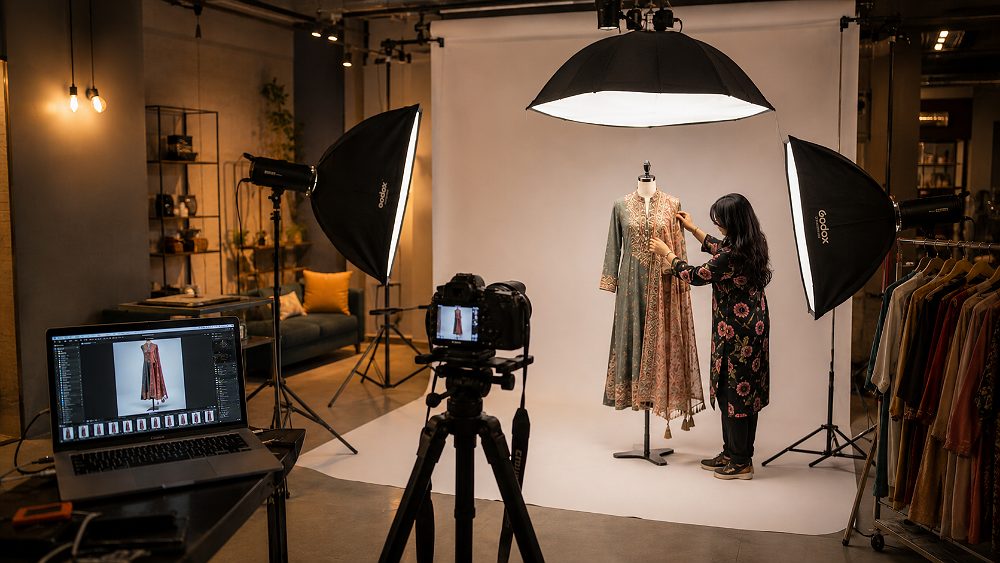
Uniqs Studio’s Delhi NCR floor uses a seamless white cyclorama, four Godox SK 400II strobes with strip softboxes, two Elinchrom FRX 400 heads with octaboxes and one beauty dish for fashion frames. Every capture runs tethered to a colour-calibrated monitor so stylists and clients can approve frames live. This live-review discipline is how we prevent expensive re-shoots on multi-marketplace projects.
Post-Production Workflow (Editing, Retouching, Formatting)
Post-production is where the master files become platform-specific exports. Our workflow covers clipping paths, ghost mannequin composites, colour correction, fabric enhancement and skin cleanup. Files are then batch-exported in the exact resolution, aspect ratio and file weight each marketplace expects — Amazon at 1600px+ white background, Myntra at fashion-editorial crops, Flipkart hero shots and Meesho lightweight uploads. Our professional post-production guide details the entire pipeline.
Key Takeaways — Unified Workflow
- One master shoot engineered for four-marketplace export cuts per-SKU cost 30-40%.
- Marketplace-aware shot lists prevent expensive re-shoots.
- Tethered live-review is non-negotiable for multi-platform QC.
- Post-production must produce platform-formatted variants, not one-size-fits-all files.
- Colour-calibrated monitors and neutral studio lighting are the technical foundation.
Ghost Mannequin vs On-Model vs Flat Lay — Which Works Best per Marketplace?
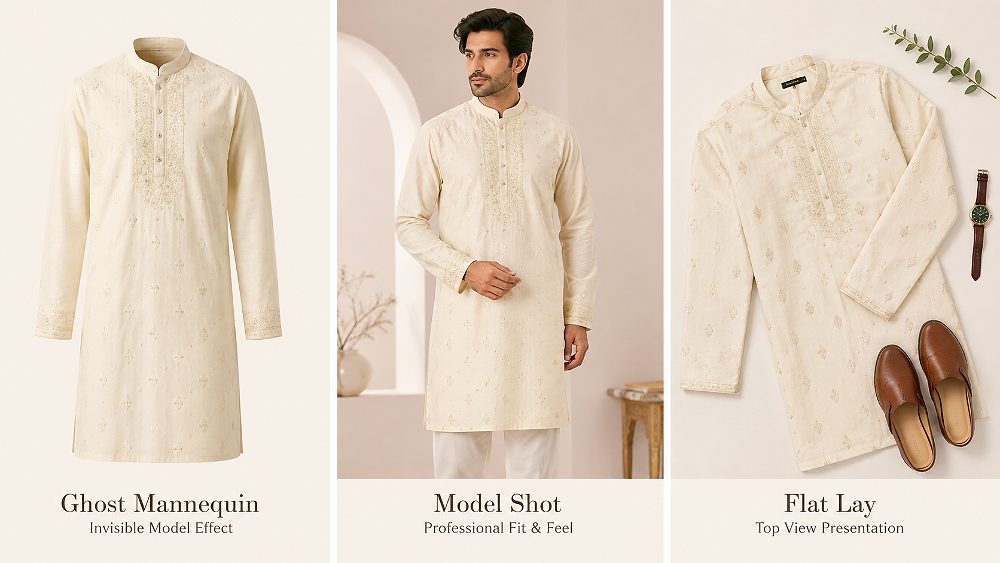
Choosing the right imagery style is the single most consequential creative decision in garment photography for online marketplaces. Ghost mannequin delivers a clean 3D silhouette without a human model, on-model gives fit and lifestyle context and flat lay is fastest and cheapest but weakest on shape communication. Each marketplace favours a different mix. Our ghost mannequin vs model vs flat lay comparison is the deep-dive companion to this section.
| Style | Best For | Marketplace Fit | Cost Range (INR/image) |
|---|---|---|---|
| Ghost Mannequin | Structured apparel — shirts, kurtas, blazers | Amazon, Flipkart, Meesho | ₹300 – ₹700 |
| On-Model | Fashion, ethnic wear, premium D2C | Myntra (primary), Flipkart, Amazon (secondary) | ₹1,200 – ₹2,500 |
| Flat Lay | Accessories, kidswear, layered sets | Meesho, Flipkart (secondary), Amazon (secondary) | ₹250 – ₹600 |
When to Choose Ghost Mannequin
Ghost mannequin is the go-to for structured apparel with a clear silhouette — think shirts, kurtas, blazers and outerwear — especially where marketplaces prohibit human models on the hero. It’s cost-efficient, fast to produce at volume and reads cleanly on white backgrounds. Our specialised ghost mannequin work shows how far this technique can flex across categories.
When to Choose On-Model Photography
On-model imagery is essential for Myntra and highly valuable on Amazon and Flipkart secondary slots. It communicates fit, drape and lifestyle context that no ghost mannequin can match. Premium D2C brands almost always invest in a strong on-model set — see our editorial vs commercial vs catalogue comparison for direction on style choices.
When to Choose Flat Lay
Flat lay is quickest and cheapest, ideal for accessories, kidswear, layered outfits and Instagram-friendly styling. It’s a strong secondary choice on Meesho and Flipkart but rarely a primary on Amazon or Myntra for apparel. Our best flat lay photographer for clothing brands resource covers use cases in more depth.
Common Reasons Marketplace Apparel Images Get Rejected
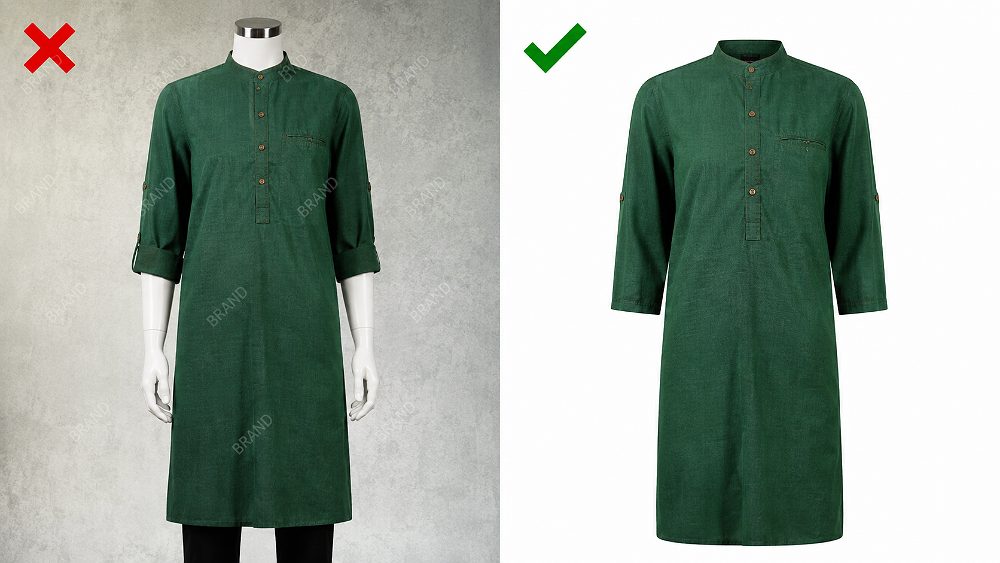
Image rejections are the silent killers of Indian ecommerce apparel businesses. They suppress listings, hurt account health and eat into ad spend. In our experience running marketplace-ready clothing shoots for hundreds of sellers, roughly 80% of rejections trace back to a handful of recurring issues. Fixing these is often more valuable than adding more images.
Top 10 Image Rejection Triggers Across Marketplaces
- Non-white background where the platform mandates pure white.
- Watermarks, logos or promotional text on the primary image.
- Low resolution below the platform minimum, killing the zoom feature.
- Visible mannequin edges on ghost mannequin composites.
- Human model in the hero where the category prohibits it (Amazon specific).
- Props or accessories not included in the SKU appearing in-frame.
- Incorrect aspect ratio — non-square hero images on Amazon.
- Poor colour accuracy caused by uncalibrated monitors or wrong colour space.
- Off-focus, blurry captures or motion blur on hero frames.
- Missing back or side views where the category demands multi-angle imagery.
Our production QC checklist at Uniqs Studio catches these issues before delivery. Sellers who’ve had listings suppressed can typically recover within 48 hours by replacing the offending frames — but the smarter play is preventing rejection at the shoot stage.
Garment Photography Pricing for Marketplace Sellers in India
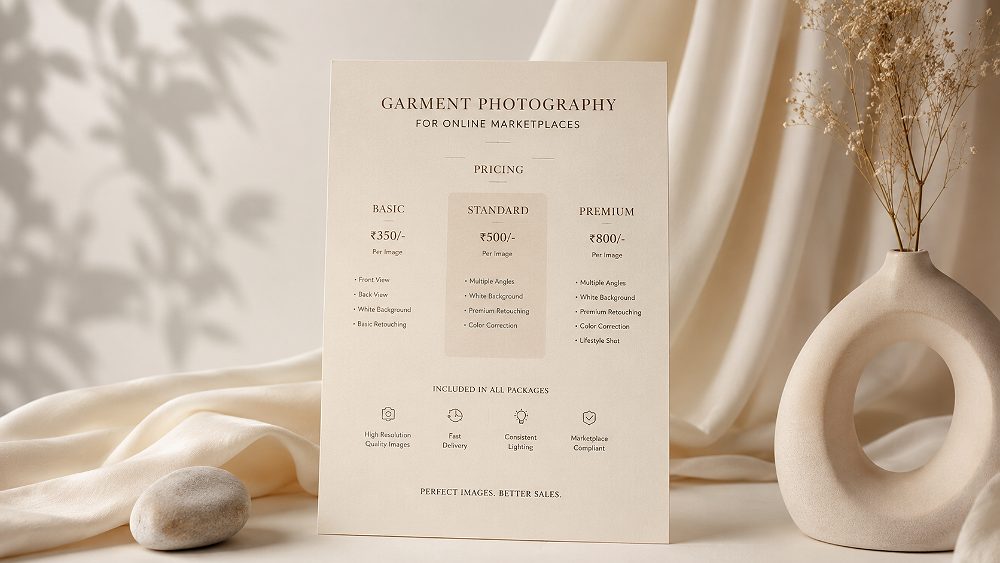
Pricing for garment photography for online marketplaces in Delhi NCR ranges roughly ₹250 to ₹2,500 per image depending on the style, retouching depth and SKU volume. Ghost mannequin and flat lay sit at the affordable end; on-model editorial work sits at the premium end. Fair pricing correlates strongly with studio infrastructure, model access and post-production discipline. Our Delhi fashion photography pricing guide and 2026 ghost mannequin pricing guide break the numbers down further.
What Determines Marketplace Photography Cost
Cost drivers include shoot style (ghost mannequin vs on-model vs flat lay), SKU volume (higher volumes lower per-image cost), retouching depth (basic vs premium fashion retouch), turnaround urgency, model day-rates and location or set-design requirements. Multi-marketplace unified shoots almost always come in cheaper per platform than four separate shoots.
Uniqs Studio Pricing Packages for Marketplace Sellers
Starter
₹300 – ₹500 /image
Ideal for new sellers testing marketplaces (10–25 SKUs).
- Ghost mannequin OR flat lay
- 4 images per SKU
- Basic retouching
- Pure white background
- 5-day turnaround
Growth
₹500 – ₹900 /image
Established sellers going multi-marketplace (25–100 SKUs).
- Ghost mannequin + flat lay + on-model
- 6–8 images per SKU
- Advanced retouching
- Marketplace-formatted exports
- 3-day turnaround
Fashion Editorial
₹1,200 – ₹2,500 /image
D2C fashion brands, Myntra-focused sellers (50–200 SKUs).
- On-model editorial photography
- Professional model + stylist
- 10–12 images per SKU
- Premium retouching
- 2-day turnaround
Enterprise
Custom Quote
Large sellers, agencies, all-marketplace coverage (200+ SKUs).
- Ghost mannequin + on-model + flat lay + 360° video
- Marketplace-specific exports
- Dedicated account manager
- Unlimited revisions
- 24–48hr turnaround
Get Marketplace-Ready Images from Uniqs Studio
Talk to Satyam for a custom quote across Amazon, Myntra, Flipkart and Meesho — Delhi NCR studio with 9+ years of ecommerce apparel experience.
How to Choose the Right Marketplace Photography Partner in Delhi NCR
Delhi NCR has hundreds of photography studios but only a handful genuinely understand garment photography for online marketplaces as a discipline. When evaluating partners, look beyond a pretty portfolio and probe for marketplace-specific experience, turnaround discipline and post-production depth. Our studio background and direct enquiry line both walk you through this in a first call.
Key Checklist Before Hiring a Studio
- Verified portfolio of live Amazon India, Myntra, Flipkart or Meesho listings.
- In-house ghost mannequin retouching capability, not outsourced.
- Access to a curated model roster for on-model shoots.
- Tethered live-review workflow on set.
- Clear per-SKU pricing in INR — no hidden charges.
- Documented turnaround SLA (24hr / 48hr / 3-day tiers).
- QC checklist mapped to each marketplace’s rejection triggers.
- Willingness to shoot a small paid sample lot before scaling.
Uniqs Studio ticks all of these — plus we cover the entire Delhi NCR belt from our central studio, serving clients in Gurgaon, Noida, Faridabad and Ghaziabad. Insight from our how to choose the best model photographer post applies equally to picking a marketplace studio partner.
Frequently Asked Questions About Garment Photography for Online Marketplaces
These are the questions Indian sellers ask us most often about marketplace apparel imaging. If yours isn’t answered here, drop a note to Uniqs Studio and we’ll add it.
Garment photography for online marketplaces is a specialised form of apparel photography that produces images meeting the compliance rules and visual standards of platforms like Amazon India, Myntra, Flipkart and Meesho. It covers ghost mannequin, on-model and flat lay styles optimised for marketplace listing conversion.
Amazon India recommends a minimum 1600px on the longest side for zoom-enabled listings on a pure white background (RGB 255,255,255). Myntra prefers high-resolution on-model editorial images. Flipkart accepts ghost mannequin and clean white background images from 1500px+. Meesho requires clean, high-resolution product images from 1080px+. Always verify current specs in your seller portal since requirements can change.
Yes, with proper planning. A well-executed “shoot once, sell everywhere” workflow at a professional studio produces master files that can be exported and formatted per marketplace. However, Myntra typically demands more editorial on-model imagery while Amazon and Flipkart prioritise clean white-background hero shots — plan the shoot accordingly.
Marketplace garment photography in Delhi NCR typically ranges from ₹300 to ₹2,500 per image depending on style (ghost mannequin, flat lay or on-model), retouching complexity and SKU volume. Uniqs Studio offers dedicated marketplace packages starting from ₹300 per image with faster turnaround for high-volume sellers. Email [email protected] for a custom quote.
Common reasons include non-white backgrounds, low resolution, watermarks or logos on the main image, models or props in the primary image where not allowed, incorrect aspect ratios and mannequins visible in ghost mannequin shots. Always verify current specs in your seller portal and work with a marketplace-experienced studio like Uniqs Studio.
Final Verdict — Building a Winning Marketplace Photography Strategy
Winning at garment photography for online marketplaces in 2026 comes down to three disciplines: rigorous compliance-first planning, a unified shoot-once workflow and platform-specific post-production. The sellers who master these consistently outperform peers on click-through, conversion and return rates — and pay less per SKU while doing it. This is not a place to cut corners; every rupee saved on cheap imagery costs you multiples in lost sales and suppressed listings.
At Uniqs Studio, Satyam and the team have spent 9+ years refining exactly this workflow for Indian sellers across Amazon, Myntra, Flipkart and Meesho. If you’re planning your next marketplace apparel shoot — whether it’s 20 SKUs or 2,000 — we’d love to help you plan it properly. Start by reviewing our complete ecommerce garment photography guide and our fashion photography for ecommerce playbook, then get in touch.
Ready to Shoot Once and Sell Everywhere?
Get marketplace-ready apparel imagery from Uniqs Studio Delhi NCR — 9+ years, 500+ SKUs, four-marketplace expertise. Call, WhatsApp or email Satyam today.