
Send Jewellery for Photoshoot Safely 2026-2027: 9 Proven Inventory, Handover & Remote Approval Checks
If you run a jewellery brand in Ahmedabad, Jaipur, Surat or anywhere outside Delhi, the hardest part of a catalogue shoot is often not the lighting. It is the moment you send jewellery for photoshoot work to a studio you cannot walk into. Pieces are small, valuable and easy to mix up, so the brands that do this well treat the trip like a stock transfer. This guide supports our jewellery photography studio in Delhi and explains how we suggest you prepare, hand over and approve a shoot remotely.
At Uniqs Studio, Satyam has spent 9+ years shooting product and fashion catalogues for 500+ D2C brands and marketplace sellers, and the shoots that go smoothly share one habit: everything is written down before the parcel leaves. Below you will find the inventory sheet format, the packing routine, what a documented handover should include, how remote photo approval works and how to recount pieces when they come back.
Key takeaways
- Before you send jewellery for photoshoot work, build a numbered inventory sheet with one row per piece and a reference photo for each.
- Pack every SKU in its own labelled pouch, seal the carton on video and share the tracking details with the studio.
- Ask for a recorded unboxing and a same-day count against your sheet, so any gap is flagged immediately.
- Approve one sample set first, then let the full batch run with comments tied to SKU codes.
- Transport, cover and return arrangements are agreed with the studio and your courier in advance, never assumed.
What does it mean to send jewellery for photoshoot work to a studio?
It means your pieces travel to the studio, get photographed without you in the room, and travel back to you. To send jewellery for photoshoot work safely, three things need to be agreed in writing: what was sent, what was shot and approved, and what was returned.
Brands outside Delhi NCR usually choose this route because the catalogue matters more than the travel. A founder in Ahmedabad may have 60 new SKUs for a festive drop, a small team, and no time to sit in a studio for three days. Shipping the collection, briefing the photographer on a call and approving images online keeps the launch on schedule. The trade-off is control: you are trusting a process instead of watching it, so the process has to be visible.
A remote jewellery photoshoot is not a different kind of shoot. The lighting, macro work and retouching are the same as an in-person session. What changes is the paperwork around the jewellery: the inventory sheet, the handover record, the approval trail and the return recount. Get those four right and the photography itself becomes the easy part.
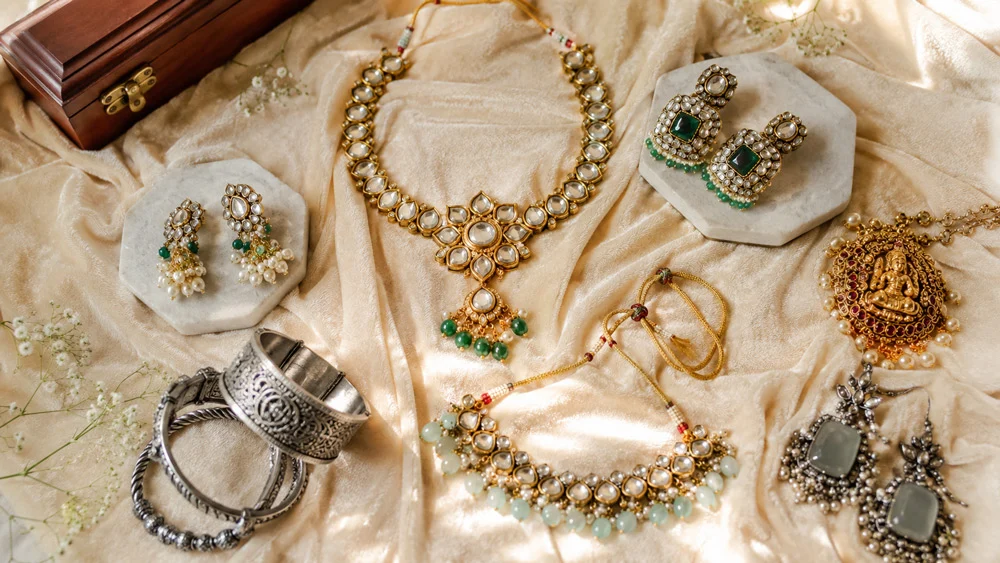
Who should send jewellery for photoshoot work instead of travelling?
Remote shoots suit brands with repeat catalogue needs, clear product categories and a stable style guide. They suit Ahmedabad catalogue teams that already know which angles Amazon or Myntra want, jewellery brands launching seasonal collections, and resellers refreshing old listings. If this is your first-ever shoot and you have no reference images, a short visit or a detailed video call first is worth the time, because your feedback on the first set shapes everything after it.
Why does a documented handover matter more for jewellery than for garments?
Jewellery is small, high-value and often near-identical across SKUs, so a missing stud or a swapped pendant is easy to overlook and hard to prove later. A documented handover turns every piece into a line item with a photo, so both sides can confirm the count at each stage.
Garments are hard to lose: a kurta set is bulky and obvious. A pair of American diamond studs is the size of a fingernail, and three pendants from the same collection may differ only in stone colour. In our experience, almost every jewellery dispute between brands and studios comes down to missing records, not missing pieces. Nobody counted on arrival, or the list said “12 earrings” without saying whether that meant 12 pairs or 12 singles.
| Risk | What usually causes it | Control that prevents it |
|---|---|---|
| Piece reported missing | No count on arrival | Recorded unboxing and same-day count against your sheet |
| Wrong SKU photographed | Look-alike pieces in one bag | One labelled pouch per SKU, code shown in a slate frame |
| Damage questioned | No condition notes before dispatch | Reference photo of each piece, condition column on the sheet |
| Approval delays | Feedback by voice notes, no SKU codes | Comments in one shared sheet, tied to each SKU |
| Return mismatch | Return packed without recount | Return recount on video, signed return list |
None of these controls need special software. A spreadsheet, a phone camera and a little discipline on both sides cover almost everything, and they also make your marketplace work easier later, because the same SKU codes follow the images into your listings.
How do you build a jewellery inventory list before dispatch?
Make one row per physical piece (or per pair for earrings), give it a unique SKU code, describe it in plain words and attach a quick reference photo. The same sheet then travels with the parcel, is used for the arrival count, the shot list and the return recount.
This jewellery inventory photography sheet is the backbone of the whole job. Keep it in a shared Google Sheet or Excel file and print one copy for the parcel. When you send jewellery for photoshoot work, the photographer and retoucher will both use it, so write it for someone who has never seen your collection.
Which details should every line on the inventory sheet carry?
| Column | Example entry | Why it helps |
|---|---|---|
| Line no. + SKU code | 07 · KND-NK-114 | Every image, comment and file name uses this code |
| Item description | Kundan choker with green drops | Separates look-alike pieces |
| Quantity / unit | 1 set (necklace + 2 earrings) | Removes the pairs-vs-singles confusion |
| Metal / finish | Gold-plated brass, matte | Guides lighting and colour correction |
| Condition note | Small scratch on clasp | Records pre-existing marks before dispatch |
| Shots needed | White packshot, macro, on-model | Turns the list into a shot list |
| Reference photo | Phone photo link | Visual proof of what was packed |
If you sell hallmarked gold, add the hallmark or HUID details you already hold for each piece; the Bureau of Indian Standards explains how hallmarking works if your team needs a refresher. Weight is useful too, but record the weight from your own scale before dispatch rather than expecting the studio to verify it.
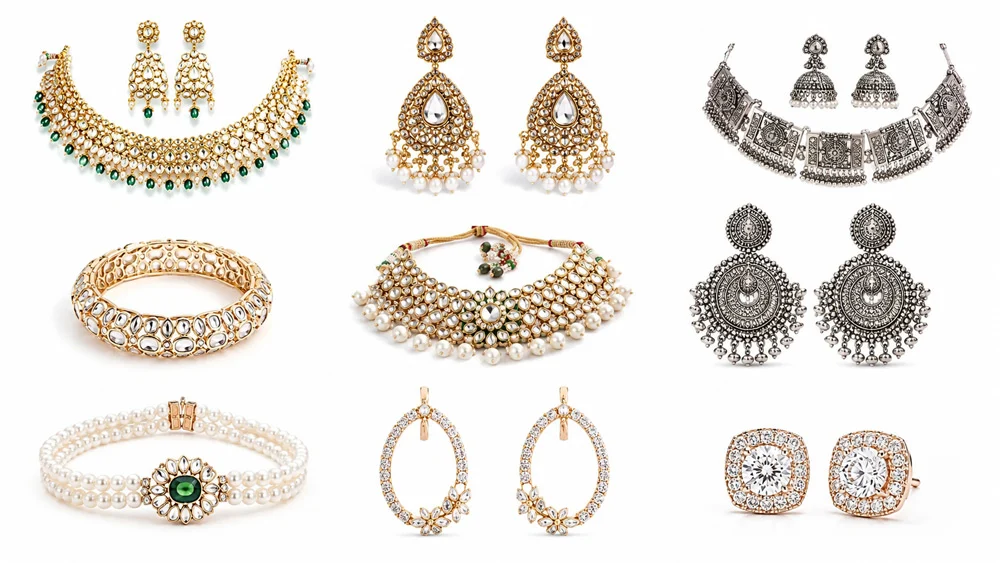
How should you photograph your own pieces before packing?
Your reference photos do not need to be beautiful. Place each piece on a plain white sheet next to a small paper slip with its SKU code, and take one clear phone photo from above. Photograph any existing scratch, loose stone or bent hook up close. These photos protect both sides: you can show what you sent, and the studio can show what it received.
How should you pack jewellery so it reaches the studio shoot-ready?
Pack each SKU in its own labelled pouch, protect delicate parts from tangling and pressure, and seal everything inside a rigid carton. Record the packing on video and share the courier tracking details with the studio the same day.
Good packing saves shoot time as well as reducing risk. Tangled chains, tarnished silver and bent earring hooks all have to be fixed on set before the first frame, and that time comes out of your shoot day. Follow this sequence:
- Clean and check each piece, then place it in an anti-tarnish or zip pouch with the SKU code written on the outside.
- Keep sets together in one pouch (necklace plus earrings), and keep earring pairs on a card so they never separate.
- Thread fine chains through a drinking straw or lay them flat on card to prevent knots.
- Add soft padding around stone-heavy pieces and avoid stacking heavy chokers on delicate rings.
- Place pouches in line order inside a rigid box, with the printed inventory sheet on top.
- Seal the carton on video, showing the count, the sheet and the tape going on.
- Share the tracking details and expected delivery date with the studio, and ask who will receive the parcel.
Transport is your decision, not the studio’s. Choose a courier or trusted person you already use for valuables, and check directly with them (and your own insurer, if you have one) what cover applies in transit. Do not assume that any studio, including Uniqs Studio, insures goods in transit; confirm arrangements on a call before dispatch at +91-8076745824.
What should happen when the parcel reaches the studio?
The parcel should be opened on camera, counted against your inventory sheet line by line, and any difference reported to you the same day. You should receive a written acknowledgement of what arrived before shooting begins.
This step is where a jewellery shoot handover checklist earns its value. A good arrival routine looks like this: the outer box is photographed with the seal intact, the unboxing is recorded in one continuous clip, every pouch is checked against the sheet, and condition notes are added where a piece looks different from your reference photo. Only then does the collection move to the shooting table.
- Photo of the sealed outer carton and courier label
- Continuous unboxing video, pouches laid out in line order
- Count recorded on the same sheet you sent, with a “received” column
- Condition notes for anything that differs from your reference photos
- Email or WhatsApp acknowledgement listing received quantities
If you are sending pieces for the first time, ask the studio to walk you through its receiving process before dispatch. When you plan to send jewellery for photoshoot work to Uniqs Studio, you can agree this routine in advance on +91-8076745824 so there are no surprises on the day the parcel lands.
How do you brief a jewellery shoot when you can’t be there?
Turn your inventory sheet into a shot list: for every SKU, say which images you need, on which background, for which marketplace. Add two or three reference images of the style you like, and agree the brief on a short video call before the parcel ships.
A remote brief has to answer the questions you would normally answer by standing next to the photographer. Which pieces need a macro close-up of stone work? Which sets go on a model? Do you need a scale shot on a hand or ear? Marketplace rules matter here too: our guides to Amazon jewellery image requirements and Myntra’s on-body rules explain why a single packshot is rarely enough for a listing.
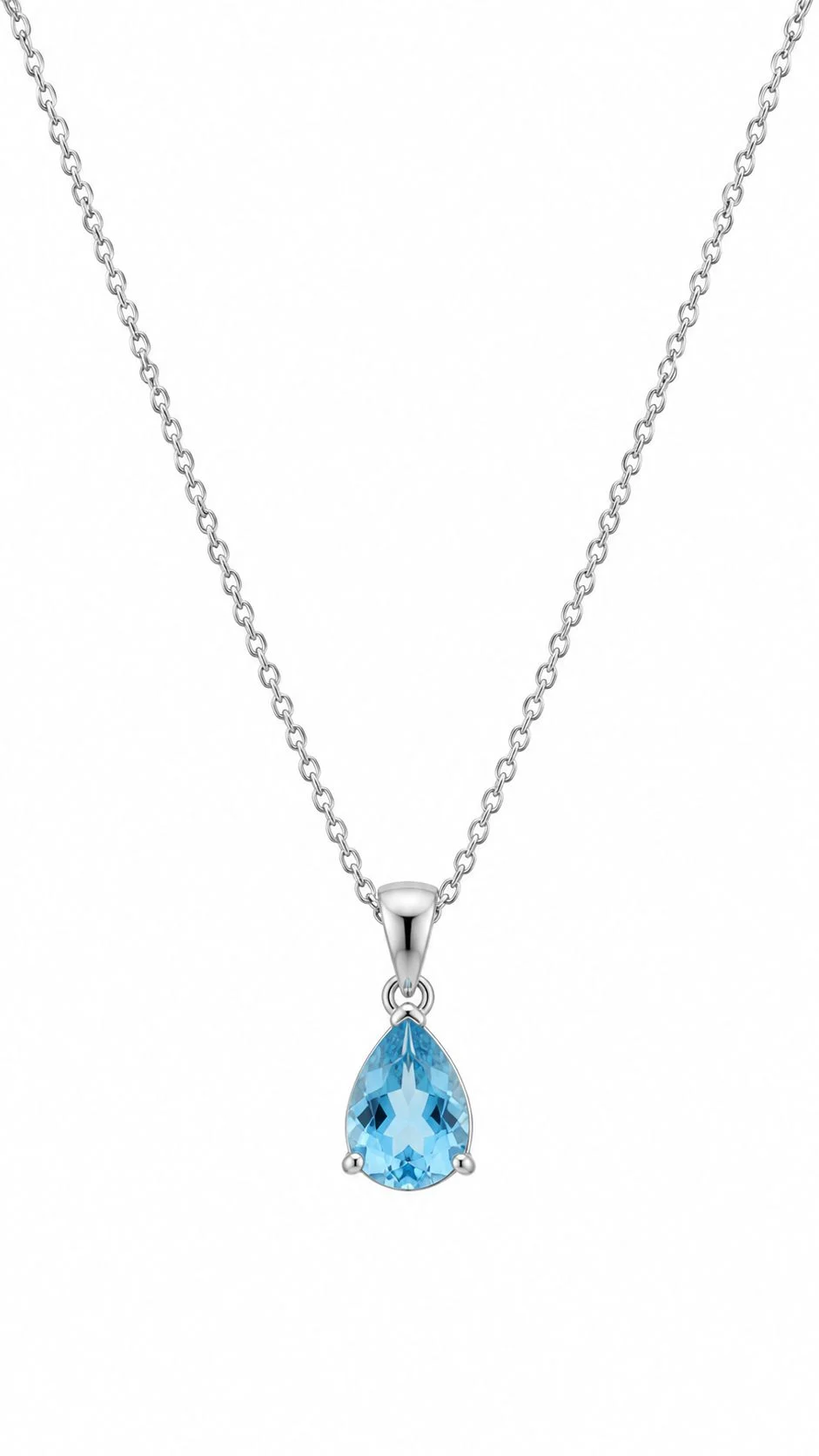
What should a remote shot list include for each SKU?
| Shot | Typical use | Brief note to add |
|---|---|---|
| White-background packshot | Main image on Amazon and Flipkart | Angle: front, flat or hanging |
| Macro detail | Stone setting, enamel, texture | Which detail matters most |
| On-model / on-body | Scale and styling for Myntra and Ajio | Neckline, hair, outfit colour |
| Set or group shot | Bundles and combos | Which SKUs appear together |
| Short video | Listing video, reels | Movement, sparkle, duration |
On-model images are where remote briefs most often go wrong, because skin tone, neckline and hair change how a necklace reads. Share a reference image for each look. If your listing also needs motion, our ecommerce video production team can capture short jewellery clips from the same session, so the pieces only travel once.
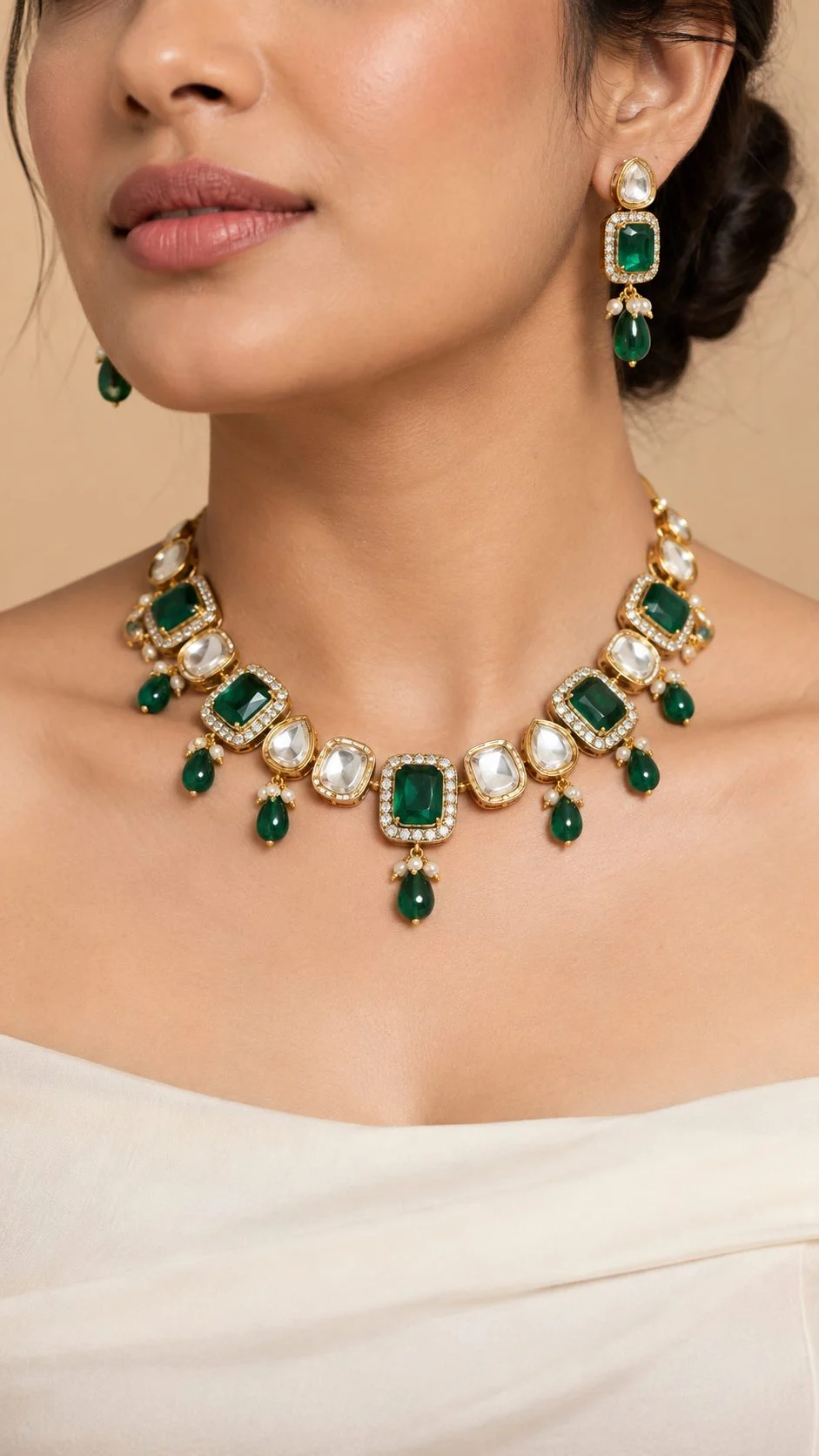
How does remote photo approval work without slowing the shoot?
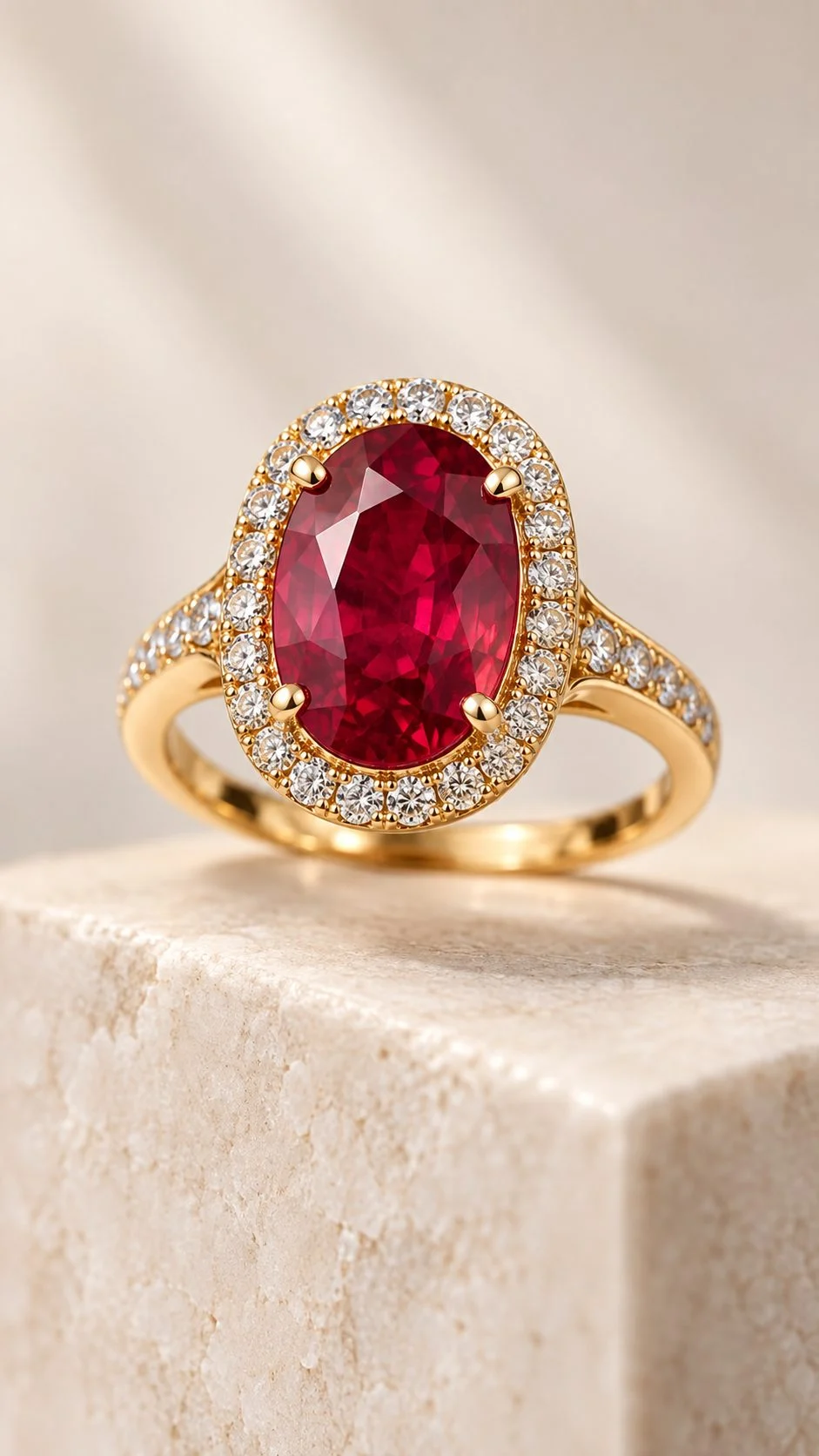
Approve a small sample first, usually two or three SKUs, before the full batch is shot. Once the sample matches your expectations, the rest of the collection follows the same setup, and you review the final set with comments tied to SKU codes in one place.
Remote photo approval works best in three rounds. First, a sample round on day one, where you check lighting, background, crop and colour. Second, a contact-sheet round, where you pick or reject frames for every SKU. Third, a final round after retouching, where you sign off on files that are ready to upload. Keep all feedback in the shared sheet, not scattered across voice notes, so nothing is lost when someone is travelling.
What should you check in sample images before approving the full batch?
- Colour: metal tone and stone colour match the piece on your desk (compare on a phone and a laptop).
- Background: pure white where the marketplace needs it, consistent shade elsewhere.
- Detail: prongs, enamel and engravings are sharp, not smoothed away.
- Scale: on-model or on-hand shots show true size.
- Crop and ratio: square or portrait as your listings require.
- File naming: every file carries the SKU code from your sheet.
If your team wants a deeper view of what separates a strong jewellery catalogue from a weak one, our post on choosing the right jewellery photographer lists the questions worth asking before you approve a studio’s first set.
How are pieces returned safely after the shoot?
The return is the arrival process in reverse: recount every piece against the sheet on video, repack in line order, seal on camera and share the tracking details. You then count on receipt and confirm in writing that the collection is complete.
Agree the return method before the shoot, not after. Some brands send their own courier pickup; others collect the parcel through a trusted person in Delhi. Whichever route you choose, the return list should have a “returned” column next to “sent” and “received”, so a single sheet tells the whole story. Open the parcel on video yourself and confirm the count within 24 hours.
How much does a jewellery shoot cost when you send pieces from outside Delhi NCR?
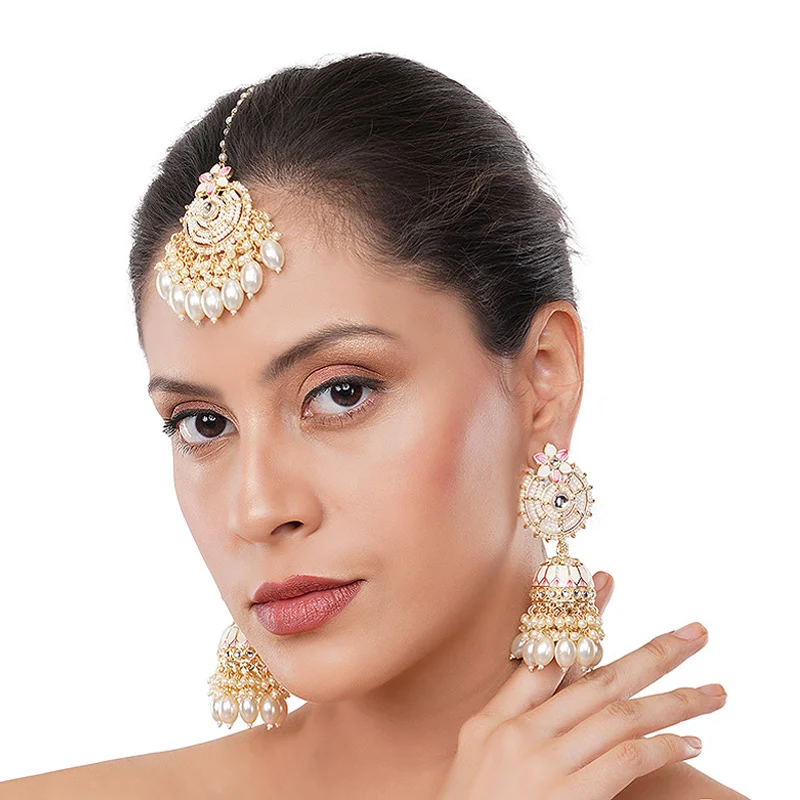
The shoot is priced the same way as an in-studio session: per product for jewellery and per product for short reels. Transport both ways is arranged and paid for by the brand through its own courier, so budget for it separately.
| Shoot type | Images | Turnaround | Price |
|---|---|---|---|
| Jewellery (ring, earring) | 2–3 angles | 4–5 days | ₹300 / product |
| Model Photography | 5–6 angles | 4–5 days | ₹400 / product |
| Ecommerce Reels Video | 20–25 seconds | 4–5 days | ₹900 / product |
Prices are per product/image as listed; call or WhatsApp +91-8076745824 for bulk catalogue quotes.
Planning a collection drop? Call Satyam on +91-8076745824, WhatsApp +91-8076745824 or email [email protected] with your SKU count, and we will confirm the shot list and handover steps before you dispatch.
Turnaround starts once the pieces are received and counted, so plan transit days on top of the shoot timeline. For a broader view of how rates vary by piece type, see our guide to what to expect from a jewellery photoshoot.
Which mistakes cause delays or disputes when you send jewellery for photoshoot work?
Most problems come from vague lists, mixed pouches and approvals spread across chats. Each of them is avoidable with ten extra minutes of preparation before dispatch.
- Counting in “pieces” without units. Write “1 pair” or “1 set” so earrings and sets are never miscounted.
- Several SKUs in one bag. Look-alike pendants get swapped on set and in file names.
- No reference photos. Without them, a pre-existing scratch becomes an argument.
- Skipping the sample round. Fixing colour on 60 SKUs after the shoot costs far more time than fixing it on two.
- Feedback by voice note. Comments without SKU codes get applied to the wrong images.
- Assuming transit cover. Confirm with your courier what is covered; never assume the studio carries that risk.
- Packing the return in a hurry. A return without a recount undoes all the care taken on the way in.
One more mistake is worth naming: replacing real photos with AI-generated jewellery images because shipping feels inconvenient. Shoppers zoom into stone settings and metal finish, and generated images often invent details your piece does not have, which leads straight to “product different from image” returns. Real photography of the real piece is still the safest choice.
What tools make a remote jewellery shoot easier to manage?
A shared spreadsheet, a cloud folder organised by SKU, a video-call app for the brief and your courier’s tracking page cover almost every need. You do not need specialised software, only consistent use of the same few tools.
- Shared sheet: inventory, shot list, approvals and return recount in one file.
- Cloud folder: one subfolder per SKU for samples, selects and finals.
- Video call: a 20-minute brief before dispatch and a live look at the sample set.
- Phone camera: reference photos and packing videos on your side.
- Anti-tarnish pouches and silica gel: especially for silver and oxidised pieces.
For gemstone pieces, the Gemological Institute of America publishes general guidance on handling and caring for stones, which is useful when you train staff to pack delicate settings.
Implementation checklist: what to do before, during and after dispatch
Use this checklist every time you send jewellery for photoshoot work. Print it, tick it off and keep it with your inventory sheet for the record.
Before dispatch
- Inventory sheet with SKU, units, finish and condition
- Reference photo for every line
- Shot list and style references agreed on a call
- Transport and return method confirmed
- Packing and sealing recorded on video
During the shoot
- Unboxing video and written acknowledgement received
- Sample set approved for colour, crop and background
- Contact-sheet selects marked by SKU
- Any extra shots agreed in writing
After the shoot
- Final files named with SKU codes
- Return recount recorded and shared
- Parcel opened on video on your side
- “Returned” column completed and confirmed
Where are remote jewellery shoots heading in 2026-2027?
Expect more brands to combine stills, short video and spin views in a single remote session, because sending pieces once and getting every asset back is cheaper than repeating the trip. Approval is also moving into shared sheets and live links rather than email chains.
Marketplaces keep adding video slots and on-body requirements, so a remote brief in 2026-2027 increasingly includes reels and 360 views alongside the packshot. The other shift is trust: as AI images become common, buyers look harder for signs of a real product. Brands that send jewellery for photoshoot work and show genuine macro detail, true metal tone and real scale stand out for exactly that reason.
Frequently asked questions about sending jewellery for a photoshoot
These are the questions jewellery brands outside Delhi NCR ask most often before they ship a collection for a catalogue shoot.
It can be, if you use a courier you already trust for valuables, confirm transit cover directly with them, pack each SKU separately and record both the packing and the unboxing. Safety comes from the documented process, not from any single promise.
A numbered inventory sheet with SKU codes, units, finish and condition notes; a reference photo for each piece; a sealed-carton video; a recorded unboxing at the studio; a written acknowledgement of received quantities; and a matching return recount.
You approve a small sample set first for colour, background and crop, then review contact sheets for every SKU, and finally sign off on retouched files. All comments stay in one shared sheet tied to SKU codes.
Transport both ways is normally arranged and paid for by the brand through its own courier or a trusted person. Confirm the method and timing with the studio before dispatch.
Jewellery (ring, earring) photography is ₹300 per product for 2–3 angles with a 4–5 day turnaround, and an ecommerce reels video is ₹900 per product. Call or WhatsApp +91-8076745824 for bulk catalogue quotes.
Yes. Add the video shots to your shot list before dispatch, so stills, short reels and close-up clips are captured in the same session and the pieces only travel once.
What is the next step after your pieces are approved?
Once the sample set is approved and the full batch is shot, the work moves to retouching and marketplace formatting. That is where stone colour, metal tone and white backgrounds are finished for upload.
If you are preparing to send jewellery for photoshoot work for the first time, start with the inventory sheet today; everything else builds on it. Uniqs Studio is happy to review your list and shot plan before you ship. Call +91-8076745824 or email [email protected].
Next step: read what happens in jewellery post production after the shoot so you know exactly what to check when your final files arrive.
Shipping a jewellery collection for a catalogue shoot?
Share your SKU count and marketplaces, and Satyam’s team at Uniqs Studio will confirm the shot list, handover steps and timeline before you dispatch. Studio: 1800/9, Kalkaji Extension, New Delhi 110019 · Mon–Sat, 10 am–7 pm.