
Meesho returns are the quiet profit killer for most suppliers on the platform. You win the order, pack it, ship it, and two weeks later the same kurti comes back with a “size issue” or “different from image” reason, plus the shipping cost you never recover. This guide is part of our Meesho seller hub, and it focuses on one question: how do you bring Meesho returns and RTO down without cutting your prices?
At Uniqs Studio, Satyam and the team have shot catalogues for 500+ D2C brands and marketplace sellers over 9+ years, and the pattern is always the same. Most returns are decided before the parcel leaves your warehouse: by the photos, the size chart, the colour accuracy and the way the product is described. Fix those, and Meesho returns start falling within a few catalogue cycles.
Key Takeaways
- Customer returns and RTO are two different problems: one is about expectations, the other about delivery and COD intent.
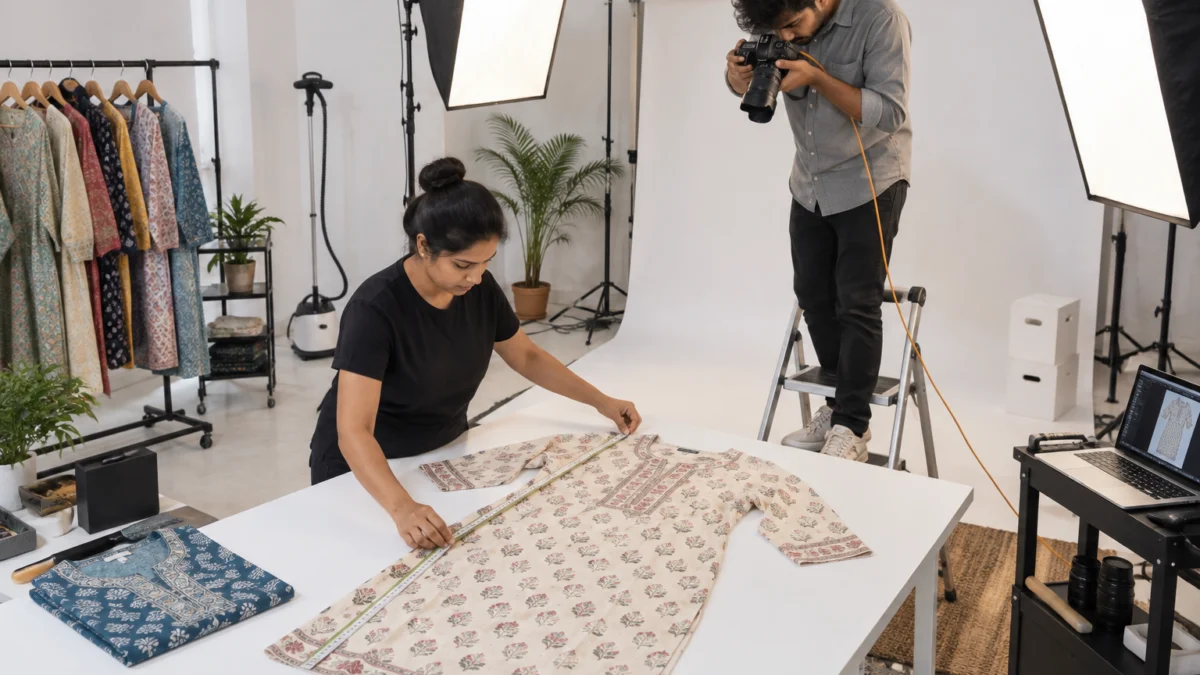
- Most fashion Meesho returns come from three reasons: size and fit, colour mismatch and “product looks different”.
- Honest, true-colour photos with a fabric close-up and a real size chart remove the surprise that triggers a return.
- Packing videos and label discipline are your evidence when you raise a Meesho return claim.
- Track your return rate per catalogue, not per account, so you fix the right listings first.
What are Meesho returns and how are they different from RTO?
Meesho returns are orders that were delivered and then sent back by the customer, usually for size, quality or “not as shown” reasons. RTO (return to origin) is an order that never reached the customer at all, mostly a refused or unreachable cash-on-delivery parcel. Both hurt your margin, but they have different causes and different fixes.
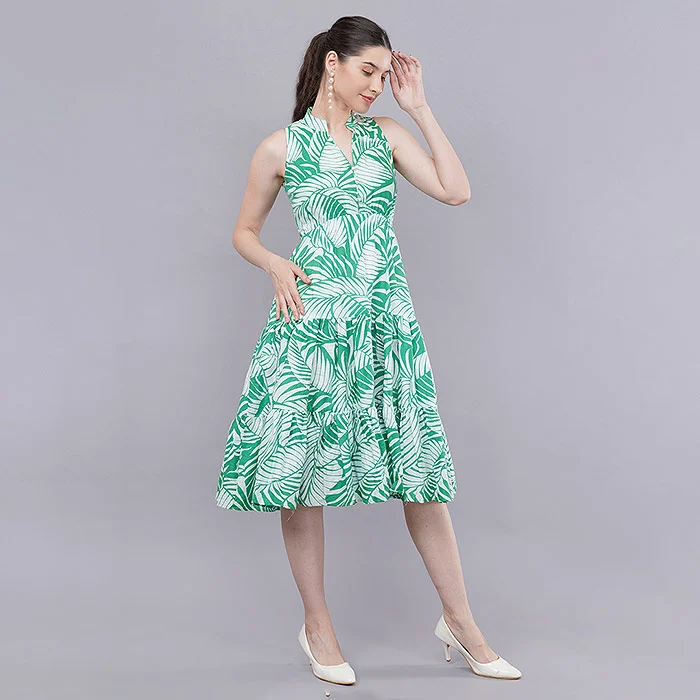
A customer return happens after delivery. The buyer opens the parcel, feels that the product does not match what they expected, and requests a return inside the return window. These Meesho returns usually come back through reverse pickup, and the product may arrive used, unfolded or without tags, which is why the condition check matters so much.
RTO is different. The courier attempts delivery, the buyer refuses the COD parcel, is not reachable, or has given an incomplete address, and the order goes back to you. Here the photo and size chart play a smaller role; buyer intent and delivery experience play the bigger one. We cover both in this guide, but the biggest lever for most fashion suppliers is the customer-return side.
| Point | Customer return | RTO (return to origin) |
|---|---|---|
| When it happens | After delivery | Before delivery |
| Main trigger | Size, colour, quality, “looks different” | COD refusal, wrong address, buyer not reachable |
| Product condition | Can come back used, damaged or swapped | Usually comes back sealed |
| Best fix | Honest images, size chart, fabric detail | Clear listing, fair price, fast dispatch |
| Evidence you need | Packing video, SKU label, QC photo | Dispatch and handover records |
Why are Meesho returns so high for fashion sellers?
Meesho returns run high in fashion because buyers order on price and photos alone, often on a small phone screen, with no store to try the product. When the parcel does not match the picture in their head, returning it costs them almost nothing. The gap between expectation and reality is the real cause.
Most Meesho buyers are value-conscious shoppers from smaller towns who trust what they see in the catalogue. Many first-time online shoppers order two sizes or two colours and keep one. Others order on COD to “see it first”. None of this is bad behaviour; it is simply how the platform works, and your catalogue has to be built for it.
The five most common return reasons we see
- Size or fit issue: the size chart is copied from another catalogue, or it shows body size when the buyer needs garment measurements.
- Colour different from image: over-saturated or filtered photos make a dusty pink look like hot pink.
- Quality or fabric not as expected: thin rayon photographed under harsh light looks like heavy cotton.
- Wrong or different product: a design variant was mixed up at packing, or one photo is reused across similar SKUs.
- Changed mind: impulse buys, duplicate orders and COD “trial” orders.
Only the last reason is mostly outside your control. The first four are catalogue and operations problems, which means they are fixable. In our experience at Uniqs Studio, sellers who fix images and size charts first see the fastest drop in Meesho returns, because those listings stop attracting the wrong buyer.
How do you calculate your Meesho return rate?
Your Meesho return rate is the number of delivered orders that came back as customer returns, divided by total delivered orders, for the same period. Calculate RTO separately against total shipped orders. Track both every week, per catalogue, so you know exactly which listings need fixing.
| Metric | Formula | What it tells you |
|---|---|---|
| Customer return rate | Customer returns ÷ delivered orders × 100 | How well your catalogue sets expectations |
| RTO rate | RTO orders ÷ shipped orders × 100 | COD intent, address quality, delivery speed |
| Return reason share | Returns for one reason ÷ all returns × 100 | Which fix gives the biggest drop |
| Net realised orders | Shipped − RTO − returns | Orders that actually earn money |
Export your orders and returns from the Supplier Panel every week and sort them by catalogue and return reason. You will usually find that three or four catalogues create most of your Meesho returns. Those are the listings to reshoot, re-measure and rewrite first; everything else can wait.
How to reduce Meesho returns: 11 fixes that work
To reduce returns on Meesho, close the gap between what the buyer sees and what the buyer receives. That means true-colour photos, garment-based size charts, fabric and fit detail, honest titles, and careful packing. Each fix below targets a specific return reason, so start with the reason that hurts you most.
1. Shoot true-colour images under consistent light
Colour complaints are among the easiest Meesho returns to prevent. Shoot under controlled studio strobes with a grey card, keep white balance locked across the catalogue, and never push saturation to make a product “pop”. If the fabric is a muted mustard, the image must show a muted mustard. A phone photo under a yellow tube light is the most common source of colour returns we see.
2. Show the garment’s real shape with clean product shots
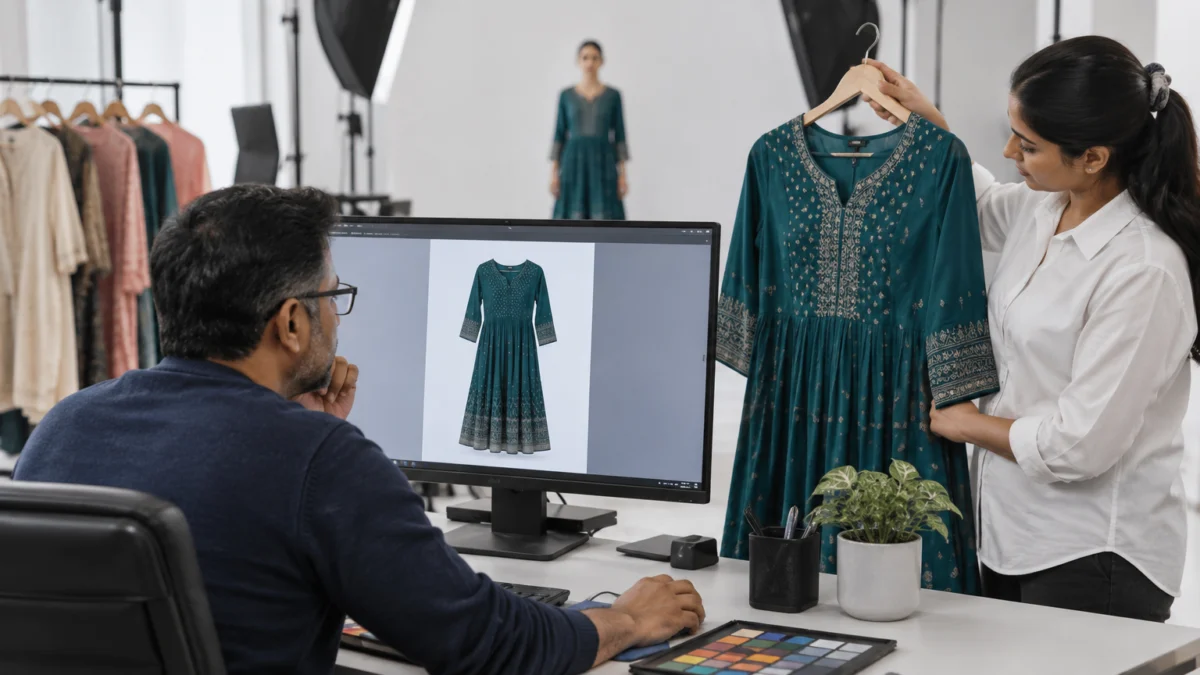
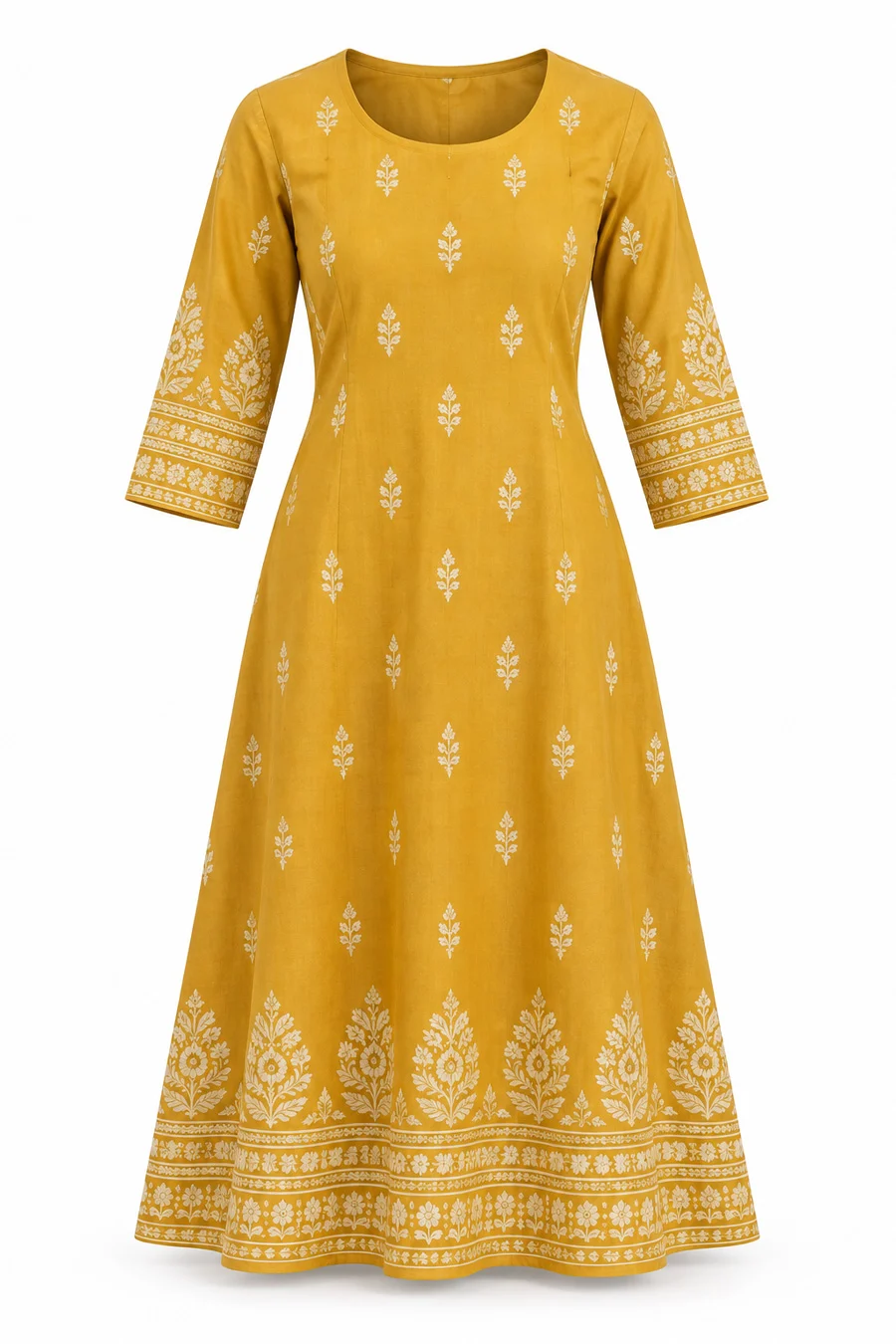
Buyers return a kurti when the neckline, length or flare looks different in person. A clean front image on a pure white background, plus a side and back view, removes that guesswork. For kurtas, shirts and tops, ghost mannequin shots show the true silhouette and neckline without a model’s styling changing the look, which is why they work so well as the first image of a Meesho catalogue.
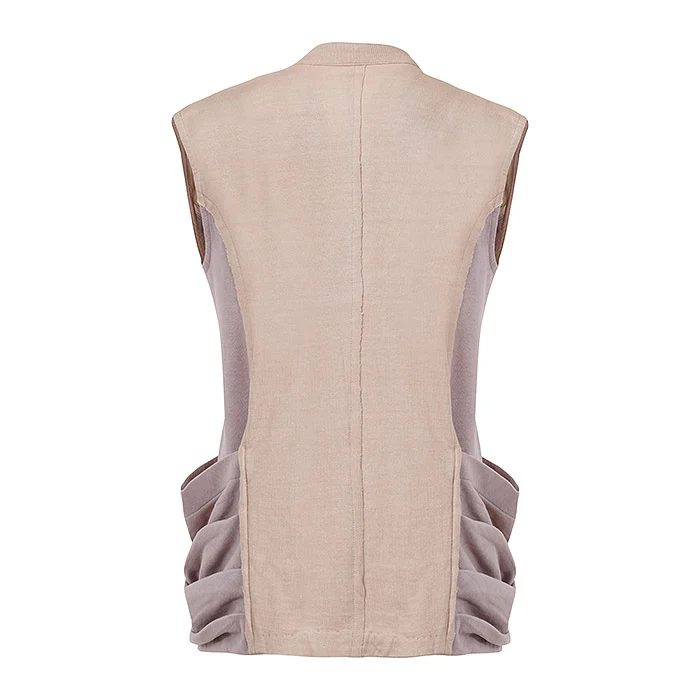
3. Never skip the back view and detail shots
A surprising number of “different from image” returns are about the back: a deep back neck, a zip, a tie-up or a print that does not continue. Add a back image and two detail shots (neckline and hem or border) to every catalogue. It costs a few extra frames on shoot day and saves a return every time a buyer would otherwise be surprised.
4. Build a garment-based size chart for every catalogue
Meesho size issue returns drop fastest when the size chart lists real garment measurements: chest, waist, hip, length and sleeve, for each size, in inches. Measure two pieces per size from the actual production lot, not from the tech pack, because cutting varies. Add a one-line fit note such as “relaxed fit, choose your usual size” or “fitted, size up if between sizes”.
5. Show the model’s height and size worn
“Model is 5’6″ and wearing size M” is one of the most useful lines you can add to a fashion listing. It turns an abstract size chart into something the buyer can picture. Put it in the description and, where the template allows, as a small note on one image. Keep the same model across a catalogue so the fit reference stays consistent.
6. Add a short garment video for fabric and fall
Photos cannot always show how thin, heavy, stretchy or flowy a fabric is. A 20 to 30 second clip of the garment on a model, turning and walking, answers that in seconds. Our short garment videos are built exactly for this: front, side, back, movement and a fabric close-up, so the buyer knows how the piece behaves before ordering. Use the video on Meesho where your listing supports it, and in your shared catalogue links and social posts.
7. Photograph the fabric close-up honestly
Add one macro shot of the fabric texture, print and stitching at true scale. Light it softly from the side so the weave is visible but not exaggerated. If the fabric is slightly sheer, show it; a buyer who knows in advance will not return it for that reason. Honest detail builds the trust that keeps your rating healthy.
8. Use one photo set per SKU, never a shared one
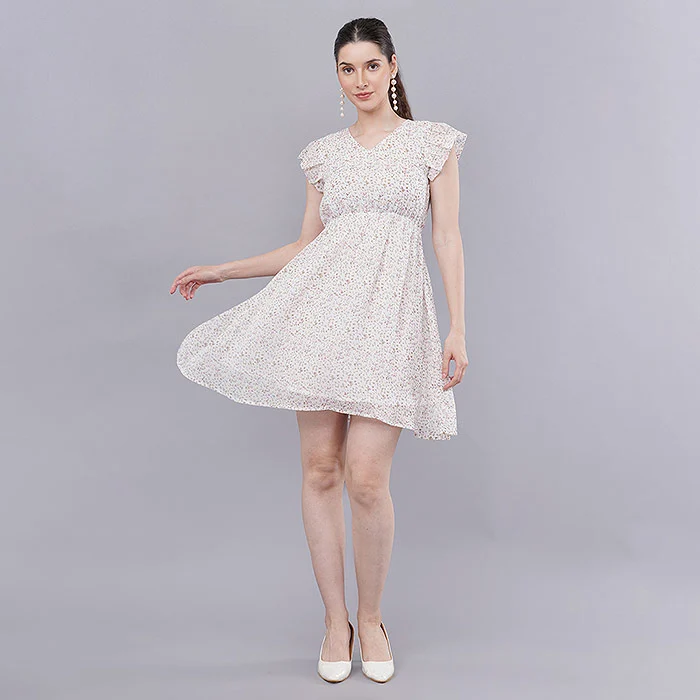
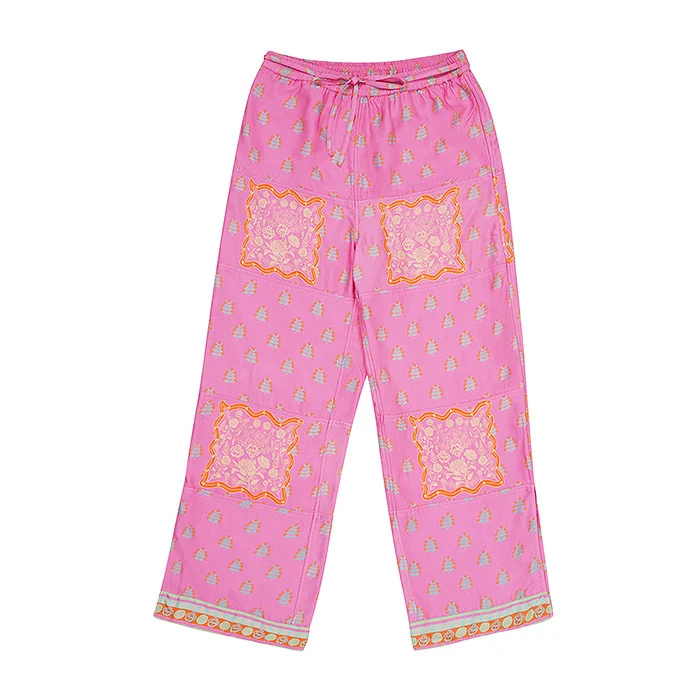
Reusing one image across three similar prints is a direct route to “wrong product” Meesho returns. Every colour and print variant needs its own photo set with matching SKU codes in the file names. On shoot day, tag each garment with its SKU before it goes on the mannequin or model, so the edit team can never mix variants up.
9. Write titles and descriptions that match the product
Keep titles factual: fabric, fit, neckline, sleeve and occasion. Avoid “premium silk look” for a polyester blend, and do not promise “free size fits all” unless it really does. List the fabric composition, wash care and what is included (for example, “kurti with dupatta, pant not included”). Clear text stops the “not as described” return before it starts.
10. Pack, label and record every order
Many wrong-item returns are packing errors. Use a simple pick-and-pack routine: scan or tick the SKU, fold to a standard size, seal in a plain poly bag, and label. Record a short packing video for high-value orders, with the label and product visible in one continuous shot. That video is your strongest evidence if you ever need to raise a Meesho return claim.
11. Read return reasons weekly and fix one catalogue at a time
Set a 30-minute weekly slot to read every return reason and every buyer comment. If one catalogue keeps getting “size small”, fix the size chart and add a fit note. If another keeps getting “colour different”, reshoot it. Fixing one problem catalogue per week compounds quickly and keeps Meesho returns trending down instead of spiking every sale season.
Satyam’s tip: before a big sale, check your top 20 selling catalogues for size chart accuracy and colour accuracy. Returns from sale-season orders arrive weeks later, when it is too late to fix the listing.
How do you cut Meesho RTO on COD orders?
You cut Meesho RTO by making buyers confident enough to accept the parcel and by shipping fast enough that they still want it. Clear listings, honest pricing, quick dispatch and good packing all reduce COD refusals. You cannot remove RTO completely, but you can stop feeding it.
- Dispatch on the same or next day: the longer the wait, the more often COD buyers change their mind or buy elsewhere.
- Keep listings honest: buyers who doubted the product at checkout are the ones who refuse at the door.
- Avoid unrealistic discounts: a price that looks “too good” attracts trial orders that end in RTO.
- Watch pin codes: if certain areas show repeated RTO in your reports, review stock and pricing for those catalogues.
- Use sturdy, neat packing: a torn or wet pouch gives the buyer a reason to refuse.
RTO and Meesho returns often move together. A listing with weak photos creates doubt at checkout (RTO) and disappointment after delivery (customer return). That is why the catalogue fixes above usually lower both numbers at once.
How do you raise a Meesho return claim for wrong or damaged returns?
When a return arrives damaged, used, incomplete or with a different product inside, raise a claim from the Supplier Panel within the window it shows, with clear unboxing proof. Strong evidence (a continuous unboxing video, the label and the product in frame) is what gets claims approved. Without proof, a wrong product return is hard to recover.
- Record a continuous unboxing video of every return parcel, starting with the sealed pack and the label visible.
- Compare the returned item with your original photos and SKU tag: design, size, colour and condition.
- If something is wrong, open the returns section of the Supplier Panel and raise a claim with the right reason.
- Upload the unboxing video and clear photos of the issue, and keep your packing video ready as supporting proof.
- Track the claim status and note the outcome, so you know which reasons get approved.
Meesho tightened its return checks in early 2023 with barcodes and packaging video verification, and sellers were given a short window to raise claims after receiving a return, as Inc42 reported at the time. Rules and windows change, so always confirm the current process on the official Meesho supplier portal. If you also sell on other platforms, our Myntra returns and SPF claim guide shows how evidence works there too.
Which common mistakes push Meesho returns up?
The mistakes that push Meesho returns up are almost always shortcuts on the catalogue: filtered phone photos, copied size charts, shared images across variants and vague titles. Each one saves a little time today and costs a return later. Avoid them and your return rate improves without any price cut.
| Mistake | Return reason it causes | Fix |
|---|---|---|
| Beauty filters and heavy saturation | Colour different from image | Studio light, grey card, locked white balance |
| Copied or generic size chart | Size or fit issue | Measure two pieces per size from the real lot |
| One image for many prints | Wrong product received | One photo set per SKU, SKU in file names |
| No back or detail images | Looks different from image | Back view plus neckline and hem close-ups |
| AI-generated model images that change the garment | Quality not as expected | Real photos of the real product |
| Rushed packing, no video | Wrong or missing item, rejected claims | Pick-pack routine and packing video |
A word on AI images: they can look polished, but they often change drape, print scale or colour in subtle ways. On a platform where buyers decide purely from images, that small difference is enough for a return. Real photos of the real garment remain the safest way to reduce returns on Meesho. Our Meesho product photography rules explain how to plan that shoot in detail.
What does a return-proof catalogue reshoot cost?
A return-proof reshoot at Uniqs Studio is priced per product or per image, so you only pay for the catalogues that are actually causing Meesho returns. Most suppliers start with ghost mannequin or model images for their top-returning styles, then add a short video for fabric-sensitive pieces.
| Shoot type | Images | Turnaround | Price |
|---|---|---|---|
| Ghost mannequin | 1 angle | 3–4 days | ₹250 / image |
| Flat lay | 2–3 angles | 6 days | ₹290 / product |
| Model Photography | 5–6 angles | 4–5 days | ₹400 / product |
| Ecommerce Reels Video | 20–25 seconds | 4–5 days | ₹900 / product |
| Garment Video with Model | 25–30 seconds | 4–5 days | ₹1,200 / garment |
Prices are per product/image as listed; call or WhatsApp +91-8076745824 for bulk catalogue quotes.
Share your top-returning catalogues with us on +91-8076745824 (WhatsApp) or call +91-8076745824, and we will suggest the right mix of shots for each one.
Implementation checklist: what should you fix this week?
Start with data, then fix the three catalogues that create most of your Meesho returns. One focused week is enough to set up the routine; after that, keep the weekly review going. Use this checklist as your plan.
- Export last month’s orders, returns and RTO by catalogue and reason.
- Calculate customer return rate and RTO rate separately.
- Pick the three catalogues with the highest return share.
- Re-measure two pieces per size and rebuild their size charts.
- Check colour accuracy against the real garment; reshoot if it is off.
- Add back view, neckline and fabric close-up images where missing.
- Add “model height and size worn” to every fashion listing.
- Set up a pick-pack routine and record packing and unboxing videos.
- Book a 30-minute weekly review of return reasons.
If you are still setting up your account, our Meesho supplier registration steps cover the basics first, so your catalogue starts clean from day one.
What do sellers ask most about Meesho returns?
These are the questions suppliers ask us most often about Meesho returns, RTO and claims. The short answers below cover the essentials; for anything account-specific, check the Supplier Panel or contact Meesho supplier support.
There is no single official benchmark, and fashion naturally runs higher than other categories. Instead of chasing a number, compare each catalogue against your own average and fix the ones well above it. A steady downward trend in Meesho returns matters more than any single figure.
Meesho returns happen after delivery, when the buyer sends the product back. RTO happens before delivery, when the parcel is refused or cannot be delivered and goes back to the supplier. Returns are mostly an expectation problem; RTO is mostly a COD intent and delivery problem.
Use a size chart with real garment measurements from the production lot, add a clear fit note, and mention the model’s height and size worn. Back and side views help buyers judge length and fit, which cuts size-related Meesho returns noticeably.
Yes. If the returned parcel contains a different, used or damaged product, raise a claim from the Supplier Panel within the window it shows. A continuous unboxing video with the label visible is the most important evidence, so record every return parcel.
Yes, when “better” means more honest, not more glamorous. True-colour images, back views, fabric close-ups and a short garment video set accurate expectations, so fewer buyers feel the product looks different. That is the main lever against colour and quality returns.
At Uniqs Studio, ghost mannequin images are ₹250 per image, flat lay is ₹290 per product, model photography is ₹400 per product, and a garment video with model is ₹1,200 per garment. Call or WhatsApp +91-8076745824 for bulk catalogue quotes.
What is the next step after fixing your returns?
Once your size charts, packing and claim routine are in place, the biggest remaining lever is the catalogue itself. Reshoot your highest-returning styles first, measure the change for a few weeks, then roll the same standard out to new launches.
If your return reasons keep saying “looks different” or “fit not as expected”, the next step is to plan on-model fashion shoots for those styles, so buyers see real fit, length and fabric on a real person. Uniqs Studio shoots in-house in Delhi and works with sellers across Delhi, Gurgaon, Noida, Faridabad and Ghaziabad. Call Satyam on +91-8076745824 or email [email protected] to plan the reshoot.
Turn your highest-return catalogues into listings buyers keep
Send us your top-returning styles and we will plan true-colour images, size-chart support and a garment video for each one. Uniqs Studio, 1800/9, Kalkaji Extension, Kalkaji, New Delhi 110019 · Mon–Sat, 10 am–7 pm.