
Few things hurt a Meesho supplier more than opening the app and seeing Meesho copied product images — your own model shots, your own colours, your own styling — sitting on a listing that sells for less. This guide is part of our Meesho seller resource hub, and it focuses on one problem only: what to do when another seller steals your catalogue photos.
At Uniqs Studio, Satyam and the team have spent 9+ years shooting catalogues for 500+ D2C brands and marketplace sellers, and image theft is one of the most common worries suppliers bring to the studio. The good news: when the photos are genuinely yours and you keep the right evidence, copied listings can be reported and removed. Below you will find the exact evidence list, a 7-step takedown process, what Indian courts have said, and how to make your next shoot harder to copy.
Key Takeaways
- Copied images are usually a copyright problem, and the original creator or commissioning brand normally owns the rights to the photos.
- Proof wins takedowns: RAW files, shoot invoices, upload dates and dated screenshots of the copied listing URL.
- Report through Meesho’s supplier support and grievance channels with specific listing links, not a general complaint.
- Delhi High Court orders in 2023 and 2024 restrained Meesho sellers from copying a brand’s photographs and directed takedowns of listed URLs.
- Prevention beats chasing: distinctive original shoots, detail angles and video make your catalogue far harder to clone.
What do Meesho copied product images actually mean for a supplier?
Meesho copied product images means another seller has uploaded your photographs — or lightly edited versions of them — to their own catalogue, usually to sell a cheaper or look-alike product. It is a copyright and passing-off problem, not just a pricing problem, and it can be reported.
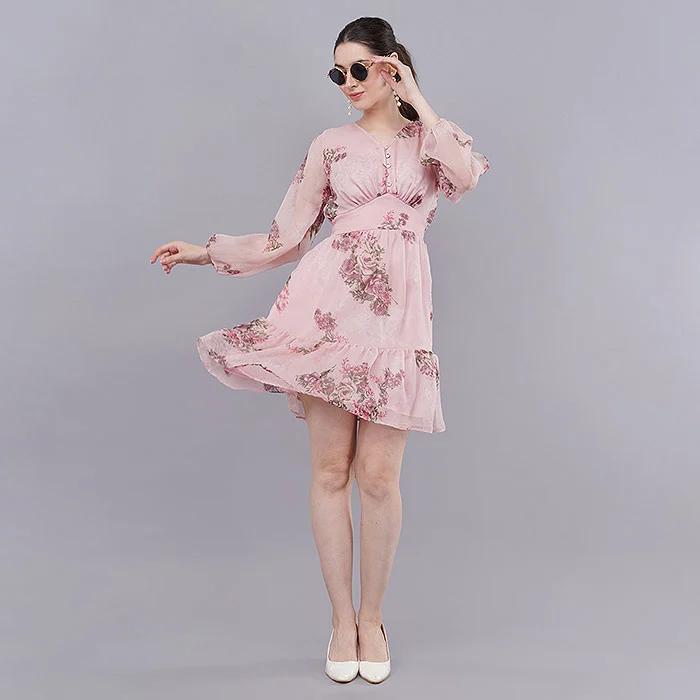
In practice we see four patterns. The first is the exact copy: your front, back and detail images downloaded and re-uploaded unchanged. The second is the cropped or flipped copy, where the seller crops your model’s face, mirrors the frame or changes the background colour to avoid easy matching. The third is the AI-edited copy, where your garment is pasted onto a different model or background with an AI tool. The fourth is a design copy — they did not take your photo, but they recreated your print and shot it similarly.
The first three are image theft, because the pixels started life in your shoot. The fourth is a design dispute and is harder to prove, so this guide treats it separately. Knowing which type you are facing decides which proof you need and what you write in your Meesho copyright complaint.
| Type of copy | How to recognise it | Strength of your case | Best first action |
|---|---|---|---|
| Exact copy | Same pose, same crease, same shadow, same file look | Very strong | Report with RAW file + listing URL |
| Cropped / flipped copy | Face cropped, image mirrored, background tinted | Strong | Show overlay comparison + RAW file |
| AI-edited copy | Your garment on a new face or background | Strong if garment pixels match | Highlight matching folds, print and stitching |
| Design copy | New photo, but your print or pattern | Needs design proof | Collect design files, sampling dates, legal advice |
Why do copycat sellers target your Meesho catalogue photos?
Copycats steal photos because good catalogue images are expensive to create and they sell. A seller who lifts your images skips the shoot, the model, the styling and the retouching, then undercuts your price with a cheaper product that looks identical online.
On a price-led marketplace like Meesho, buyers scroll quickly and compare thumbnails. If two listings show the same model in the same kurti, most buyers simply pick the cheaper one. That is why Meesho image theft hits ethnic wear and private-label clothing hardest: one strong hero image can carry a catalogue for months, so it is worth stealing.
The damage goes beyond lost orders. When the copycat ships a lower-quality product, buyers who expected your fabric and fit return it or leave poor ratings — and some of that frustration lands on the look of your photos. If you have already fought returns, our guide to winning wrong return claims with evidence on Meesho uses the same evidence-first habits you will build here.
How do you find out if your Meesho product images have been copied?
Search Meesho with your own product keywords every week, run your hero images through a reverse image search such as Google Lens, and watch for sudden drops in orders on a best-seller. Most suppliers discover Meesho copied product images by accident; a 15-minute weekly routine finds them early.
A weekly routine to catch duplicate catalogues on Meesho
- Keyword sweep: search the Meesho app with the 3–4 words buyers use for your top styles (for example, “rayon printed kurti set”) and sort by price low to high — copies usually sit below your price.
- Reverse image search: upload your front image to Google Lens; it often finds the same photo on Meesho, social shops and reseller groups.
- Order-drop alert: if a steady style suddenly loses orders without a price or stock change, look for a duplicate catalogue on Meesho first.
- Reseller groups: many Meesho resellers share catalogues on WhatsApp and Facebook; a look at those groups often reveals where your images travelled.
- Log everything: keep a simple sheet with the date found, listing URL, seller name shown and screenshot file name.
Take screenshots that show the full listing, the seller name, the price and the date and time on your phone or computer. Copy the product link of every listing showing Meesho copied product images from the share button too, because a complaint without a specific URL is much harder for any platform to act on.
How do you prove Meesho copied product images are really yours?
Prove it with files a copycat cannot have: the original RAW or full-resolution camera files, the shoot invoice, behind-the-scenes photos and your earlier upload date. Together they show you created the images first and paid for them.
This is where a professional shoot quietly protects you. Every Uniqs Studio catalogue leaves a paper trail — RAW files with camera data, edited exports, the shoot date and the invoice. A seller who downloaded a compressed JPG from the app cannot produce any of that. Under India’s Copyright Act, 1957, the person at whose instance a photograph is taken for payment is generally the first owner of its copyright unless an agreement says otherwise, so keep your shoot paperwork safe.
Evidence checklist for a Meesho copyright complaint
| Proof | Where you get it | Why it matters |
|---|---|---|
| RAW / original camera files | Your photographer or studio | Higher resolution and camera data show you are the source |
| Shoot invoice or agreement | Studio invoice, email confirmation | Shows you commissioned and paid for the photos |
| Behind-the-scenes photos | Phone photos from the shoot day | Shows the product, model and set in real life |
| Your listing date | Supplier Panel catalogue history | Shows your images went live first |
| Dated screenshots of the copy | Your phone or computer | Shows the infringing listing, seller and price |
| Side-by-side comparison | A simple collage you make | Makes matching folds, prints and shadows obvious |
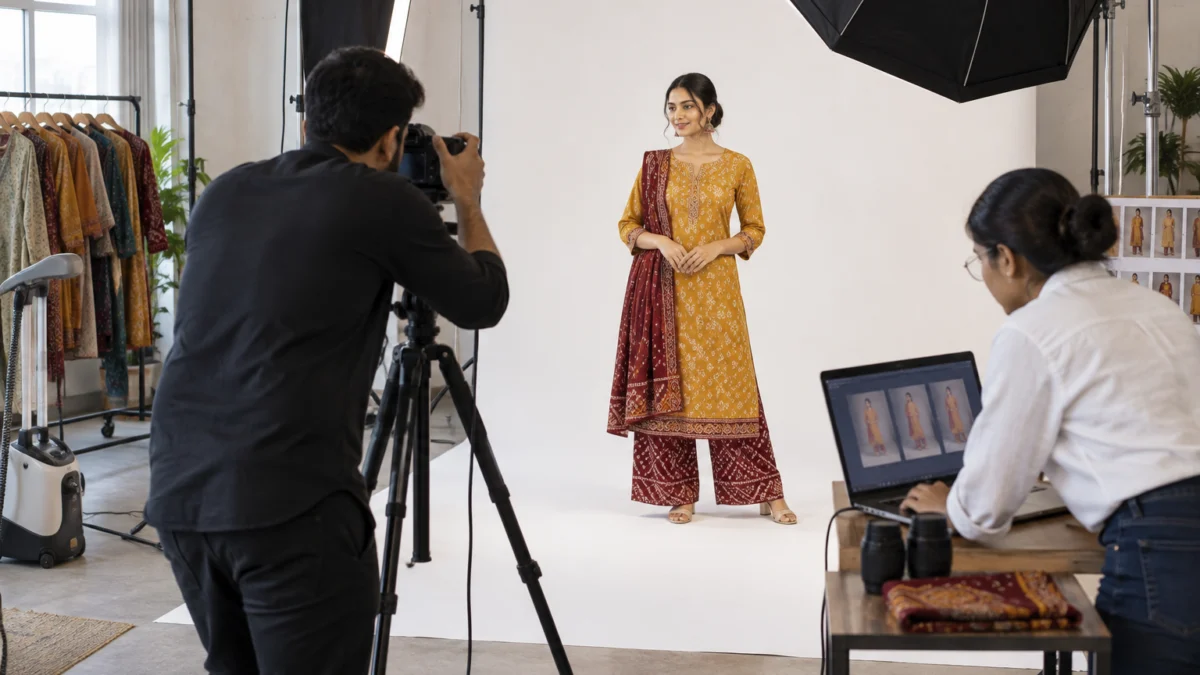
One practical tip from our studio floor: ask your photographer to hand over a folder that keeps the camera file names unchanged and includes 2–3 wider frames showing the set. Those frames, with lights and the clothing rack visible, are almost impossible for a copycat to fake and make your Meesho catalogue copied claim much easier to accept.
How do you report copied product images on Meesho, step by step?
Collect the listing URLs, prepare your proof pack, raise a ticket from your Meesho Supplier Panel support section, and escalate to Meesho’s Grievance Officer if needed. Be specific: one complaint, clear URLs, clear proof and a clear request to remove the listings.
Menus inside the Supplier Panel change from time to time, so treat the steps below as the process rather than exact button names. Always check the latest help pages inside your panel before you file a Meesho takedown request.
- Step 1 — List every infringing URL. Open each copied listing, use the share option to copy its link and note the seller name shown. Courts and platforms act on specific URLs, so this list is the heart of your complaint.
- Step 2 — Build a proof pack. Put your RAW file names, shoot invoice, behind-the-scenes photos, your own catalogue ID and upload date, and side-by-side comparisons into one PDF or folder.
- Step 3 — Raise a support ticket. From the Supplier Panel’s support or help section, choose the category closest to intellectual property, copied images or listing issues, and attach your proof pack.
- Step 4 — Write a short, factual complaint. State that you own the photographs, list the URLs, explain how you know (RAW files, invoice, earlier upload date) and ask for removal of the copied listings.
- Step 5 — Escalate to the Grievance Officer. Under India’s IT Rules, 2021, large platforms must publish a Grievance Officer contact; if support does not help, email the officer listed on Meesho’s website with the same proof pack and ticket number.
- Step 6 — Track and re-check. Note the dates you filed and re-check each URL after a few days. Copycats sometimes re-upload under a new catalogue, so keep the weekly search going.
- Step 7 — Escalate legally if needed. For repeated, large-scale copying, speak to an IP lawyer about a legal notice or a court petition, as other brands have done.
Sample complaint wording: “We are the owner of the product photographs used in the listings below. The images were created in a commissioned studio shoot on [date]; RAW files, the shoot invoice and our original catalogue ID are attached. These listings use our photographs without permission. Please remove them: [URL 1], [URL 2].”
Keep the tone professional and the message short. Platforms process many tickets, and a complaint that reads clearly in 30 seconds — with URLs and attached proof — moves faster than a long emotional message. If your images also break catalogue rules after edits, compare them with our Meesho photography guidelines for catalogue QC before you re-upload anything.
What have Indian courts said about copied Meesho listings?
Delhi High Court orders in 2023 and 2024 restrained Meesho sellers from copying a brand’s photographs and designs, directed Meesho to share seller details, and in one case required copied listings to be taken down within 72 hours of receiving the URLs.
In Tibra Collection v. Fashnear Technologies (order dated 27 September 2023), an ethnic wear brand said Meesho sellers had copied its clothing designs and photographs. As reported by SCC Online, the court restrained the sellers from reproducing the brand’s images, including photographs, and directed Meesho to disclose the sellers’ available details.
In a later case decided on 29 February 2024, a clothing seller again went to court over copied designs and product images. According to BananaIP’s summary of the order, the plaintiff was to share the infringing URLs and Meesho was to take those listings down within 72 hours, while also displaying seller addresses clearly.
These cases do not mean every complaint ends in court. They show two useful things: Indian courts treat copied product photographs seriously, and specific URLs plus solid ownership proof are what make takedowns possible. This is general information, not legal advice — speak to a qualified IP lawyer for your own situation.
What should you do if Meesho does not remove the copied listing?
Follow up on the same ticket, escalate to the Grievance Officer with your ticket number, and if copying continues at scale, ask an IP lawyer about a legal notice to the seller or a court petition. Meanwhile, strengthen your own listing so buyers can tell the original from the copy.
- Follow up politely on the same ticket rather than opening many new ones; a clean history helps.
- Escalate with structure: ticket number, URLs, proof pack and the dates you contacted support.
- Consider a legal notice through a lawyer when one seller repeatedly copies many catalogues.
- Differentiate your listing with extra angles, close-ups and a short video the copycat does not have.
- Refresh your hero image for best-sellers so your newest, strongest image is unique to you.
From experience, the fastest commercial fix is often the last one. When your listing shows six or seven original angles and a video, while the copy shows two stolen images, buyers notice the difference — even before the takedown comes through.
How can you protect product photos from copying on Meesho?
You cannot make images impossible to download, but you can make them hard to reuse: shoot distinctive originals, add detail angles and video, keep metadata and RAW files, and avoid relying on heavy watermarks that can fail catalogue QC.
Should you watermark product images on Meesho?
A large logo across the garment may stop a lazy copier, but marketplaces generally reject images with heavy watermarks, text or logos, and they hurt conversion. Check the current Meesho image rules before adding any mark. A safer approach is invisible protection: keep copyright details in the file metadata, keep RAW files, and use a consistent set, props and styling that make your photos recognisably yours.
Make Meesho copied product images easy to prove and hard to reuse
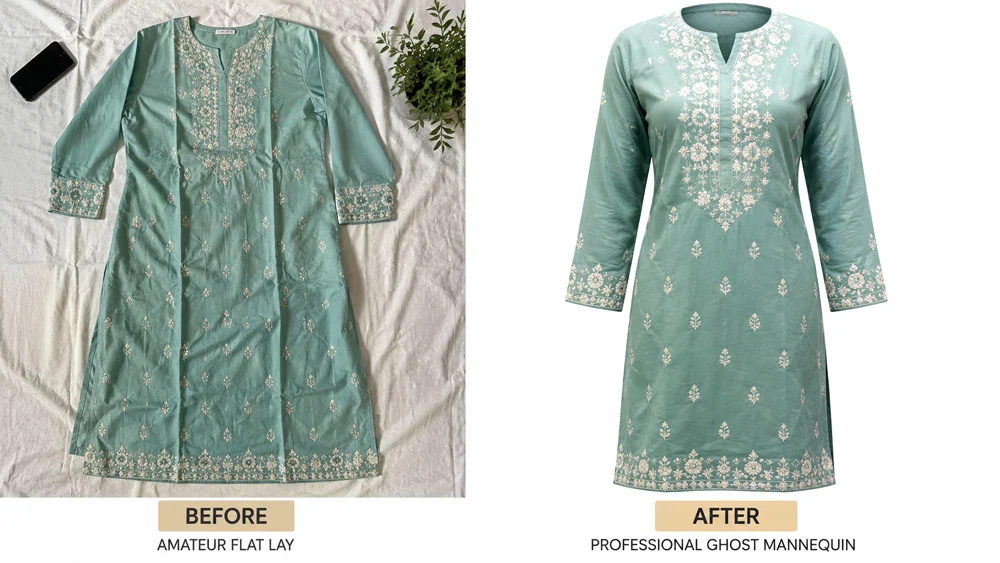
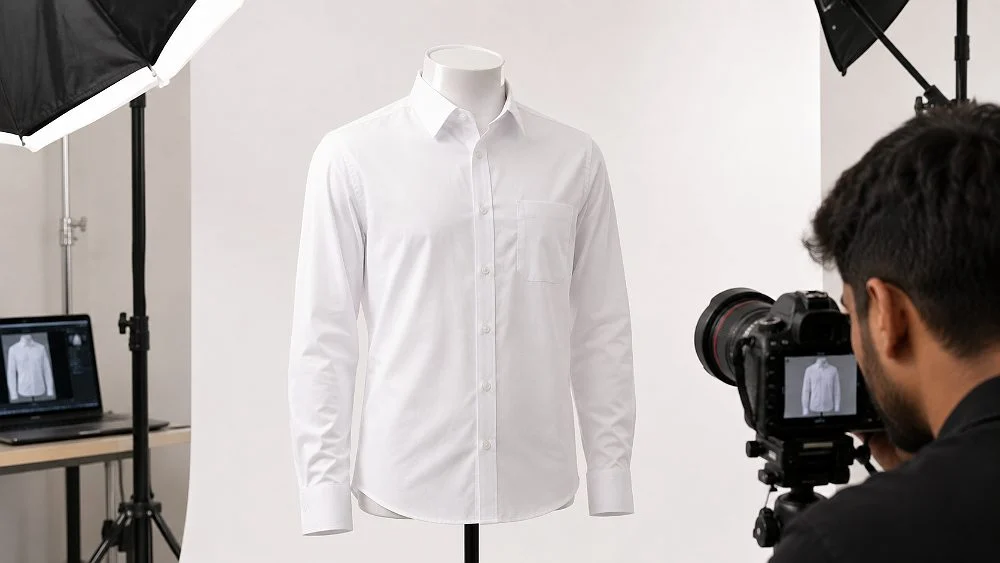
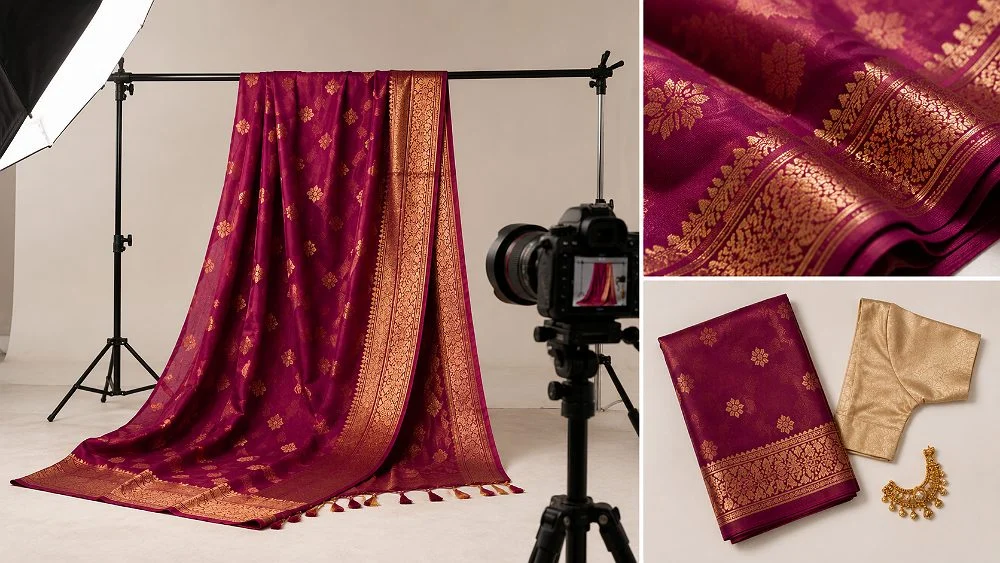
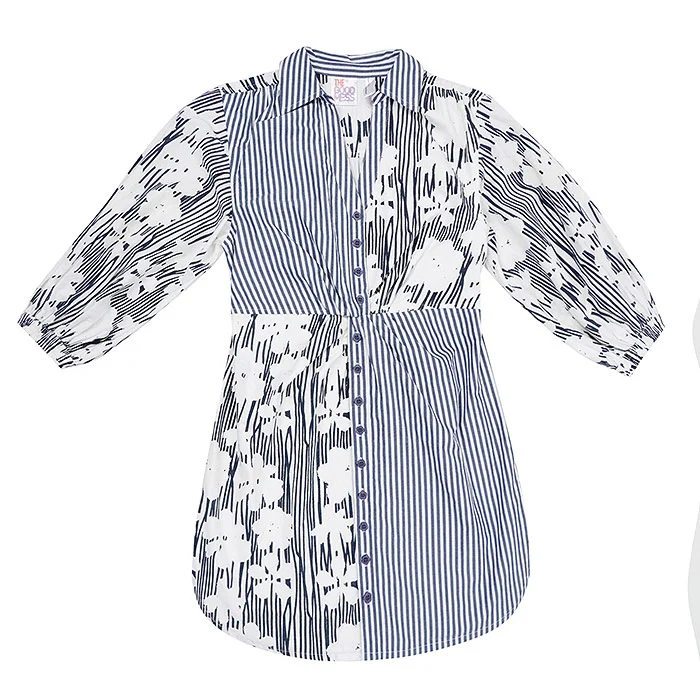
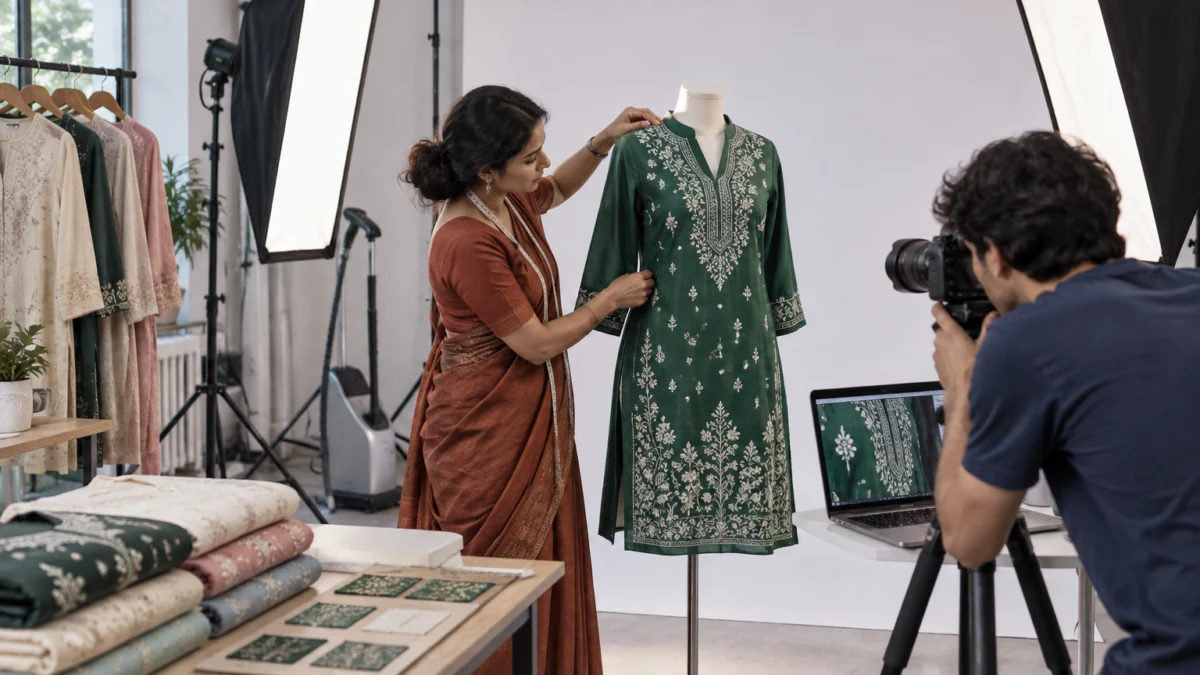
The best defence is a catalogue that is clearly the work of one brand. For shirts, kurtas and tops, ghost mannequin shoots for apparel show the garment’s real shape with a consistent studio look that is hard to fake with a quick edit. For kids’ wear, combos and accessories, clean flat lay shots with your own fold style and props give every SKU a signature look.
Use detail angles and video copycats rarely bother with
Copycats usually take only the front image and maybe one back view. Fabric close-ups, print macros, neckline and cuff details, a size-chart image and a short model video are rarely copied together — and they are exactly what buyers use to judge quality. When your listing has them and the copy does not, you win the comparison.
Protection habits that cost nothing
- Add your brand name and copyright line to image metadata before upload.
- Keep RAW files and shoot invoices in two places (cloud plus drive).
- Note every catalogue’s upload date and catalogue ID in one sheet.
- Avoid sharing full-resolution files in public reseller groups — share listing links instead.
- Refresh the hero image of best-sellers each season so the latest version is only yours.
How much does an original catalogue shoot cost to replace stolen photos?
At Uniqs Studio, apparel shoots are priced per product or per image, so you can re-shoot only your best-sellers first. The table below lists our current rates and turnaround times for the shoot types Meesho clothing suppliers use most.
| Shoot type | Images | Turnaround | Price |
|---|---|---|---|
| Ghost mannequin | 1 angle | 3–4 days | ₹250 / image |
| Flat lay | 2–3 angles | 6 days | ₹290 / product |
| Model Photography | 5–6 angles | 4–5 days | ₹400 / product |
| Ecommerce Reels Video | 20–25 seconds | 4–5 days | ₹900 / product |
| Garment Video with Model | 25–30 seconds | 4–5 days | ₹1,200 / garment |
Prices are per product/image as listed; call or WhatsApp +91-8076745824 for bulk catalogue quotes.
Want original images copycats can’t match? Call +91-8076745824 or WhatsApp +91-8076745824 with your style count, and Satyam’s team will suggest the right mix for your catalogue.
What mistakes do sellers make when fighting Meesho image theft?
The biggest mistakes are complaining without specific URLs, having no original files to prove ownership, and copying someone else’s images yourself. Each one weakens your case or puts your own account at risk.
- No URLs: “Someone copied my kurti” is not actionable; a list of listing links is.
- No originals: if you only have the compressed JPG you uploaded, your proof looks the same as the copycat’s.
- Using supplier or factory photos: if your images came from a manufacturer who sells to many sellers, you may not own them — and others may use them legally.
- Using AI-generated models from someone else’s photos: editing another brand’s image with AI is still copying, and it can backfire.
- Angry public posts: naming sellers publicly without proof can create new problems; keep it on platform and on paper.
- Stopping after one takedown: copies often come back under new catalogue IDs, so keep the weekly search going.
Mistake number three surprises many new suppliers. If you started with factory images, the most reliable way to own your catalogue is to commission your own shoot. For Meesho copied product images, that single step turns a weak “these are also my photos” argument into a clear ownership claim backed by an invoice and RAW files.
What should your Meesho image-protection checklist include?
Use this checklist once for your existing catalogue and then every time you add a new style. It covers proof, monitoring and response so that Meesho copied product images never catch you unprepared.
- Original RAW files and edited exports saved for every catalogue
- Shoot invoice or agreement saved with the catalogue ID
- 2–3 wide behind-the-scenes frames per shoot day
- Upload date and catalogue ID logged in one sheet
- Brand and copyright details added to image metadata
- Weekly keyword and reverse image search for top 10 styles
- Screenshot + URL log for every copy you find
- Complaint template ready with proof-pack folder
- Detail angles, size chart and video on best-sellers
- Hero image refreshed each season for top styles
Frequently asked questions about Meesho copied product images
These are the questions Meesho suppliers ask Uniqs Studio most often about copied photos, takedowns and protection. Short answers first, so you can act quickly.
Under the Copyright Act, 1957, a photo taken for payment at your request is generally owned by you, the commissioning brand, unless an agreement says otherwise. Keep the invoice and, ideally, a line confirming ownership.
Collect the listing URLs, prepare proof (RAW files, invoice, upload date, screenshots), raise a ticket from your Supplier Panel support section, and escalate to Meesho’s Grievance Officer with the ticket number if needed.
Heavy watermarks, text or logos on product images can fail catalogue checks and reduce clicks. Check Meesho’s current image rules first, and rely on metadata, RAW files and distinctive original shoots instead.
There is no fixed public timeline for normal complaints. In one 2024 Delhi High Court order, Meesho was required to take down listed URLs within 72 hours, which shows how much specific URLs matter.
The listing shows the seller’s display name and, under e-commerce rules, sellers’ addresses should be available to buyers. In court cases, judges have directed Meesho to disclose fuller seller details to the brand.
Then you may not own them, and other sellers may have the same right to use them. Commissioning your own original shoot is the most reliable way to own your images and win future complaints.
What is your next step after a takedown?
Once the copies are reported, put your energy into a catalogue nobody can match: original, detailed and clearly yours. That protects orders today and makes every future complaint easier to win.
Start with your top five styles. If they still use factory or phone photos, replace them with original images that show fit, fabric and detail. Next step: book on-model fashion shoots for your best-sellers so your hero images are distinctive, documented and backed by RAW files. You can also email [email protected] or reach the Uniqs Studio team in Kalkaji to plan a catalogue refresh.
Protect your Meesho catalogue with original photos
Uniqs Studio is an in-house ecommerce, fashion and product photography + video studio in Delhi, shooting for sellers across Delhi, Gurgaon, Noida, Faridabad and Ghaziabad. Call Satyam on +91-8076745824, WhatsApp +91-8076745824 or write to [email protected]. Studio hours: Mon–Sat, 10 am–7 pm.