
If you sell kurtis, sarees or western wear on Meesho, the question that decides your cash flow is simple: when does the money actually arrive? The Meesho payment cycle is the timeline between a customer receiving your order and Meesho transferring the settled amount to your bank account, after shipping, returns and taxes are adjusted. This guide is part of our Meesho seller resource hub, where we collect practical, supplier-tested advice for growing on the platform.
At Uniqs Studio, we shoot catalogues every week for Meesho suppliers in Delhi NCR, and payment questions come up in almost every briefing call. Sellers want to know why the amount in the Payments tab is lower than their order value, why one week’s payout looks smaller, and whether a return can still pull money back after settlement. Below, Satyam breaks the Meesho payment cycle into plain steps, so you can plan stock, ads and shoots with a realistic cash calendar.
Key Takeaways
- Meesho’s official pricing page describes a 7-day payment cycle from order delivery, including cash on delivery orders, while an older learning-hub lesson mentions settlement every 15 days. Your Supplier Panel shows the cycle that applies to your account.
- The clock starts at delivery, not dispatch, so slow delivery delays your payout.
- Your payout is order value minus shipping (with GST), return adjustments, and tax deductions (TCS and TDS), plus any compensations.
- The Payments tab has six views: next payment, last payment, total outstanding, previous payments, commission tax invoice, and deductions & compensations.
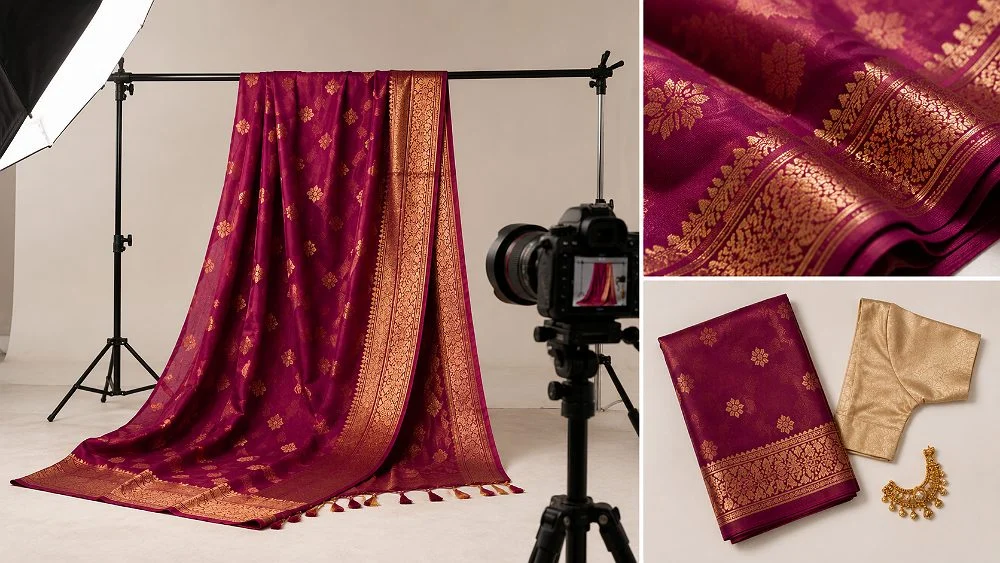
- Returns are the biggest silent leak in any Meesho payment settlement, and most “colour/size not as shown” returns start with unclear catalogue images.

What is the Meesho payment cycle and when do suppliers get paid?
The Meesho payment cycle is the fixed waiting period after an order is delivered before Meesho releases the settled amount to your registered bank account. Meesho’s official pricing page states that suppliers are paid on a 7-day payment cycle from order delivery, including cash on delivery orders. Your exact next payout date and amount always appear in the Payments tab of the Supplier Panel.
Think of every order as moving through three money states. First, it is pending while the parcel is in transit. Second, it becomes outstanding once delivered, because Meesho now owes you the amount but the cycle has not completed. Third, it is paid once the transfer is made and listed under previous payments. A healthy Meesho supplier payment rhythm simply means a steady flow of orders moving from outstanding to paid every cycle.
The waiting period exists because the customer still has a return window after delivery. Meesho holds the money briefly so it can adjust for returns before the transfer. That is also why a single return can show up as a negative line in a later cycle, even after an order has been paid.
Why do sellers see 7 days in one place and 15 days in another?
Because Meesho’s own public pages are not fully in sync. The current Meesho supplier pricing page describes a 7-day cycle from delivery, while an older lesson in the Meesho learning hub says settlement happens every 15 days. Treat the Supplier Panel as the final word for your account.
Many blogs, YouTube videos and seller WhatsApp groups repeat whichever number they saw first. When a supplier asks “meesho payment kab aata hai“, the honest answer is: check the “Next Payment” card in your panel, note the date, and compare it with the delivery dates of the orders included. After two or three cycles you will know your real rhythm far more accurately than any forum post.
How does a Meesho order move from dispatch to your bank account?
An order moves through five stages: accepted, dispatched, delivered, outstanding (cycle running), and paid. The payment clock only starts at delivery, so dispatch speed and courier delivery time both affect when you receive money. Returns raised inside the window are adjusted before or after the payout.
| Stage | What happens | Where you see it | Money status |
|---|---|---|---|
| 1. Order accepted | You confirm stock and print the label | Orders → Pending | Not yet payable |
| 2. Dispatched | Courier picks up the parcel | Orders → Shipped | Not yet payable |
| 3. Delivered | Customer receives it; payment cycle starts | Orders → Delivered | Outstanding |
| 4. Cycle running | Return window open; adjustments possible | Payments → Total Outstanding | Estimated, can change |
| 5. Paid | Transfer to your bank account | Payments → Last / Previous Payment | Settled |
The practical lesson: a faster dispatch means faster money. If you dispatch on the same day the order is accepted, you take a full day or two off your cash cycle. Suppliers who batch dispatch twice a week often wonder why their Meesho payment settlement feels slow; the delay is usually on their side of the timeline, not Meesho’s.
Meesho payment cycle example: one kurti order
Imagine a printed cotton kurti ordered on a Monday. You dispatch on Tuesday, and the courier delivers on Friday. On a 7-day cycle from delivery, that order becomes payable roughly a week after Friday, and it will appear in the “Next Payment” card once Meesho schedules it. If the buyer raises a return on Saturday, the order drops out of the payable amount, and reverse-shipping adjustments may appear under deductions.
What gets deducted from your Meesho supplier payment?
Meesho currently advertises 0% commission, so the deductions you see are mostly shipping, GST on shipping, return-related adjustments, and statutory tax deductions. Penalties and compensations, when they apply, appear in a separate Deductions and Compensations view. Here are the seven lines to check in every Meesho payment settlement.
- Commission: Meesho’s pricing page states 0% commission across categories. If you ever see a commission line, open the Commission Tax Invoice tab for that order.
- Forward shipping charge: charged per order based on weight and delivery zone, as per your rate card at the time of listing.
- GST on shipping: Meesho’s pricing page mentions 18% GST on shipping charges.
- Customer return adjustments: when a delivered order is returned, the order value is reversed and reverse-shipping charges may apply.
- RTO (return to origin): Meesho’s pricing page says no return shipping fee is charged for RTOs, but the sale itself is cancelled, so it never reaches your payout.
- TCS and TDS: marketplaces deduct Tax Collected at Source under GST and TDS under Section 194-O of the Income Tax Act. Both are generally claimable in your GST and income-tax filings; confirm the current rates with your CA.
- Penalties or compensations: listed in Deductions and Compensations, with waivers and claim credits shown as positive lines.
Our earlier breakdown of Meesho seller fees, shipping and return charges goes deeper into the rate card itself. In this post we focus on how those charges show up inside your Meesho payment deductions, so you can reconcile them line by line.
| Deduction | When it appears | Can you reduce it? |
|---|---|---|
| Forward shipping + GST | Every delivered order | Yes: accurate weight and compact packing |
| Return reversal | Customer return inside window | Yes: clearer images, size charts, QC |
| Reverse shipping | Customer returns | Yes: fewer returns |
| TCS / TDS | Every settled sale | No, but usually claimable as tax credit |
| Penalties | Policy issues, if any | Yes: dispatch on time, correct listings |
How do returns and RTO change your Meesho payment settlement?
Returns hit your payout twice: the sale value is reversed and reverse-shipping charges can be adjusted from future cycles. RTO orders never become payable at all. For most fashion suppliers, returns are the single biggest gap between “orders received” and “money received”.
When we review supplier dashboards before a reshoot, the pattern is almost always the same. Return reasons cluster around “colour different from image”, “size issue” and “product not as shown”. Each of these is, at its root, a catalogue problem. A kurti photographed under warm yellow bulbs looks mustard online and arrives pale yellow; the customer returns it, and your Meesho payment cycle loses that order entirely.

For dresses, kurtis and co-ord sets, on-model fashion shoots show where the hem falls, how the fabric drapes and how the size looks on a real body. That single change usually does more for your net payout than any pricing trick, because a kept order is worth far more than a cheaper one that comes back.
Why wrong returns still need evidence
Sometimes the customer sends back a different, used or damaged item. Those cases are not a pricing problem but a claim problem. Our step-by-step guide to winning wrong return claims on Meesho explains the packing video and photo evidence you need. Approved claims usually show up as compensations in the Deductions and Compensations view.
How do you read your Meesho next payment report and settlement report?
Open the Payments tab in the Supplier Panel. Start with the “Next Payment” card to see the amount and date of your coming transfer, then open the order-level details to match each delivered order with its deductions. Finally, compare “Last Payment” with your bank statement.
According to the Meesho learning hub lesson on first payments, the Payments area gives you six views. Here is how we suggest using each one in your weekly check of the Meesho next payment report.
- Next Payment: the amount Meesho will transfer in the coming cycle and its date. Download the order list for this payment.
- Last Payment: the amount transferred most recently. Match it with the credit in your bank account.
- Total Outstanding Payments: an estimate of all money Meesho owes you that has not yet been scheduled. It changes as returns come in.
- Previous Payments: your full payout history. Use it to spot cycles that were unusually low.
- Commission Tax Invoice: per-order tax invoices, useful for your accountant and GST filing.
- Deductions and Compensations: penalties, waivers and claim credits. Check this every cycle, not only when the payout looks wrong.
A simple reconciliation formula
For each order in the payment file, check: settled amount = selling price − forward shipping − GST on shipping − TCS − TDS, and then subtract any return reversals or add any compensations listed separately. If one order does not fit the formula, note its order ID and raise a ticket with that ID and a screenshot. Sellers who do this weekly rarely lose money to silent mistakes.

How do Meesho COD and prepaid payments differ?
For suppliers, the Meesho payment cycle is the same for cash on delivery and prepaid orders. Meesho’s pricing page says the delivery-based cycle includes COD orders and that there is no collection fee on either payment gateway or COD orders. The real difference is in risk: COD orders tend to have more refusals at the doorstep.
A large share of Meesho buyers prefer cash on delivery, especially in smaller towns. When a COD buyer refuses the parcel, it becomes RTO, which means no payout for that order and blocked stock while the parcel travels back. Strong images, honest titles and a correct size chart reduce impulse orders that later get refused, which keeps your Meesho COD payment flow steadier.
What should you do if your Meesho payment is delayed or short?
First, check whether the orders were actually delivered and whether the cycle has completed. Next, look for returns or deductions in the Deductions and Compensations view. If the numbers still do not match, raise a support ticket from the Supplier Panel with order IDs, dates and screenshots.
- Bank details: confirm your account number, IFSC and account holder name match your registration. A mismatch is a common reason for a Meesho payment delay.
- Delivery status: orders stuck in “shipped” have not started the cycle yet.
- Sale periods: during large sale events, volumes rise and the payout may include more adjustments; keep your sheet updated.
- Holidays: bank holidays can push the credit by a day.
- Super Fast Pay: if you have seen “Meesho Super Fast Pay” mentioned in seller groups, check your Payments tab for any early-payout option offered to your account. We could not confirm current public terms, so do not plan cash flow around it until you see it in your panel.
Keep every ticket number. If the same issue repeats over two cycles, escalate with the full history. Calm, documented follow-up works far better than repeated new tickets.
How can better catalogue images protect your Meesho payout?
Fewer returns mean fewer reversals, fewer reverse-shipping deductions and a bigger share of each order reaching your bank. Clear, colour-accurate images that show fit, fabric and every included piece are the most reliable way to reduce “not as shown” returns. Uniqs Studio shoots these catalogue sets every week for Meesho and multi-marketplace sellers.
For tops, hoodies, shirts and kurtas without a model, clean ghost mannequin shots show the true shape, neckline and length of the garment. For kidswear, combo packs and budget sets, top-down flat lay shots make it obvious what the customer receives. Our Meesho product photography rules cover angles, backgrounds and styling for each category.


Video adds one more layer of honesty. A short clip of a model turning in a kurti shows flare, fabric fall and length in a way a still cannot. Here is an example of the kind of ecommerce model video we produce for kurti sellers.
What does a returns-reducing catalogue shoot cost at Uniqs Studio?
Here are our standard per-product rates for the shoot types that matter most to apparel suppliers on Meesho. Weigh them against the value of a single avoided return per style.
| Shoot type | Images | Turnaround | Price |
|---|---|---|---|
| Ghost mannequin | 1 angle | 3–4 days | ₹250 / image |
| Flat lay | 2–3 angles | 6 days | ₹290 / product |
| Model Photography | 5–6 angles | 4–5 days | ₹400 / product |
| Ecommerce Reels Video | 20–25 seconds | 4–5 days | ₹900 / product |
| Garment Video with Model | 25–30 seconds | 4–5 days | ₹1,200 / garment |
Prices are per product/image as listed; call or WhatsApp +91-8076745824 for bulk catalogue quotes.
Planning a fresh Meesho catalogue? Call Satyam on +91-8076745824 or send your style list on WhatsApp at +91-8076745824.
Which cash-flow checklist should every Meesho supplier follow?
Plan your stock and ad spends around the payout you can actually see in the panel, not around order count. A weekly 20-minute routine covering dispatch, payments, deductions and returns keeps the Meesho payment cycle predictable.
- Dispatch every accepted order within the same day where possible.
- Check the “Next Payment” amount and date every Monday.
- Match “Last Payment” with your bank credit.
- Open Deductions and Compensations and note any new line.
- List the top three return reasons for the week and the styles behind them.
- Reshoot or re-edit the images of styles with repeated “not as shown” returns.
- Keep two to three weeks of operating cash, since returns can reduce a later cycle.
- Send monthly tax invoices and TCS/TDS data to your accountant.
What are the most common Meesho payment mistakes suppliers make?
The common mistakes are counting orders as income before delivery, ignoring the deductions view, and treating returns as bad luck rather than a fixable catalogue issue. Each one makes cash flow feel random when it is actually predictable.
- Spending on ads based on order count. Orders are not money until delivered, kept and settled.
- Not reconciling weekly. Small errors compound over many orders.
- Using supplier-provided or copied images. They rarely match the actual product colour, which drives returns. AI-generated garment images carry the same risk.
- Under-declaring weight. It leads to weight disputes and extra shipping charges later.
- Skipping packing videos. Without evidence, wrong-return claims are hard to win.
Real product photographs shot in a controlled studio remain the safest base for any Meesho catalogue. The buyer gets what they saw, and your Meesho payment settlement reflects sales that stay sold.
Meesho payment cycle FAQs
Quick answers to the questions suppliers ask most often about Meesho payments, deductions and settlement reports.
Meesho’s official pricing page describes a 7-day payment cycle counted from order delivery, including COD orders. An older learning-hub lesson mentions 15 days, so always confirm the date shown on the Next Payment card in your Supplier Panel.
The Meesho payment cycle starts on the delivery date, not the dispatch date. Once the cycle completes, the amount appears as your next payment and is transferred to your registered bank account.
Forward shipping, GST on shipping, TCS, TDS and any return reversals are adjusted before payout. Check the order-level payment file and the Deductions and Compensations view to match each line.
Yes. If a return is processed after an order was settled, the reversal and any reverse-shipping charge can appear as a negative adjustment in a later cycle.
No. Meesho states that the delivery-based payment cycle includes cash on delivery orders, and there is no collection fee on COD or payment-gateway orders. COD orders do carry a higher risk of doorstep refusal and RTO.
Check delivery status, bank details and the Deductions and Compensations view first. If the amount still does not match, raise a ticket in the Supplier Panel with order IDs, dates and screenshots, and keep the ticket number for follow-up.
What is your next step after understanding the Meesho payment cycle?
Now that you can read your payouts, the next step is to shrink the biggest leak in them: returns and RTO. Fix the reasons buyers send products back, and every future cycle carries more of your money.
Next step: work through our guide to cutting Meesho returns and RTO, which turns the return reasons in your panel into a clear action list for images, size charts and packing. When you are ready to reshoot, the Uniqs Studio team is one call away on +91-8076745824, or you can visit us at 1800/9, Kalkaji Extension, New Delhi, Monday to Saturday, 10 am to 7 pm. You can also contact the Uniqs Studio team online.
Turn more Meesho orders into kept orders
Uniqs Studio shoots ghost mannequin, flat lay, on-model and video catalogues for Meesho suppliers across Delhi, Gurgaon, Noida, Faridabad and Ghaziabad. Call Satyam on +91-8076745824, WhatsApp +91-8076745824 or email [email protected].
Get a Quote